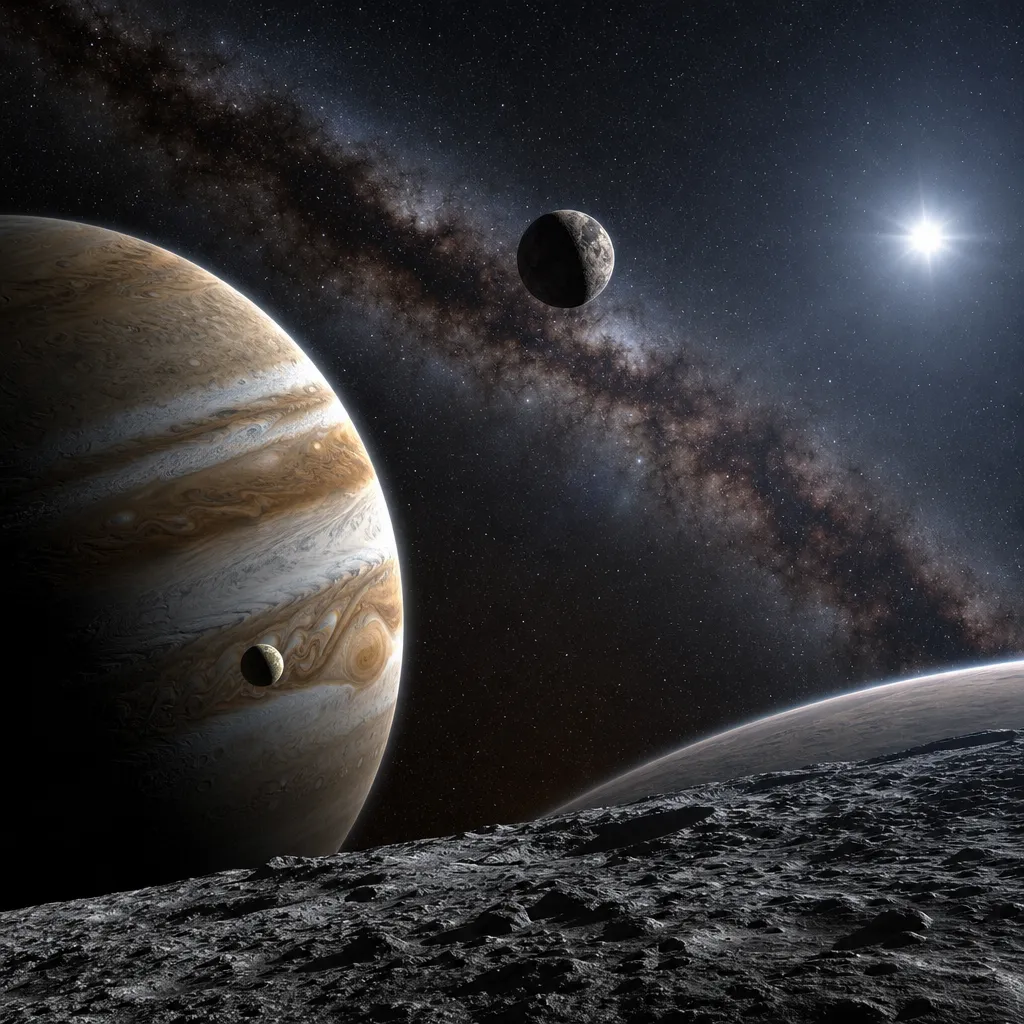
Space is not empty, silent nothingness. It is a dynamic environment filled with stars, planets, gas, dust, radiation, magnetic fields, and expanding structure on scales almost beyond intuition. Some space facts are simple and well established, such as the Earth orbiting the Sun, while others come from careful inference using telescopes, spacecraft, spectroscopy, and physics. Together, these facts reveal how the universe works, how our planet fits into it, and what scientists still do not fully understand.
What makes space scientifically important is not just its size, but its variety. Space includes nearby regions such as Earth orbit and the Moon, the planets of the Solar System, distant stars and exoplanets, the Milky Way, and galaxies billions of light-years away. Studying these environments helps answer fundamental questions about matter, time, life, and the origin and future of the cosmos.
What space is and what it contains
In everyday language, “space” usually means the region beyond Earth’s atmosphere. In science, it covers a vast range of environments, from low Earth orbit to the observable universe. There is no single boundary where “space begins” in a universal physical sense, although the Kármán line at about 100 kilometers is often used operationally for aerospace purposes.
Space is often described as a vacuum, and compared with Earth’s surface it is extremely sparse. But it is not completely empty. Even the seemingly dark regions between stars contain atoms, molecules, charged particles, magnetic fields, and tiny dust grains. On larger scales, galaxies are embedded in halos of dark matter, and the universe as a whole is permeated by relic radiation from the Big Bang known as the cosmic microwave background.
The contents of space can be grouped into several major categories:
- Stars, which generate energy by nuclear fusion.
- Planets and moons, which orbit stars or planets.
- Asteroids and comets, which preserve material from the early Solar System.
- Gas and dust clouds, where stars and planets can form.
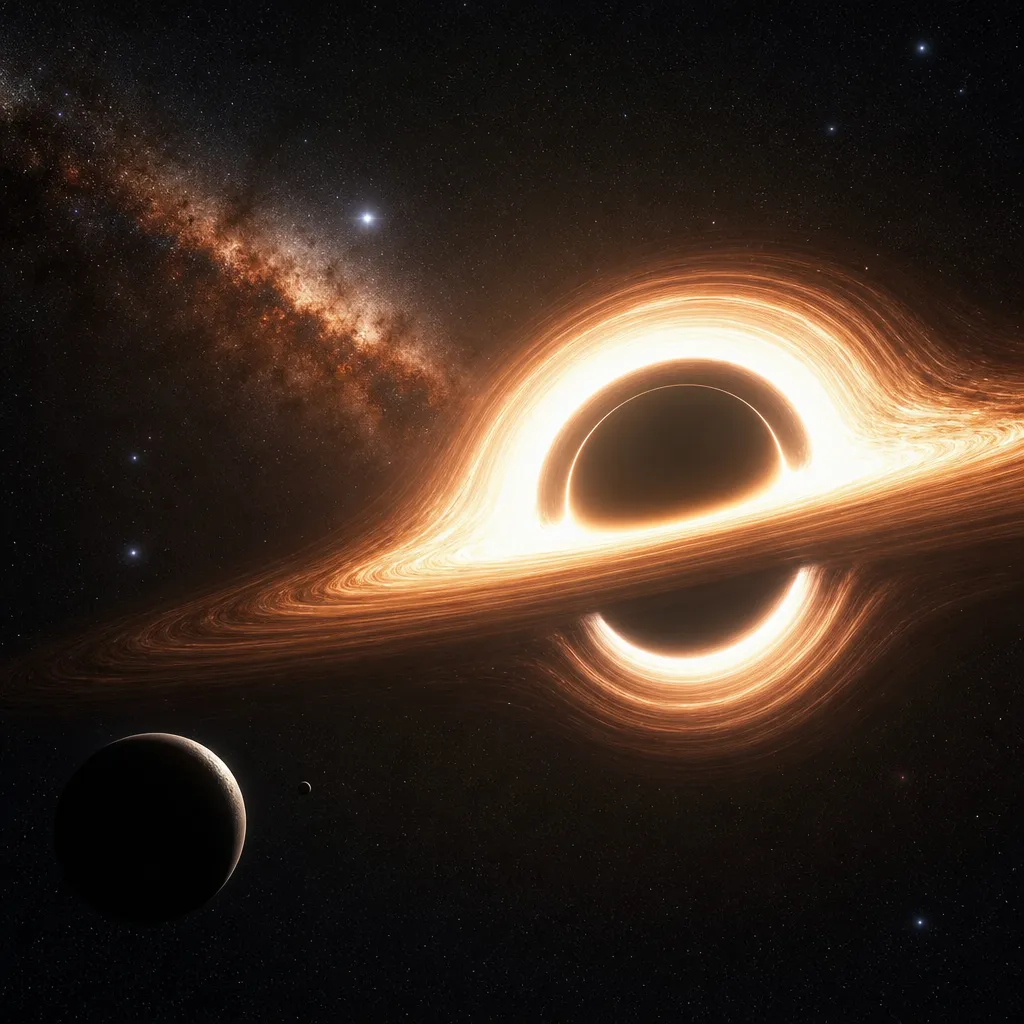
- Black holes, neutron stars, and white dwarfs, the remnants of stellar evolution.
- Radiation and particles, including sunlight, cosmic rays, and solar wind.
- Galaxies and galaxy clusters, the largest organized structures held together by gravity.
Some of the most important established space facts
Many famous space facts are not isolated trivia; they connect directly to deep physical laws. The Earth rotates once roughly every 24 hours and orbits the Sun once each year because of gravity and angular momentum. The Sun shines because hydrogen nuclei fuse into helium in its core. The Moon influences Earth through gravity, producing most ocean tides and helping stabilize Earth’s axial tilt over long timescales.
The Solar System formed about 4.6 billion years ago from a collapsing cloud of gas and dust. This is supported by radiometric dating of meteorites, models of protoplanetary disks around young stars, and the shared chemical and dynamical history of Solar System bodies. The universe itself is much older, about 13.8 billion years, according to evidence from cosmic expansion, the cosmic microwave background, and the abundance of light elements.
Another central fact is that the universe is expanding. Galaxies, on average, are moving away from one another on large scales, and the more distant the galaxy, the more its light is shifted toward longer wavelengths. This redshift is one of the key observations behind modern cosmology.
| Space fact | How we know | Why it matters |
|---|---|---|
| Earth orbits the Sun | Astronomical observations, planetary motions, Newtonian and relativistic gravity | Explains seasons, orbital dynamics, and our place in the Solar System |
| Stars generate energy by fusion | Solar physics, neutrino measurements, stellar spectra, nuclear physics | Explains sunlight, stellar evolution, and the origin of many elements |
| The universe is expanding | Galaxy redshifts, cosmic microwave background, cosmological models | Foundational to modern cosmology and the history of the universe |
| Planets exist around other stars | Transit observations, radial velocity, direct imaging, microlensing | Shows planetary systems are common and informs the search for habitable worlds |
How space works: the main physical processes
The large-scale behavior of space is governed above all by gravity. Gravity shapes planetary orbits, forms stars from collapsing clouds, binds galaxies together, and influences the expansion history of the universe. On smaller scales, gravity competes with pressure, rotation, magnetic fields, and radiation.
Nuclear fusion powers stars. In stellar cores, high temperature and pressure allow light atomic nuclei to combine into heavier ones, releasing energy. That energy travels outward and escapes as light and other radiation. Without fusion, stars would not shine, planets would lack a stable long-term energy source, and many chemical elements essential for rocky planets and life would be far rarer.
Electromagnetism also matters throughout space. Magnetic fields guide charged particles in the solar wind, shape auroras, influence star formation, and affect spacecraft systems. Light itself is electromagnetic radiation, and astronomers rely on radio waves, infrared, visible light, ultraviolet, X-rays, and gamma rays to study different cosmic environments.
Orbital motion is another key principle. Objects in space do not need engines to keep moving; in the near absence of drag, they continue along paths shaped mainly by gravity. This is why planets stay in orbit and why satellites can circle Earth for years, depending on altitude and atmospheric drag.
How scientists know these facts
Space science depends on observation, measurement, and theory working together. Many conclusions are direct, such as photographing planets, counting craters on the Moon, or measuring the Sun’s spectrum. Others are indirect but strongly supported, such as inferring the composition of a distant star from its light or estimating the mass of a galaxy from the motion of its stars.
Spectroscopy is one of the most powerful tools in astronomy. Every element and molecule interacts with light in characteristic ways. By splitting light into a spectrum, scientists can identify chemical composition, temperature, motion, magnetic activity, and sometimes atmospheric structure. This is how astronomers study stars, nebulae, galaxies, and exoplanet atmospheres even when those objects are too distant to visit.
Spacecraft measurements provide another kind of evidence. Orbiters, landers, rovers, and flyby missions have directly measured the surfaces, atmospheres, gravitational fields, and magnetic environments of many Solar System bodies. Lunar rocks returned by Apollo, comet samples returned by Stardust, asteroid samples returned by Hayabusa2 and OSIRIS-REx, and meteorites found on Earth all provide laboratory evidence that can be tested repeatedly.
Simulations also play a major role, but they are not evidence by themselves. They are used to test whether known physics can reproduce what is observed. For example, models of galaxy formation, star birth, and climate on Mars or Earth-like exoplanets are judged by how well they match actual data.
The Solar System as a laboratory
The Solar System is the part of space we understand in greatest detail because it can be observed closely and visited by spacecraft. It includes the Sun, eight planets, dwarf planets, moons, asteroids, comets, and smaller debris populations such as Kuiper Belt objects and meteoroids. These bodies preserve different chapters of planetary history.
Mercury shows how extreme solar heating and a weak atmosphere affect a rocky world. Venus demonstrates a powerful greenhouse effect. Earth is the only known planet with life. Mars preserves evidence of a wetter ancient past. The giant planets reveal how gas and ice behave under enormous pressure, while their moons include some of the most intriguing places for astrobiology, such as Europa and Enceladus, both of which likely contain subsurface oceans.
Small bodies are especially informative. Asteroids and comets are often considered leftovers from planetary formation. Their compositions help scientists reconstruct the early Solar System, including the possible delivery of water and organic molecules to the early Earth.
| Object type | What it reveals | Typical methods |
|---|---|---|
| Planets | Climate, geology, atmospheric evolution, habitability | Orbiters, rovers, radar, spectroscopy |
| Moons | Tidal heating, subsurface oceans, planetary system history | Imaging, gravity measurements, magnetic field data |
| Asteroids | Formation of rocky bodies and impact hazards | Telescopes, sample return, spectroscopy |
| Comets | Primitive ices and chemistry from the early Solar System | Flybys, coma analysis, remote sensing |
Beyond the Solar System: stars, galaxies, and exoplanets
One of the most significant modern space facts is that planets around other stars are common. Thousands of exoplanets have been confirmed, and many more candidates are under study. These worlds include hot giant planets close to their stars, rocky planets, mini-Neptunes, and systems unlike anything in our own Solar System.
Scientists detect exoplanets mainly through the transit method, which measures tiny dips in starlight when a planet crosses its star, and the radial velocity method, which detects the star’s slight back-and-forth motion caused by the planet’s gravity. In some cases, planets are directly imaged, though this is technically difficult.
Galaxies are the fundamental large-scale homes of stars. The Milky Way contains hundreds of billions of stars, interstellar gas and dust, a supermassive black hole at its center, and a much larger dark matter halo inferred from gravitational effects. On even larger scales, galaxies form clusters, filaments, and voids that trace the structure of the universe.
Dark matter and dark energy remain among the biggest open questions in space science. Dark matter is inferred from gravity, not direct detection, and appears to provide much of the mass that shapes galaxies and clusters. Dark energy is the name given to the cause of the observed accelerated expansion of the universe. The evidence for both is strong, but their physical nature is still unknown.
Space is also an environment with hazards
Space is not only a place to observe; it is also a harsh operating environment. In Earth orbit, spacecraft face vacuum, temperature extremes, atomic oxygen at lower altitudes, radiation, and micrometeoroid impacts. Human spaceflight adds risks from bone and muscle loss in microgravity, radiation exposure, and the difficulty of maintaining life support far from Earth.
Space weather is another major issue. Activity from the Sun, including solar flares and coronal mass ejections, can disturb Earth’s magnetosphere and ionosphere. These events can interfere with satellites, radio communication, navigation signals, and power systems on the ground. Monitoring the Sun is therefore important not only for astronomy but for modern infrastructure.
Orbital debris is a growing engineering and policy concern. Defunct satellites, spent rocket stages, and fragments from collisions or explosions travel at very high speed. Even small debris can damage spacecraft. Tracking larger objects, designing shields, limiting debris creation, and planning post-mission disposal are standard mitigation measures, but long-term management remains difficult.
Why space matters to life on Earth
Space science matters because Earth is not isolated from its cosmic setting. The Sun controls our planet’s primary energy input. Impacts have shaped Earth’s geological and biological history. The Moon affects tides and long-term rotational behavior. Space weather can disrupt technologies that modern societies depend on.
Space also matters intellectually and practically. Astronomy has helped develop detectors, imaging systems, precision timing, and data methods with uses far beyond observatories. Satellite systems support communication, weather forecasting, disaster monitoring, navigation, environmental science, and climate research.
Perhaps most importantly, studying space places Earth in context. It helps scientists ask whether habitable conditions are common, how rare complex life might be, and how planetary climates change over time. These are scientific questions, not just philosophical ones, and they increasingly can be approached with real data.
What remains uncertain
Although many basic space facts are firmly established, major uncertainties remain. Scientists still do not know what dark matter is made of, what drives dark energy, or whether life exists elsewhere. They are still testing how common Earth-like planets truly are around Sun-like stars and red dwarfs, and whether potentially habitable planets can retain stable atmospheres over billions of years.
Within the Solar System, there are open questions about the origin of Earth’s water, the detailed history of Mars’s climate, the chemistry of subsurface ocean worlds, and the full inventory of small bodies in the outer Solar System. In astrophysics, researchers continue to investigate how the first stars formed, how supermassive black holes grew so early, and how galaxies evolved across cosmic time.
These uncertainties do not mean space science lacks answers. They show where the frontier lies. Scientific knowledge is strongest when observations, theory, and independent methods converge, and weakest where data are sparse or hard to interpret. Future telescopes, sample-return missions, planetary landers, gravitational-wave observatories, and improved models will sharpen many of these questions.
FAQ
How do scientists know what distant objects in space are made of?
Mostly through spectroscopy. Atoms and molecules absorb and emit specific wavelengths of light, producing patterns that can be measured with telescopes and compared with laboratory data.
Can space be truly empty?
Not in a perfect everyday sense. Some regions are extremely close to vacuum, but even interstellar and intergalactic space contain particles, radiation, and fields.
Why is the sky dark at night if the universe has so many stars?
This is related to the finite age and expansion of the universe. Light from many distant regions has not had enough time to reach us, and cosmic expansion stretches and dims distant radiation.
Is there evidence of life elsewhere in space?
There is currently no confirmed evidence of extraterrestrial life. Scientists have identified environments that may be habitable and have detected organic molecules in various places, but habitability is not the same as proof of life.
How are exoplanets found if they are so hard to see directly?
Most are found indirectly, especially through transits and radial velocity measurements. These methods detect a planet’s effect on its star rather than imaging the planet itself.
Is space travel dangerous?
Yes. Human and robotic missions must deal with radiation, vacuum, temperature extremes, launch risk, orbital debris, and system failures. Spaceflight is technically feasible but never routine in the ordinary sense.
What is the biggest unsolved problem in space science?
There is no single answer, but dark matter, dark energy, the origin of life, and the frequency of life-bearing worlds are among the largest open questions.
What missions are helping answer these questions?
Space telescopes such as Hubble and the James Webb Space Telescope, planetary missions to Mars and the outer Solar System, solar observatories, and asteroid sample-return missions all contribute important evidence.
Sources
- NASA Solar System Exploration
- European Space Agency, Science & Exploration
- Space Telescope Science Institute, James Webb Space Telescope