
Can Black Holes Destroy Earth?
Probably not. Black holes are real and powerful, but the kinds that could destroy Earth…
Probably not. Black holes are real and powerful, but the kinds that could destroy Earth…

Inside a black hole, gravity has become so strong that, according to general relativity, every…

Black holes form when enough mass is compressed into a small enough region that gravity…
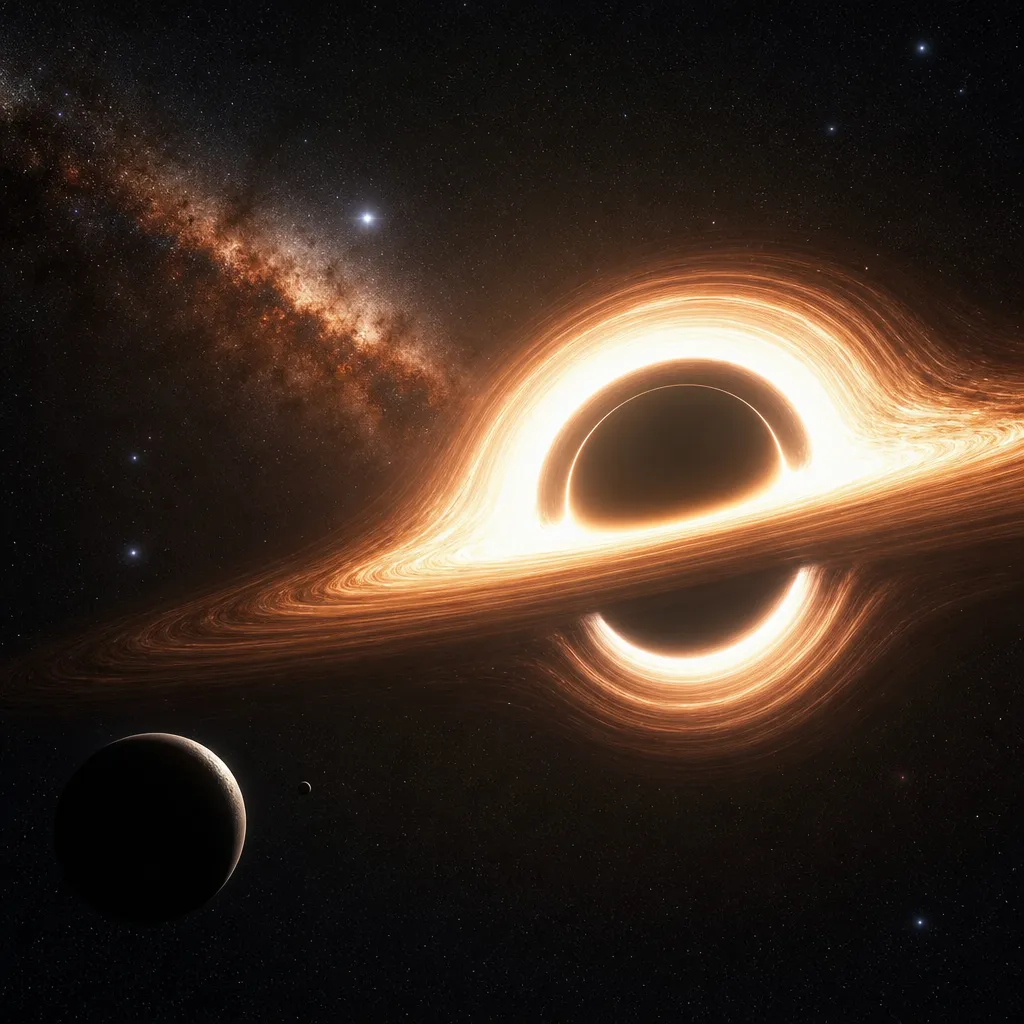
A black hole is a region of space where gravity is so strong that, once…

Probably not. Black holes are real and powerful, but the kinds that could destroy Earth are either far too distant, far too rare, or would have to come improbably close before becoming dangerous. In practice, there is no evidence that any known black hole poses a threat to our planet, and modern astronomy is very…

Inside a black hole, gravity has become so strong that, according to general relativity, every possible path leads inward. Once anything crosses the event horizon, it can no longer return or send signals back out. What happens next depends on which part of the problem we mean: established physics gives a clear picture of the…

Black holes form when enough mass is compressed into a small enough region that gravity overwhelms every known force that could otherwise support the object. In today’s universe, the best-established route is the collapse of the core of a very massive star after it runs out of nuclear fuel. Black holes can also grow by…
A black hole is a region of space where gravity is so strong that, once something crosses a certain boundary, it cannot escape—not even light. It is not a cosmic vacuum cleaner that sucks in everything nearby; far away, it pulls on other objects just as any other mass would. Black holes form when enough…
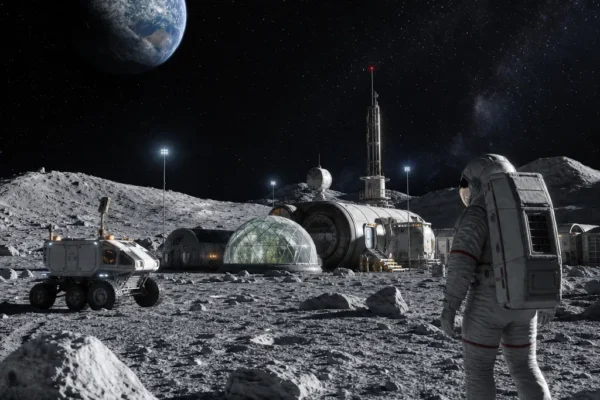
Yes, humans could live on the Moon, but not easily and not in the same way we live on Earth. Short stays have already happened during the Apollo missions, and longer-term residence is considered technically possible if people bring or produce air, water, food, power, shelter, and protection from radiation and dust. The Moon is…
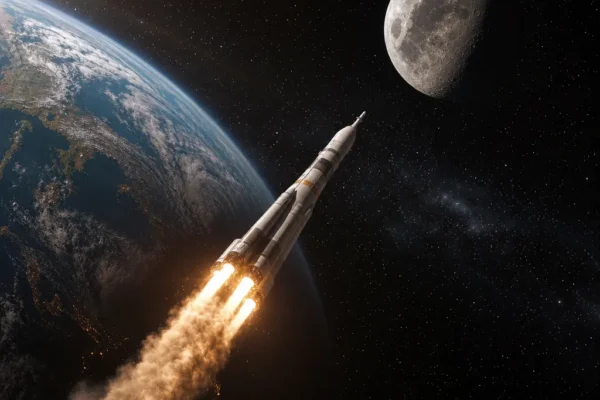
For most missions, getting to the Moon takes about three days. Apollo astronauts reached lunar vicinity in roughly 72 to 76 hours, while some robotic spacecraft have taken a bit less time and others have taken much longer, depending on their trajectory, propulsion, and mission goals. The Moon is close by planetary standards, but it…
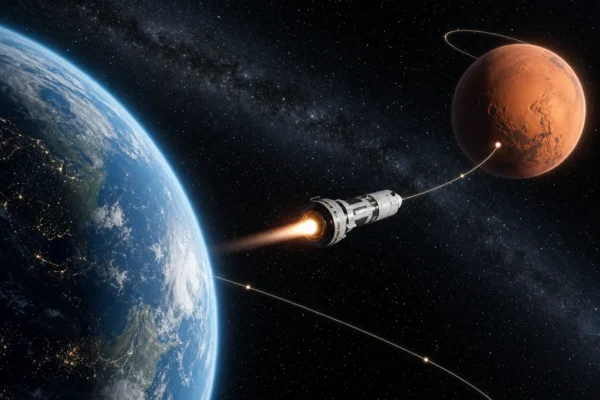
A trip to Mars typically takes about six to nine months with current spacecraft and conventional chemical rockets, but there is no single fixed answer. Travel time depends on the positions of Earth and Mars, the energy of the chosen trajectory, the mass of the spacecraft, and whether the mission is carrying cargo, robots, or…
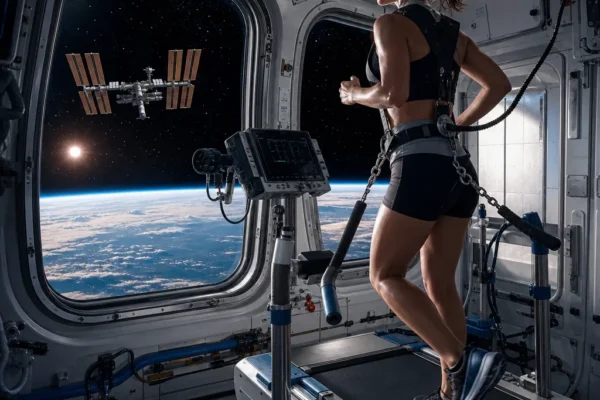
Space is not empty from a human body’s point of view. In orbit or beyond, the body loses the constant pull of gravity it evolved with, becomes exposed to higher radiation, shifts fluids toward the head, weakens muscles and bones, and must live inside an artificial life-support system. Some changes happen within minutes, others unfold…
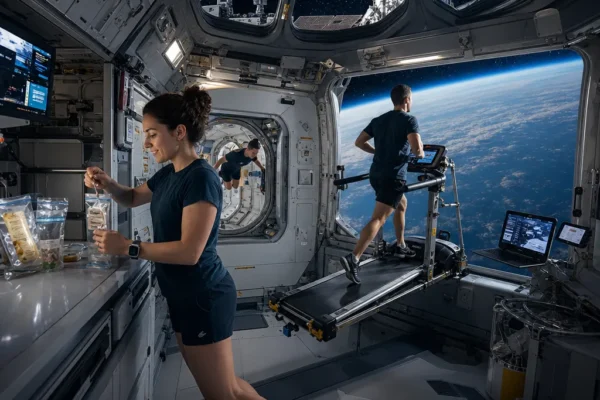
Astronauts live in space by turning a spacecraft or space station into a carefully controlled artificial habitat. They breathe recycled air, drink recovered water, eat packaged food, sleep in small crew quarters, exercise every day, and follow strict schedules to stay healthy and keep the station running. Life in orbit feels weightless, but it is…
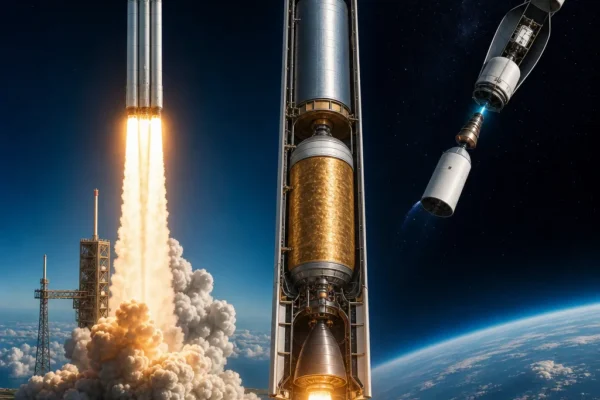
Rockets work by accelerating mass in one direction so the vehicle is pushed in the opposite direction. In practice, a rocket carries fuel and an oxidizer, burns them in a chamber, and expels the hot exhaust at very high speed through a nozzle. That outward jet produces thrust, allowing the rocket to rise from Earth,…