How Was the Universe Formed?

How Was the Universe Formed?

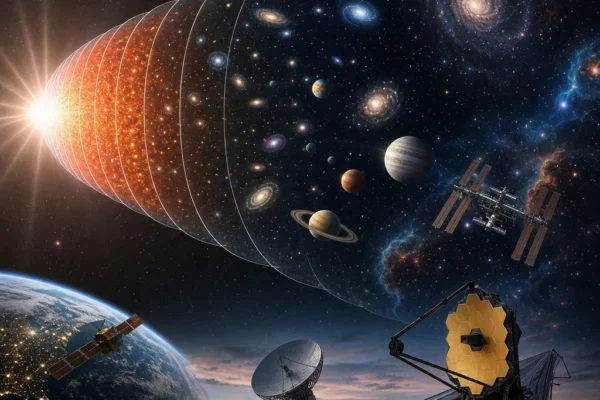
The universe, as far as modern cosmology can tell, was not formed as an explosion into empty space. It began about 13.8 billion years ago in an extremely hot, dense early state, and space itself has been expanding and cooling ever since. Over time, simple particles formed, then atoms, then stars and galaxies, and much…
Read More
What Is Astronomy?

What Is Astronomy?

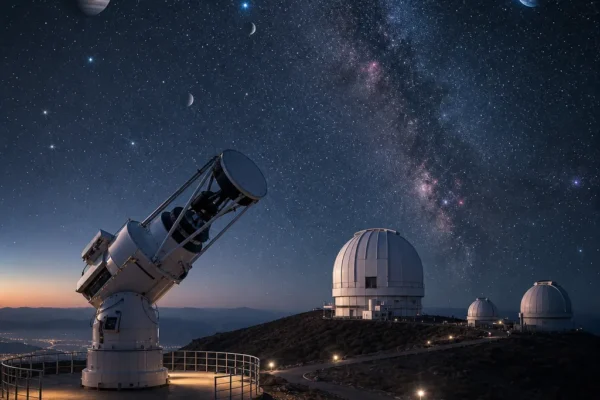
Astronomy is the science of the universe beyond Earth’s atmosphere. It studies objects such as the Moon, planets, stars, galaxies, gas clouds, black holes, and the large-scale structure of the cosmos, as well as the physical laws that govern them. In practice, astronomy combines careful observation with physics, mathematics, chemistry, and increasingly computing to understand…

Read More
How Old Is the Universe?

How Old Is the Universe?

The best current estimate is that the universe is about 13.8 billion years old. More precisely, modern cosmology places its age at roughly 13.8 billion years based on measurements of how fast space is expanding and what the early universe looked like. This number does not come from a single clock, but from several independent…

Read More
Astronomy for Beginners

Astronomy for Beginners

Astronomy is the science of everything beyond Earth’s atmosphere: the Moon, planets, stars, galaxies, and the universe as a whole. For beginners, the subject can be understood as a way of asking simple questions with careful tools: What is out there, how does it move, how did it form, and could life exist elsewhere? Modern…

Read More
Space Facts

Space Facts

Space is not empty, silent nothingness. It is a dynamic environment filled with stars, planets, gas, dust, radiation, magnetic fields, and expanding structure on scales almost beyond intuition. Some space facts are simple and well established, such as the Earth orbiting the Sun, while others come from careful inference using telescopes, spacecraft, spectroscopy, and physics….

Read More

The Fascinating History of Radio Astronomy

The Fascinating History of Radio Astronomy reveals how humanity learned to listen to the **universe** in wavelengths far beyond the visible spectrum. From the first serendipitous detections to today’s massive arrays, radio astronomy has unlocked secrets of **galaxies**, **pulsars**, and the **cosmic microwave background**. This exploration of invisible **signals** has transformed our understanding of **black…

Read More

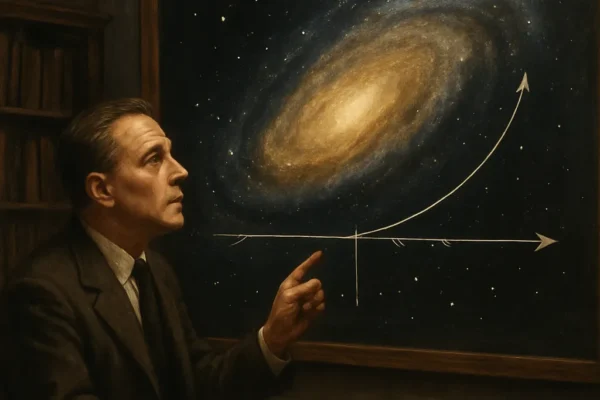
The Discovery of the Expanding Universe

The night sky has fascinated humanity for millennia, inspiring both wonder and scientific inquiry. Over time, astronomers unraveled the vast tapestry of stars, nebulae, and distant galaxies, gradually uncovering the dynamic nature of the cosmos. The journey toward understanding the expanding universe represents one of the most profound leaps in modern cosmology, reshaping our perception…

Read More

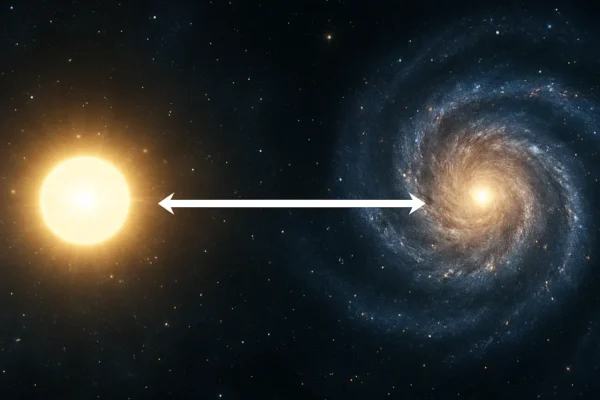
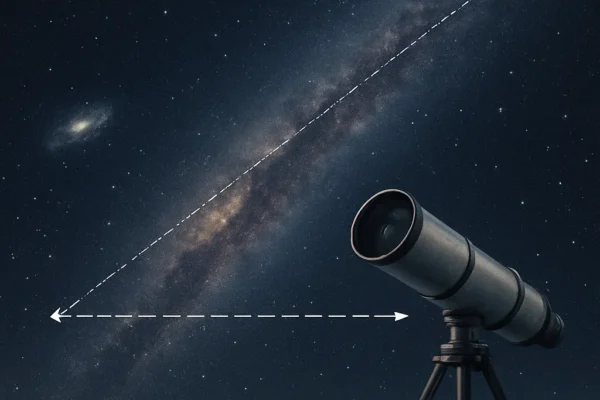
How We Measure Distance Across the Universe

Measuring the vast expanses between stars and galaxies has been one of humanity’s greatest scientific pursuits. From ancient astronomers peering at the night sky with primitive instruments to modern observatories scanning the cosmos with advanced detectors, the quest to quantify cosmic distances has shaped our understanding of the Universe. The techniques we use form a…

Read More