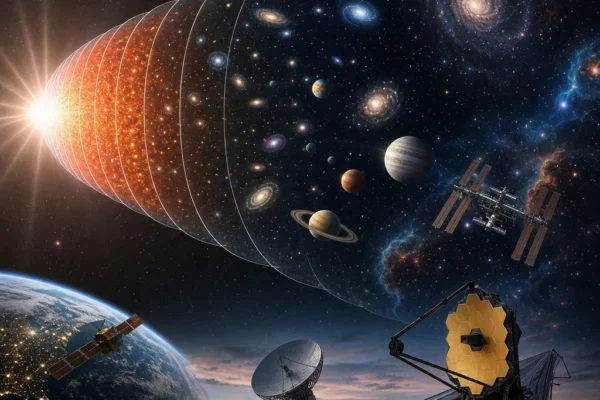
How Was the Universe Formed?

How Was the Universe Formed?

The universe, as far as modern cosmology can tell, was not formed as an explosion into empty space. It began about 13.8 billion years ago in an extremely hot, dense early state, and space itself has been expanding and cooling ever since. Over time, simple particles formed, then atoms, then stars and galaxies, and much…
Read More
Astronomy for Beginners

Astronomy for Beginners

Astronomy is the science of everything beyond Earth’s atmosphere: the Moon, planets, stars, galaxies, and the universe as a whole. For beginners, the subject can be understood as a way of asking simple questions with careful tools: What is out there, how does it move, how did it form, and could life exist elsewhere? Modern…

Read More
Space Facts

Space Facts

Space is not empty, silent nothingness. It is a dynamic environment filled with stars, planets, gas, dust, radiation, magnetic fields, and expanding structure on scales almost beyond intuition. Some space facts are simple and well established, such as the Earth orbiting the Sun, while others come from careful inference using telescopes, spacecraft, spectroscopy, and physics….

Read More

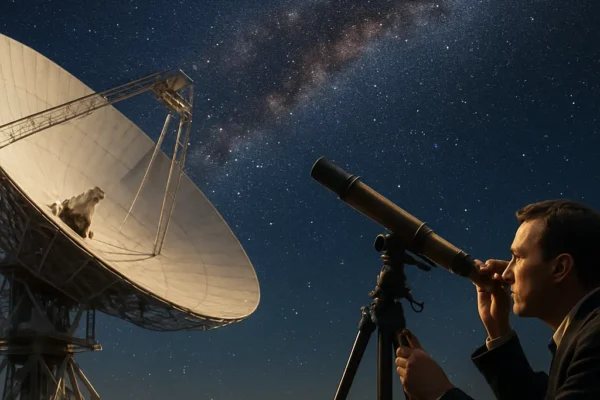
The Fascinating History of Radio Astronomy

The Fascinating History of Radio Astronomy reveals how humanity learned to listen to the **universe** in wavelengths far beyond the visible spectrum. From the first serendipitous detections to today’s massive arrays, radio astronomy has unlocked secrets of **galaxies**, **pulsars**, and the **cosmic microwave background**. This exploration of invisible **signals** has transformed our understanding of **black…

Read More

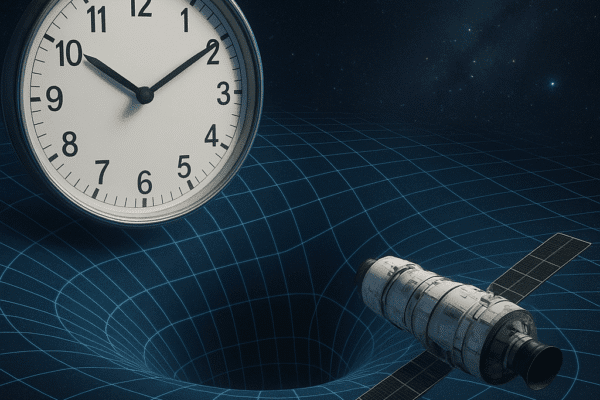
The Physics of Time Dilation in Space

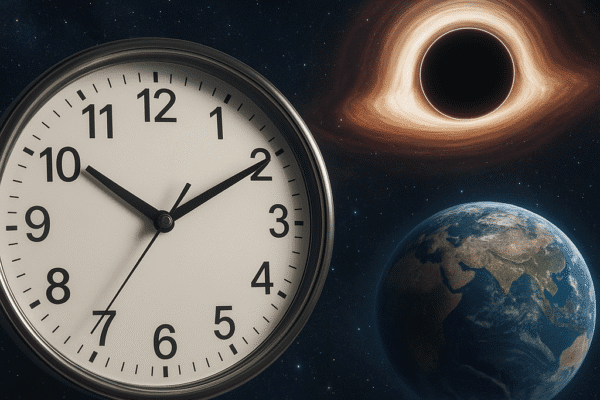
Exploring the vast reaches of the cosmos reveals strange phenomena that challenge our everyday experience. Among the most captivating is the warping of time itself. When spacecraft travel at high speeds or pass near massive celestial bodies, clocks tick at different rates—an effect known as time dilation. This phenomenon emerges naturally from Einstein’s theories and…

Read More

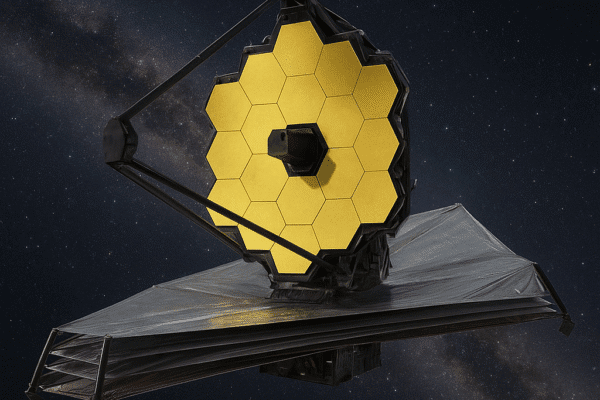
The James Webb Space Telescope: Unlocking the Secrets of the Universe

The James Webb Space Telescope stands as a groundbreaking instrument destined to transform our understanding of the universe. Nestled at the second Lagrange point, this observatory uses advanced infrared capabilities to peer further into space and time than ever before. By combining cutting-edge optics, sensitive detectors, and innovative deployment mechanisms, the telescope promises unprecedented views…

Read More

How Time Works Differently in Space

The nature of time shifts dramatically once humanity ventures beyond our planet. Far from a steady, universal metronome, time in space bends and stretches under the influence of massive bodies and rapid motion. Understanding these effects is essential for deep-space missions, satellite navigation, and fundamental physics research. This article delves into how time behaves differently…

Read More