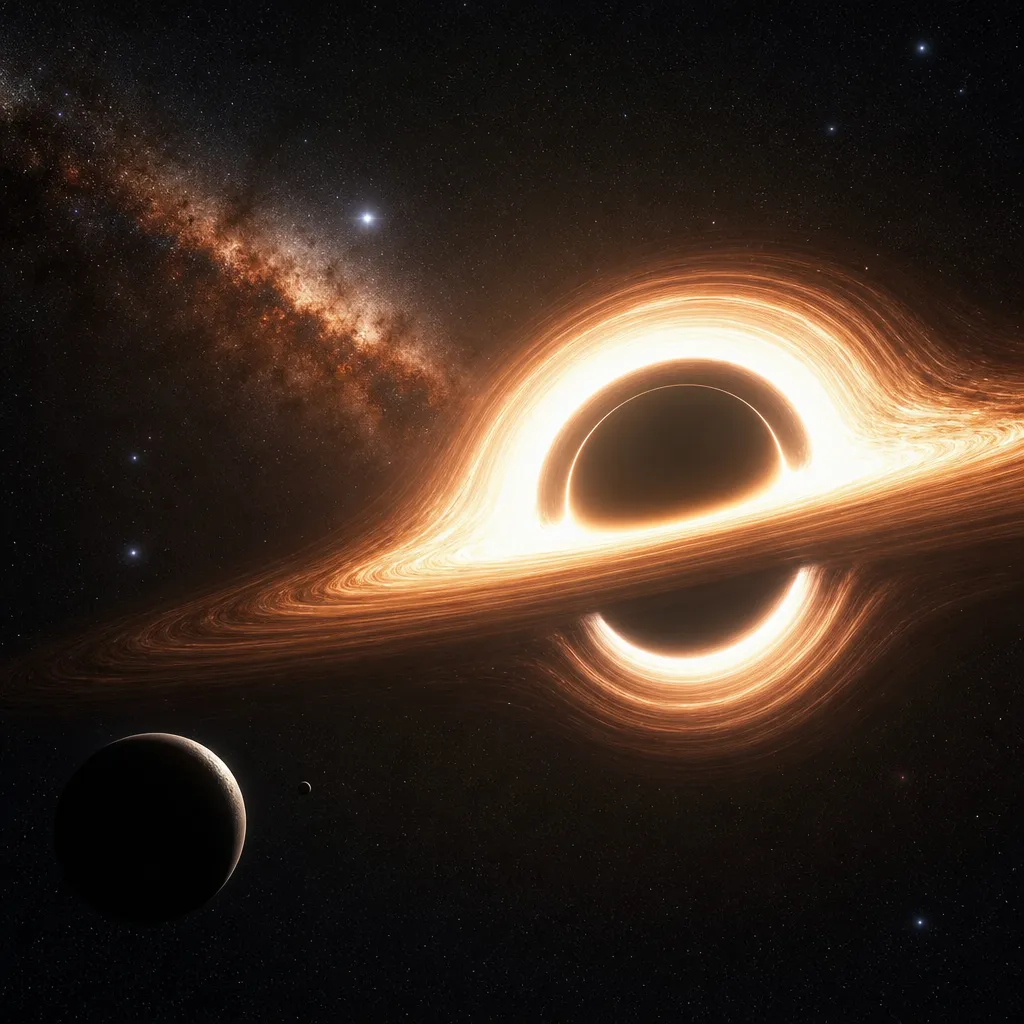

Space is not empty from a human body’s point of view. In orbit or beyond, the body loses the constant pull of gravity it evolved with, becomes exposed to higher radiation, shifts fluids toward the head, weakens muscles and bones, and must live inside an artificial life-support system. Some changes happen within minutes, others unfold over weeks or months, and a few may last long after return to Earth. Human spaceflight has shown that people can survive and work in space, but it also makes clear that space is a biologically stressful environment.
The popular phrase zero gravity is misleading. Astronauts in orbit are still under Earth’s gravity; they feel weightless because they and their spacecraft are in continuous free fall. That condition, more precisely called microgravity, changes how the body regulates balance, circulation, movement, sleep, immunity, and even gene activity. Understanding these effects matters not only for missions to the International Space Station, but also for future journeys to the Moon, Mars, and possibly beyond.
Why the body changes in space
On Earth, gravity constantly pulls blood downward, loads the skeleton, and forces muscles to work just to stand and move. In space, that familiar mechanical environment disappears. The vestibular system in the inner ear receives confusing signals, the cardiovascular system no longer needs to fight gravity in the same way, and the bones of the legs, hips, and spine are no longer stressed by body weight.
Space also adds hazards beyond microgravity. Outside Earth’s thick atmosphere and magnetic shielding, astronauts face more ionizing radiation. Spacecraft are enclosed, noisy, dry, and often crowded. Day-night cycles can be unusual, especially in low Earth orbit, where a spacecraft may see multiple sunrises and sunsets each day. All of these factors interact with biology.
| Space factor | What it does to the body | Why it matters |
|---|---|---|
| Microgravity | Reduces mechanical loading on muscles and bones; shifts body fluids | Leads to weakness, bone loss, balance problems, and cardiovascular deconditioning |
| Radiation | Damages cells and DNA | Raises long-term cancer and tissue damage risks |
| Isolation and confinement | Affects mood, sleep, cognition, and teamwork | Can reduce performance and resilience on long missions |
| Closed spacecraft environment | Changes air quality, microbes, humidity, and noise exposure | Influences respiratory health, sleep, and infection control |
The first hours and days: space adaptation sickness and fluid shifts
One of the earliest effects of spaceflight is a redistribution of fluids. On Earth, gravity pulls blood and other fluids toward the lower body. In microgravity, that gradient largely disappears, and more fluid moves toward the chest and head. Astronauts often develop a puffy face and nasal congestion, while their legs may appear thinner, sometimes called “bird legs.”
This fluid shift helps explain why many astronauts initially feel uncomfortable. The brain and inner ear receive unfamiliar sensory information. Vision says one thing, the vestibular system says another, and the body has to relearn how to interpret movement. The result can be space adaptation sickness, with nausea, dizziness, headache, and disorientation. Symptoms often improve after a few days as the nervous system adapts.
The body also responds as if it has too much fluid. Kidney regulation changes, and astronauts may excrete more fluid early in flight. This contributes to a reduction in blood plasma volume. That may not be very noticeable in orbit, but it matters when they return to gravity, where standing upright again becomes a challenge.
Muscles, bones, and movement in microgravity
The musculoskeletal system is among the most clearly affected. On Earth, bones constantly remodel in response to mechanical stress. Weight-bearing bones in the hips, legs, and spine are especially dependent on regular loading. In microgravity, that loading is greatly reduced, so bone resorption can outpace bone formation. Over time, astronauts can lose bone mineral density, particularly in weight-bearing regions.
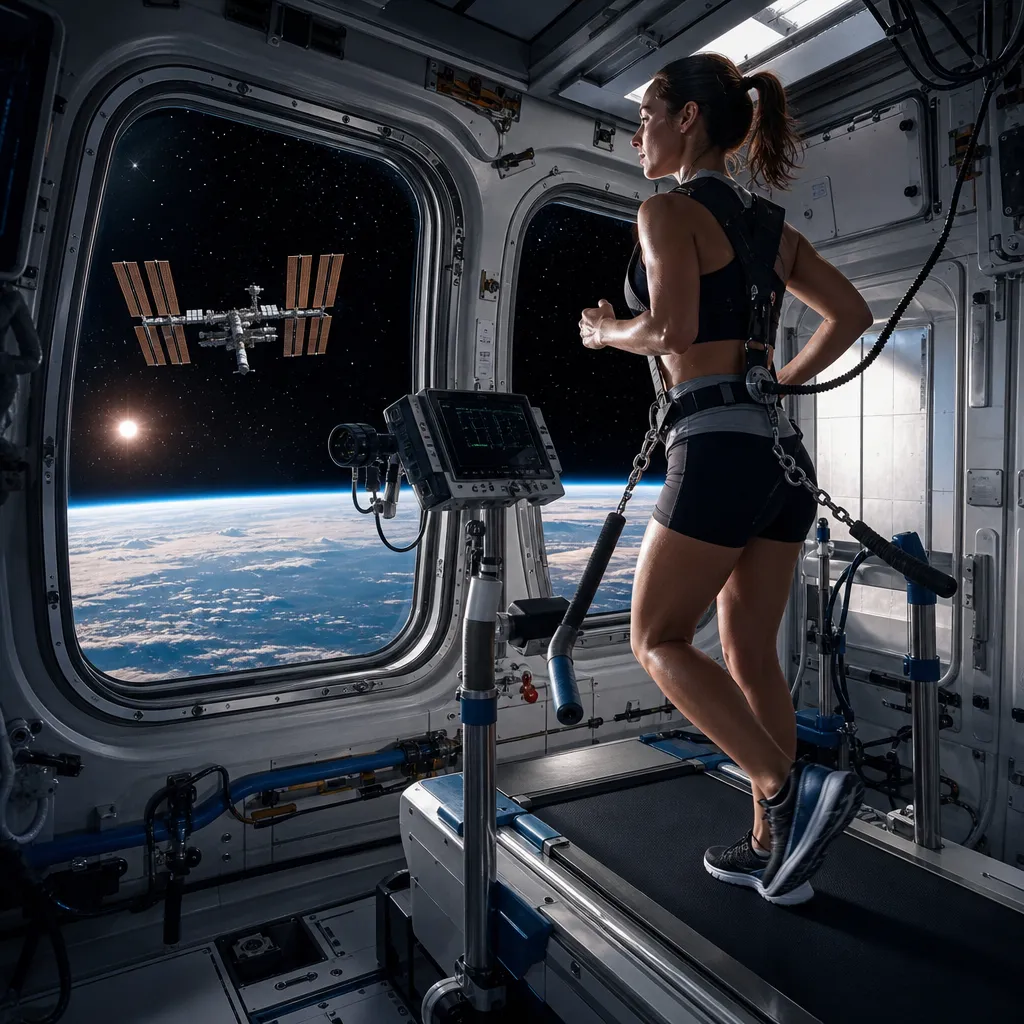
Muscles also shrink when they are not regularly challenged. Anti-gravity muscles such as those used for standing, walking, and maintaining posture are especially vulnerable. Strength and endurance decline without countermeasures. This is one reason astronauts spend substantial time exercising on the International Space Station.
Movement itself must be relearned. In weightlessness, tasks that are simple on Earth become awkward at first, while other motions become easier. Fine motor control can remain good, but body orientation changes. Up and down are no longer obvious. Astronauts often describe the need to create a new internal map for moving through space.
- Bone: reduced loading leads to net loss of mineral in some skeletal regions.
- Muscle: reduced use causes atrophy, especially in legs and trunk.
- Joints and posture: spinal unloading can temporarily increase height and contribute to back discomfort.
- Re-entry: after return to gravity, weakness and poor balance can make standing and walking difficult.
The heart, blood vessels, and balance after return
Spaceflight changes the cardiovascular system because the heart no longer pumps against gravity in the usual way. Over time, the body may become “deconditioned” for life on Earth. Blood volume can be lower, reflexes that regulate blood pressure can be altered, and the heart may not need to work as hard in orbit as it does on the ground.
This becomes especially important after landing. Some astronauts experience orthostatic intolerance, meaning they feel faint or cannot maintain blood pressure well when standing upright. The vestibular system also needs time to readapt. A person who moved smoothly in orbit may feel dizzy or unstable in gravity.
These effects are usually manageable, but they show that the body is not merely “floating.” It is actively remodeling itself in response to a new physical environment. For long-duration missions, maintaining cardiovascular fitness is a major operational requirement, not just a health preference.
The brain, eyes, sleep, and mental health
Spaceflight affects the nervous system in several ways. The brain adapts to altered sensory input and motor demands. Many astronauts function very well after adaptation, but the transition period can impair performance. Researchers also study whether long-duration missions produce more subtle changes in brain structure, fluid distribution, and connectivity. Some findings suggest shifts that may reflect adaptation, but not all consequences are fully understood.
Vision changes are a major area of concern. Some astronauts on long missions develop findings grouped under spaceflight-associated neuro-ocular syndrome, or SANS. These can include changes in the shape of the eye, swelling near the optic nerve, and altered vision. Fluid shifts are one leading explanation, but the exact mechanisms are still being investigated and may involve pressure regulation and individual susceptibility.
Sleep is another challenge. Orbiting crews often work demanding schedules, experience unusual light cycles, and live in a noisy environment. Poor sleep can affect mood, reaction time, and decision-making. Psychological health is also critical. Isolation, confinement, cultural differences, workload, and distance from family can all add stress, particularly on long missions.
| Body system | Typical effect in space | Current response |
|---|---|---|
| Muscles | Atrophy and reduced strength | Resistive and aerobic exercise |
| Bones | Loss of mineral density in weight-bearing areas | Exercise, nutrition, and medical monitoring |
| Cardiovascular system | Reduced blood volume and orthostatic intolerance after return | Training, fluid strategies, post-flight rehabilitation |
| Eyes and vision | Risk of SANS-related changes | Imaging, monitoring, and ongoing research |
| Sleep and psychology | Disrupted sleep and stress from confinement | Lighting control, schedules, behavioral support |
Radiation: the hazard that exercise cannot solve
Microgravity is only part of the problem. Radiation is a different kind of threat because it can directly damage DNA and tissues. In low Earth orbit, astronauts are still partly protected by Earth’s magnetic field, though not completely. Missions farther away, such as to the Moon or Mars, would face a harsher radiation environment.
Two major sources matter. One is galactic cosmic rays, high-energy particles that come from outside the Solar System. The other is solar particle events, bursts of energetic particles from the Sun. Spacecraft shielding helps, but shielding has limits, especially against very energetic particles. Unlike low bone loading, radiation exposure cannot be reversed simply by training after the mission.
Radiation risk is one reason long-duration exploration remains medically challenging. Scientists can estimate exposure and study biological effects, but uncertainties remain, especially for missions lasting many months beyond low Earth orbit. The challenge is not whether radiation exists, but exactly how best to predict and reduce long-term harm.
Immunity, microbes, and the closed habitat
Spacecraft are controlled ecosystems, but not sterile ones. Astronauts bring their own microbiomes, and microbes can persist on surfaces, in water systems, and in the air. The immune system may also behave differently in space. Studies have found changes in immune regulation during and after flight, although the details can vary by mission and individual.
This matters because an infection, allergy, or inflammatory problem is harder to manage when medical care is limited. Space agencies therefore monitor environmental conditions carefully, including air filtration, water quality, microbial populations, and crew health. As missions get longer and travel farther from Earth, onboard medical capability becomes more important.
Researchers are also interested in how microbes themselves behave in microgravity or altered fluid conditions. Some changes have been observed in laboratory and flight experiments, but effects depend strongly on the organism and the environment. This is an active area of study rather than a simple settled story.
How astronauts protect themselves
Modern human spaceflight relies on extensive countermeasures. Exercise is central. On the International Space Station, astronauts use treadmills, stationary cycling, and resistive exercise devices to load muscles and bones. Nutrition is also managed carefully, because adequate calories, protein, vitamins, and minerals support tissue maintenance.
Engineers and flight surgeons also reduce risk through spacecraft design and operational planning. Shielding, storm shelters for solar events, air and water recycling, careful lighting, medical monitoring, and communication support all matter. Space suits protect astronauts during extravehicular activity, but they are not complete solutions to long-term radiation exposure or deconditioning.
No single strategy solves every problem. Countermeasures are layered because the stressors are layered. A mission to Mars, for example, would likely require improvements in radiation protection, autonomous medical care, exercise systems, and perhaps habitat designs that reduce some of the physiological burden.
How scientists know this
Much of what is known comes from decades of human spaceflight, starting with early short missions and continuing through long-duration stays on space stations such as Mir and the International Space Station. Astronauts are monitored before, during, and after flight. Researchers measure bone density, muscle mass, heart function, vision, blood chemistry, immune markers, sleep patterns, and cognitive performance.
Scientists also use ground-based analogs. Bed rest studies can mimic some effects of unloading on bones, muscles, and circulation. Underwater training and isolation habitats help researchers study operational and psychological factors. Animal studies and cell experiments allow more invasive biological measurements than are possible in people.
Even so, not everything is fully known. Crew numbers are limited, missions vary, and spaceflight combines many overlapping stressors. Some findings are well established, such as bone loss and fluid shifts. Others, including the full mechanisms behind SANS or the exact long-term effects of deep-space radiation on humans, remain areas of active research.
Why this matters for the future of exploration
If humans are to live and work farther from Earth, biology becomes as important as rockets. A technically successful mission is not enough if the crew arrives weak, visually impaired, sleep deprived, or overly exposed to radiation. Human performance is part of mission design.
This knowledge also has benefits on Earth. Research on bone loss, muscle wasting, balance, cardiovascular deconditioning, and closed-environment medicine can inform care for aging populations, bedridden patients, and people in remote locations. Space medicine is therefore both a spaceflight necessity and a source of broader biomedical insight.
The central lesson is clear: the human body is adaptable, but it is adapted for Earth. Space does not instantly destroy the body, nor is it biologically neutral. It pushes physiology into a different operating mode, one that can be managed for a time, but not ignored.
Why do astronauts look puffy in the face?
In microgravity, fluids no longer pool in the lower body as strongly as they do on Earth. More fluid shifts toward the chest and head, causing facial puffiness and nasal congestion.
Do astronauts lose bone permanently?
Some bone loss can recover after return to Earth, especially with rehabilitation, but recovery may be incomplete and can take a long time. The degree of recovery depends on mission duration, the part of the skeleton affected, and the individual.
Is space radiation dangerous in low Earth orbit?
Yes, though low Earth orbit is less hazardous than deep space because Earth still provides partial magnetic shielding. Radiation exposure is monitored carefully, and risk increases with mission duration and solar activity.
Why do astronauts exercise so much on the International Space Station?
Exercise helps reduce muscle atrophy, bone loss, and cardiovascular deconditioning. It is one of the most important countermeasures available in microgravity.
How do scientists know what changes are caused by spaceflight?
They compare measurements taken before, during, and after missions, and they combine those data with Earth-based analog studies such as bed rest experiments. Some conclusions are direct observations, while others are interpretations supported by multiple types of evidence.
Can the human body adapt completely to space?
It can adapt enough to function for long periods in orbit, but not without cost. Many systems shift into a state that works in microgravity yet creates problems during prolonged missions or after return to gravity.
What remains most uncertain for missions to Mars?
Major uncertainties include the long-term health effects of deep-space radiation, the best prevention for vision-related changes such as SANS, and how multiple stressors will interact during a mission lasting many months far from Earth.
Sources
- NASA Human Research Program
- European Space Agency, Human and Robotic Exploration: Effects of spaceflight on the human body
- National Academies of Sciences, Engineering, and Medicine, Space Radiation and Astronaut Health