How Was the Universe Formed?

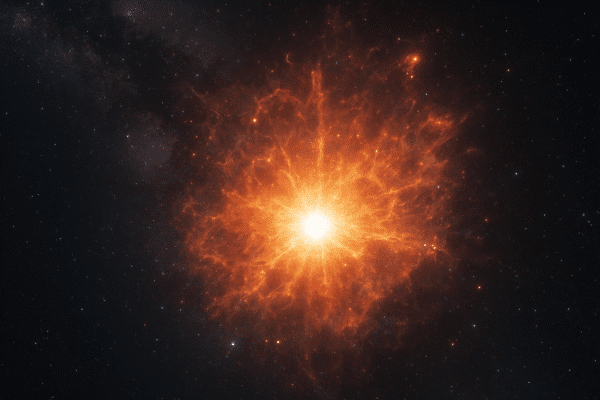
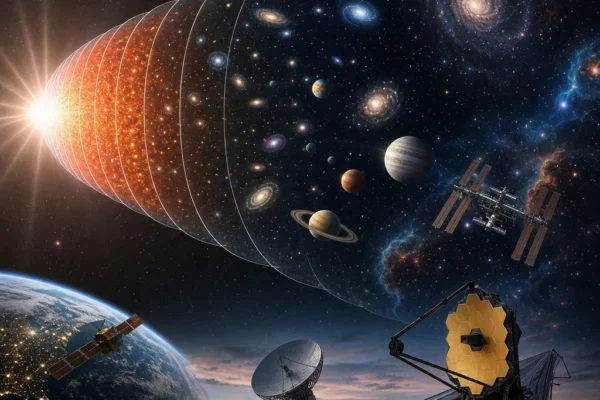
How Was the Universe Formed?

The universe, as far as modern cosmology can tell, was not formed as an explosion into empty space. It began about 13.8 billion years ago in an extremely hot, dense early state, and space itself has been expanding and cooling ever since. Over time, simple particles formed, then atoms, then stars and galaxies, and much…
Read More
Space Facts

Space Facts

Space is not empty, silent nothingness. It is a dynamic environment filled with stars, planets, gas, dust, radiation, magnetic fields, and expanding structure on scales almost beyond intuition. Some space facts are simple and well established, such as the Earth orbiting the Sun, while others come from careful inference using telescopes, spacecraft, spectroscopy, and physics….

Read More

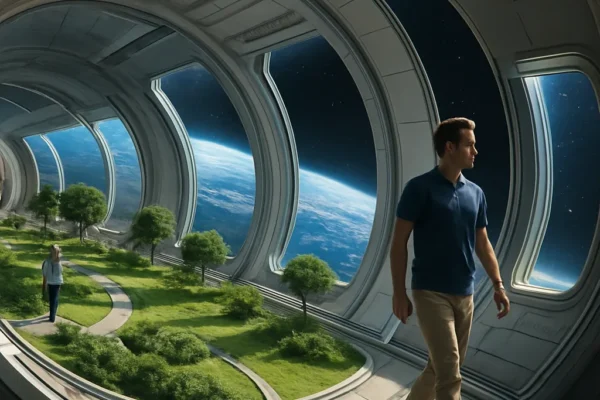
How Space Habitats Could Use Artificial Gravity

The quest to establish permanent human presence beyond Earth has driven researchers to explore creative solutions for mitigating the adverse effects of zero gravity. One promising approach involves the generation of artificial gravity through rotational motion. By simulating gravitational pull, rotating structures can address the physiological and psychological challenges faced by astronauts during extended stays…

Read More

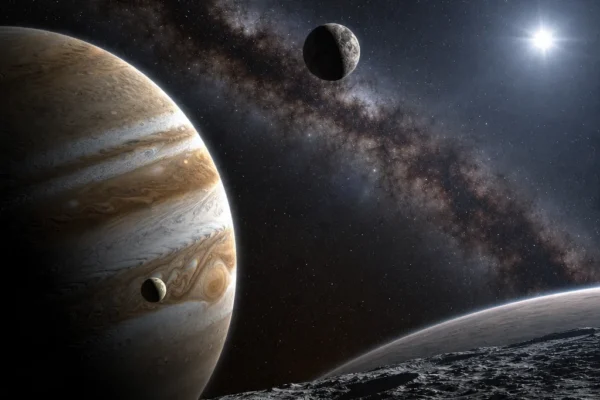
Exploring the Moons of Jupiter: Europa’s Oceanic Secrets

Europa, the enigmatic moon orbiting Jupiter, has captured the imagination of planetary scientists and the public alike. Beneath its bright, fractured exterior lies a global ocean that may harbor the conditions necessary for life. Crisscrossed by linear fractures and chaotic terrains, Europa’s surface hints at a dynamic interior powered by tidal interactions with its parent…

Read More