
Astronomy is the science of everything beyond Earth’s atmosphere: the Moon, planets, stars, galaxies, and the universe as a whole. For beginners, the subject can be understood as a way of asking simple questions with careful tools: What is out there, how does it move, how did it form, and could life exist elsewhere? Modern astronomy combines observation, physics, mathematics, and space technology. It matters because it explains our cosmic environment, reveals Earth’s place in it, and has repeatedly changed how humans understand nature.
Although astronomy often begins with looking at the night sky, it is not just stargazing. It is a quantitative science built on measurements of light, gravity, motion, chemistry, and time. Much of what astronomers know comes not from visiting distant objects directly, but from interpreting signals that reach Earth or instruments in space.
What astronomy studies
Astronomy covers a wide range of objects and processes. Some branches focus on nearby worlds such as the Moon, Mars, or the outer planets. Others study stars, black holes, galaxies, dark matter, and the large-scale structure of the universe.
Several fields overlap with astronomy. Astrophysics uses physics to explain how celestial objects work. Planetary science studies planets, moons, asteroids, and comets. Cosmology examines the origin and evolution of the universe. Astrobiology investigates the conditions that could support life.
| Field | What it studies | Why it matters |
|---|---|---|
| Observational astronomy | Light and other signals from objects in space | Provides the raw evidence for discovery |
| Astrophysics | Physical laws governing stars, gas, radiation, and gravity | Explains how cosmic systems form and evolve |
| Planetary science | Planets, moons, asteroids, comets, and their surfaces and atmospheres | Helps explain Earth and the history of the Solar System |
| Cosmology | The universe on the largest scales | Addresses questions about cosmic origin, age, and structure |
| Astrobiology | Conditions for life beyond Earth | Connects astronomy, biology, chemistry, and planetary environments |
The basic structure of the universe
For a beginner, astronomy becomes easier when organized by scale. Earth is one planet orbiting the Sun. The Sun is one star among hundreds of billions in the Milky Way galaxy. The Milky Way is one galaxy among many billions in the observable universe.
The Solar System contains the Sun, eight planets, dwarf planets, moons, asteroids, comets, and vast amounts of dust and gas. Beyond it lies interstellar space, where stars form from collapsing clouds of gas. Galaxies are bound together by gravity and often contain star clusters, nebulae, and supermassive black holes at their centers.
These structures are not random. Gravity is the main large-scale force shaping the universe. It causes gas clouds to collapse into stars, holds planets in orbit, and binds galaxies together. Other important processes include nuclear fusion inside stars, magnetic fields, shock waves from stellar explosions, and the interaction between radiation and matter.
How astronomers observe the cosmos
Most astronomical knowledge begins with electromagnetic radiation, which includes visible light but also radio waves, infrared, ultraviolet, X-rays, and gamma rays. Different objects emit different kinds of radiation depending on their temperature, composition, and physical processes.
Visible-light telescopes show stars, planets, and galaxies much as the eye would, but far more clearly. Radio telescopes detect cold gas clouds, pulsars, and cosmic background radiation. Infrared observatories can see through dust and reveal star-forming regions. X-ray and gamma-ray telescopes detect energetic events such as black hole accretion, neutron stars, and supernova remnants.
Astronomy is no longer limited to light alone. Scientists also use gravitational waves, first directly detected in 2015, to study colliding black holes and neutron stars. Meteorites provide physical samples from early Solar System material. Spacecraft can measure magnetic fields, particles, atmospheres, and surface composition directly at planets and moons.
How light reveals distance, motion, and composition
One of the most powerful ideas in astronomy is that light carries information. By spreading light into a spectrum, astronomers can identify chemical elements because each element absorbs or emits light at specific wavelengths. This technique, called spectroscopy, reveals the presence of hydrogen, helium, oxygen, carbon, sodium, and many other substances in stars and planetary atmospheres.
Motion can also be measured from light. If an object moves toward us, its light is shifted slightly to shorter wavelengths; if it moves away, the light shifts to longer wavelengths. This is the Doppler effect. It is used to measure stellar motion, galaxy recession, and the wobble of stars caused by orbiting exoplanets.
Distances are harder. For nearby stars, astronomers use parallax, the tiny apparent shift in a star’s position as Earth moves around the Sun. For more distant objects, they use stars of known intrinsic brightness and other well-tested distance indicators. These techniques form the cosmic distance ladder. Each rung has uncertainties, but together they provide a consistent framework for mapping the universe.
| Method | What astronomers measure | What it can tell us |
|---|---|---|
| Imaging | Brightness, shape, position | Structure, variability, orbital motion |
| Spectroscopy | Wavelength patterns in light | Composition, temperature, speed, magnetic effects |
| Parallax | Apparent positional shift | Distance to nearby stars |
| Transit measurements | Small dips in a star’s light | Exoplanet size and orbital period |
| Radial velocity | Periodic Doppler shifts in starlight | Exoplanet mass range and orbit |
| Spacecraft instruments | Particles, fields, chemistry, topography | Direct local measurements of planets and space environments |
The main objects beginners should know
Stars are hot balls of plasma powered by nuclear fusion. In their cores, hydrogen fuses into helium, releasing energy that balances inward gravity. A star’s mass largely determines its lifetime and fate. Some end as white dwarfs, while the most massive may explode as supernovae and leave neutron stars or black holes.
Planets orbit stars and do not produce their own starlight. In our Solar System, the inner planets are rocky, while the outer giant planets are rich in gas and ice. Thousands of exoplanets have also been found around other stars, showing that planetary systems are common.
Galaxies are enormous systems of stars, gas, dust, and dark matter. Spiral galaxies like the Milky Way have rotating disks and arms; elliptical galaxies are rounder and contain less cool gas. Galaxy collisions and mergers are part of normal cosmic evolution.
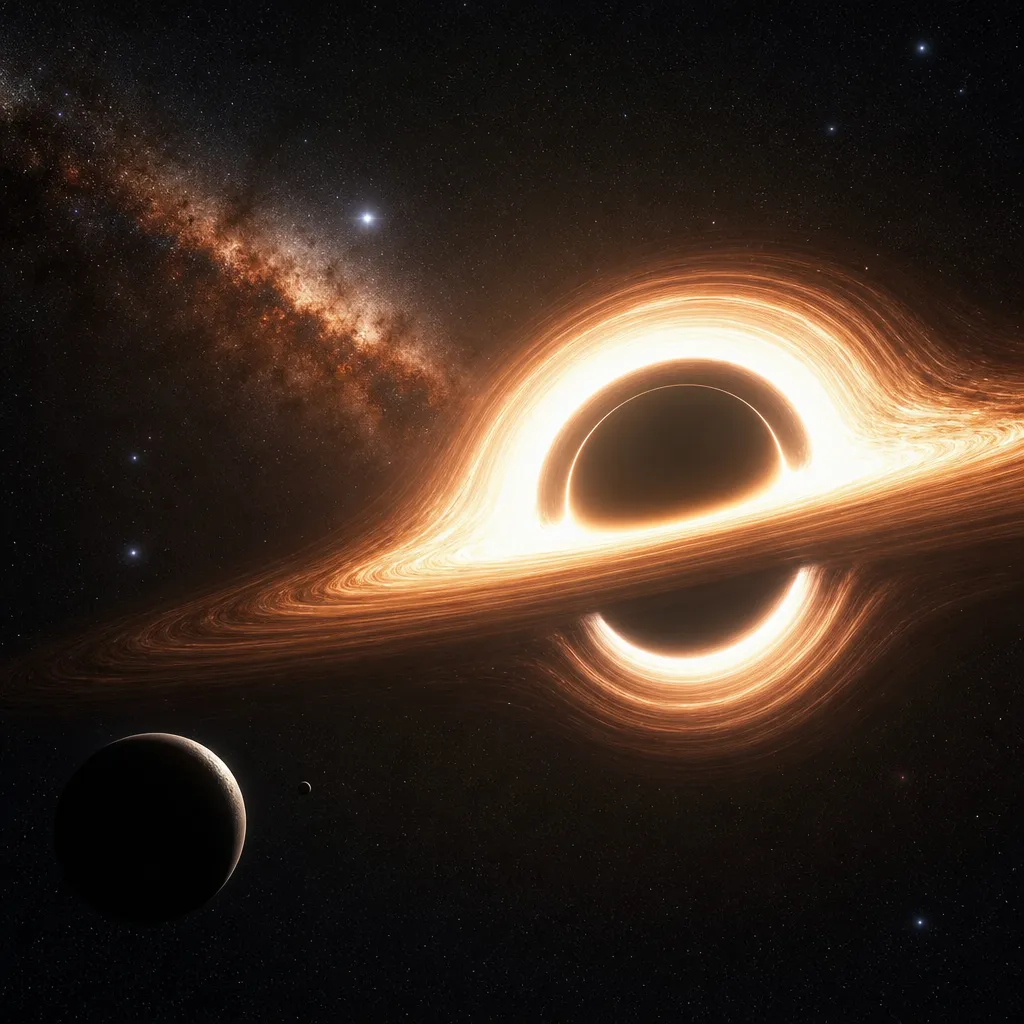
Black holes are regions where gravity is so strong that, within a boundary called the event horizon, not even light can escape. Astronomers infer their presence from effects on nearby matter, from high-energy radiation produced as gas falls inward, and from gravitational waves generated during mergers.
Nebulae are clouds of gas and dust. Some are stellar nurseries where new stars form. Others are the expanding remains of dying stars. These objects are important because they connect stellar birth, life, and death.
Why astronomy matters beyond curiosity
Astronomy is often seen as a pure science, but it has practical value as well. Tracking near-Earth asteroids helps assess impact risk. Monitoring the Sun improves forecasts of space weather, which can affect satellites, radio communication, navigation systems, and electrical infrastructure.
Astronomical research has also driven technology. Sensitive detectors, image-processing methods, precision timing, and techniques for handling large data sets all have uses beyond astronomy. Space telescopes and planetary missions require advances in optics, computing, robotics, and materials science.
Perhaps most importantly, astronomy provides context. It shows that the chemical elements in our bodies were forged in stars. It reveals that planets form naturally around many stars. It also helps answer one of humanity’s oldest questions: whether Earth is typical, unusual, or possibly inhabited alone.
How we know what we know
Scientific knowledge in astronomy is built from multiple independent lines of evidence. For example, the idea that stars produce energy through nuclear fusion is supported by stellar spectra, laboratory nuclear physics, models of stellar structure, and the direct detection of solar neutrinos. No single observation explains everything, but many methods converge.
The age and expansion of the universe are inferred from galaxy redshifts, the cosmic microwave background, and measurements of element abundances. The existence of exoplanets is supported by repeated transits, Doppler signals, direct imaging in some cases, and gravitational microlensing. The geology of Mars comes from orbital images, rover measurements, laboratory analysis of meteorites, and comparisons with Earth processes.
This does not mean all astronomical conclusions are equally certain. Some results are extremely well established, such as Earth orbiting the Sun, the existence of galaxies beyond the Milky Way, and the expansion of the universe. Other topics remain under active study, including the detailed nature of dark matter, dark energy, and how often life-friendly worlds actually become inhabited.
What remains uncertain
Beginners should know that astronomy is full of open questions. Scientists do not yet know what dark matter is made of, even though its gravitational effects are strongly supported by observation. Dark energy, the term used for the cause of cosmic accelerated expansion, is even less well understood.
There are also unsolved questions closer to home. We do not yet know whether life exists anywhere beyond Earth. Some moons, such as Europa and Enceladus, appear to contain subsurface oceans and are considered promising environments for habitability, but habitability is not evidence of life. Mars preserves signs of ancient water, yet no confirmed biosignature has been found there.
Even familiar objects still surprise astronomers. Planetary atmospheres are more dynamic than once thought. Black holes influence galaxy evolution in complex ways. Exoplanets have revealed planetary arrangements very different from our Solar System, forcing scientists to refine formation models.
Getting started as a beginner
The best way to begin is to connect observation with explanation. Learn the phases of the Moon, the motion of planets against the background stars, and the seasonal constellations. These visible patterns introduce the geometry and timing that underlie much of astronomy.
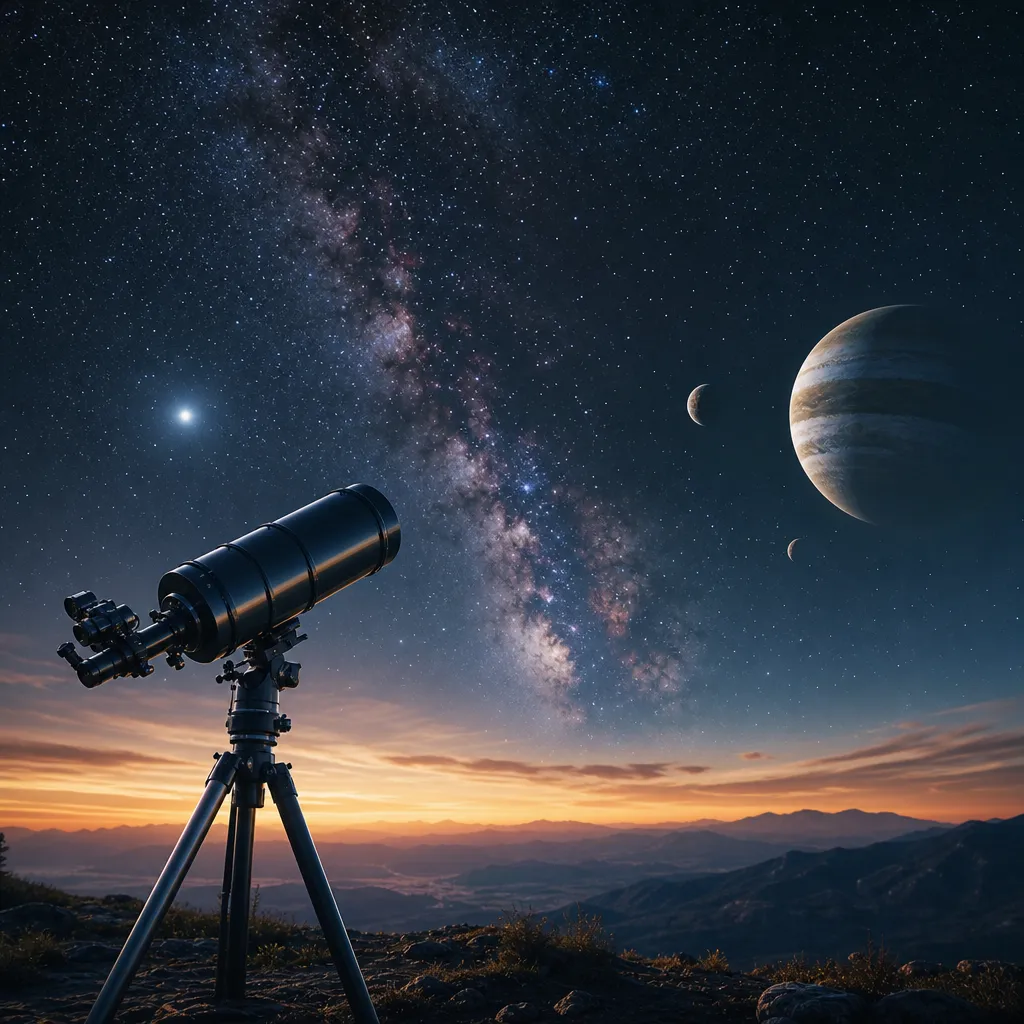
Binoculars can reveal lunar craters, Jupiter’s bright moons, star clusters, and some nebulae. A small telescope expands that experience, but understanding the sky matters more than owning complex equipment. Planetarium software, public observatory nights, and images from professional missions can help bridge the gap between backyard observation and modern research.
Beginners should also become comfortable with a few core ideas: gravity shapes motion, light carries information, atoms leave spectral fingerprints, and physical laws tested on Earth apply throughout the universe. Once those ideas are in place, astronomy becomes less about memorizing objects and more about understanding how the cosmos works.
What is the difference between astronomy and astrology?
Astronomy is a science based on observation, mathematics, and physics. Astrology is a belief system that assigns personal meaning to celestial positions. The methods and claims of astronomy are tested against evidence; astrology is not part of modern science.
How do scientists know what stars are made of?
They analyze starlight using spectroscopy. Each chemical element produces characteristic patterns in a spectrum, allowing astronomers to identify elements present in a star’s outer layers and infer physical conditions such as temperature.
Can astronomy be done only from space?
No. Much astronomy is done from the ground with optical, radio, and other telescopes. Space observatories are important because Earth’s atmosphere blocks or distorts parts of the electromagnetic spectrum, especially ultraviolet, X-rays, and much of the infrared.
Can beginners observe planets and galaxies with simple equipment?
Yes. The Moon, bright planets, star clusters, and some galaxies can be seen with the unaided eye, binoculars, or small telescopes under dark skies. Faint galaxies and detailed planetary features are easier with better instruments and good observing conditions.
How are planets around other stars discovered?
Most are found by the transit method, which detects tiny dips in a star’s brightness, or by radial velocity, which measures a star’s motion caused by an orbiting planet. Other methods include direct imaging, gravitational microlensing, and astrometry.
Is there evidence of life beyond Earth?
No confirmed evidence of extraterrestrial life has been found. Scientists have identified potentially habitable environments and interesting chemical clues, but none currently demonstrate life.
Why does astronomy use so many different kinds of telescopes?
Different wavelengths reveal different physical processes. Visible light shows stars and reflected sunlight, radio waves trace cold gas and pulsars, infrared reveals dust-hidden regions, and X-rays expose high-energy phenomena such as black hole accretion and supernova remnants.
What are the biggest unknowns in astronomy today?
Major open questions include the nature of dark matter and dark energy, how the first stars and galaxies formed, how common life is in the universe, and how planetary systems develop such a wide range of architectures.
Sources
- NASA, Imagine the Universe and Solar System Exploration resources
- European Space Agency, Science & Exploration
- National Radio Astronomy Observatory, Introduction to Electromagnetic Spectrum and Radio Astronomy