What Is Space?

What Is Space?

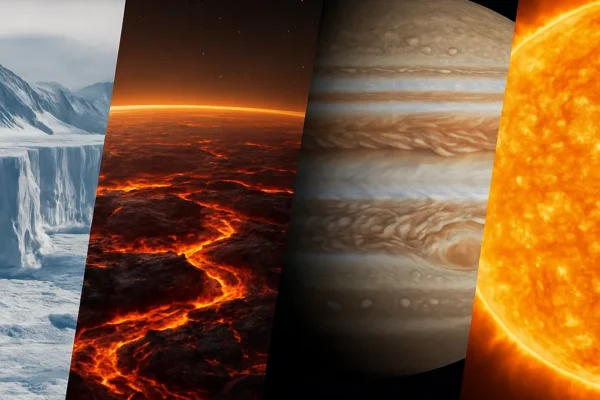
Space is the vast physical realm beyond Earth’s atmosphere, but in science it is more than “empty nothingness.” It contains matter, radiation, magnetic fields, and the structure of spacetime itself. Space begins gradually rather than at a perfectly sharp boundary, and on the largest scales it includes everything from the region around Earth to galaxies,…
Read More
Astronomy for Beginners

Astronomy for Beginners

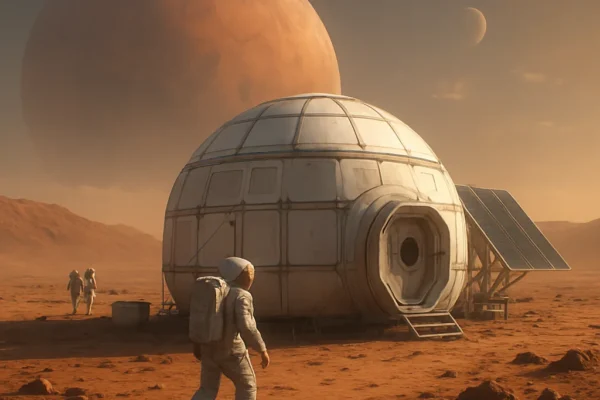
Astronomy is the science of everything beyond Earth’s atmosphere: the Moon, planets, stars, galaxies, and the universe as a whole. For beginners, the subject can be understood as a way of asking simple questions with careful tools: What is out there, how does it move, how did it form, and could life exist elsewhere? Modern…

Read More
Solar System Facts

Solar System Facts

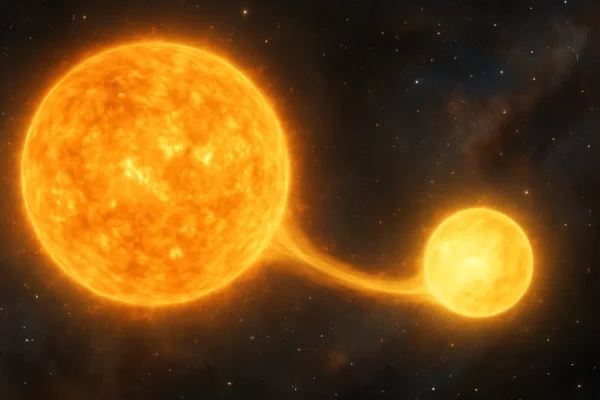
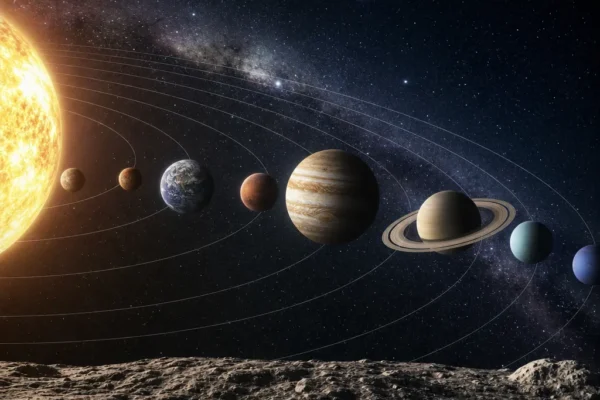
The Solar System is the planetary system centered on the Sun, a middle-aged star whose gravity holds together planets, dwarf planets, moons, asteroids, comets, dust, and gas. It formed about 4.6 billion years ago from a collapsing cloud of gas and dust, and its present structure preserves a record of that early history. Studying it…

Read More

What Happens When Stars Die?

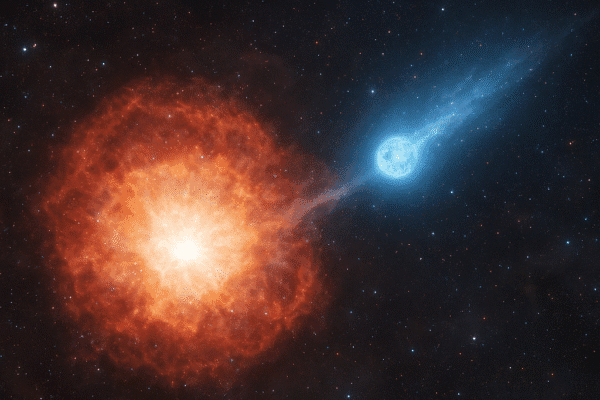
The universe is a vast tapestry woven from the birth and death of countless stars. Every star’s journey from a glowing nursery to its final, often spectacular demise shapes the cosmos around it. Understanding what happens when stars die reveals not only the fate of these celestial beacons but also the processes that seed galaxies…

Read More

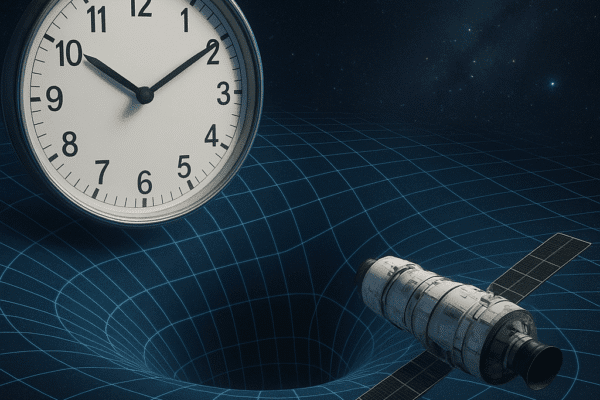
The Physics of Time Dilation in Space

Exploring the vast reaches of the cosmos reveals strange phenomena that challenge our everyday experience. Among the most captivating is the warping of time itself. When spacecraft travel at high speeds or pass near massive celestial bodies, clocks tick at different rates—an effect known as time dilation. This phenomenon emerges naturally from Einstein’s theories and…

Read More

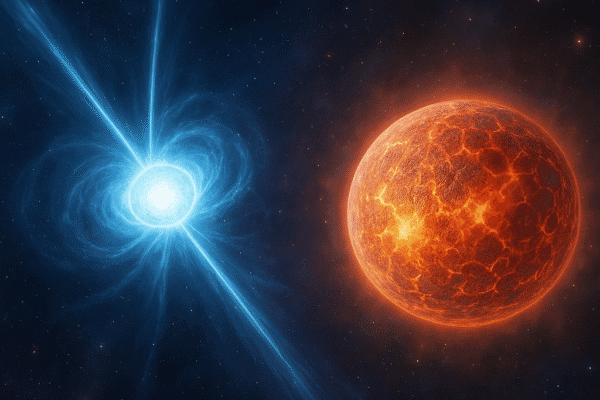
The Fascinating World of Pulsars and Neutron Stars

The cosmos is home to some of the most extraordinary objects ever observed. Among these, neutron stars and their rapidly spinning counterparts, pulsars, stand out as nature’s most compact and energetic laboratories. Born from cataclysmic supernova explosions, these remnants carry within them the blueprint of fundamental physics under the most extreme conditions. From the staggering…

Read More