
The universe is a vast tapestry woven from the birth and death of countless stars. Every star’s journey from a glowing nursery to its final, often spectacular demise shapes the cosmos around it. Understanding what happens when stars die reveals not only the fate of these celestial beacons but also the processes that seed galaxies with new material. This exploration uncovers how nuclear fusion, gravity, and exotic physics create the life cycles governing stellar evolution and drive some of the most dramatic phenomena we observe in the night sky.
Life Cycle and Nuclear Fusion
From Protostar to Main Sequence
Stars begin their lives in cold, dense clouds of gas and dust. When gravity pulls material inward, a protostar forms, heating the core until hydrogen nuclei collide and fuse into helium. This quantum degeneracy of forces marks the birth of a main sequence star, a stage where it spends the majority of its lifetime. The star’s core remains stable thanks to the delicate balance between the outward pressure from thermal energy and the inward pull of gravity. During this phase, a star shines steadily, forging elements in its heart.
The Balance of Forces
On the main sequence, a star’s fate is determined primarily by its mass. Low-mass stars burn their fuel leisurely, while massive stars consume hydrogen at a furious pace. This interplay dictates the star’s luminosity, temperature, and surface characteristics. Solar-mass stars like our Sun maintain equilibrium for billions of years, whereas the most massive stars may exhaust their fuel in mere millions of years, racing faster toward dramatic endpoints.
Paths of Stellar Death
Fading into White Dwarfs
When a low- to intermediate-mass star runs out of hydrogen, it begins fusing helium into heavier elements, expanding into a red giant. Eventually, the outer layers drift away, creating a glowing planetary nebula, while the remnant core settles into a dense white dwarf. Supported by electron degeneracy pressure, this compact object slowly cools over eons. Although no longer generating energy through fusion, a white dwarf remains visible by radiating stored heat.
Explosive Supernovae
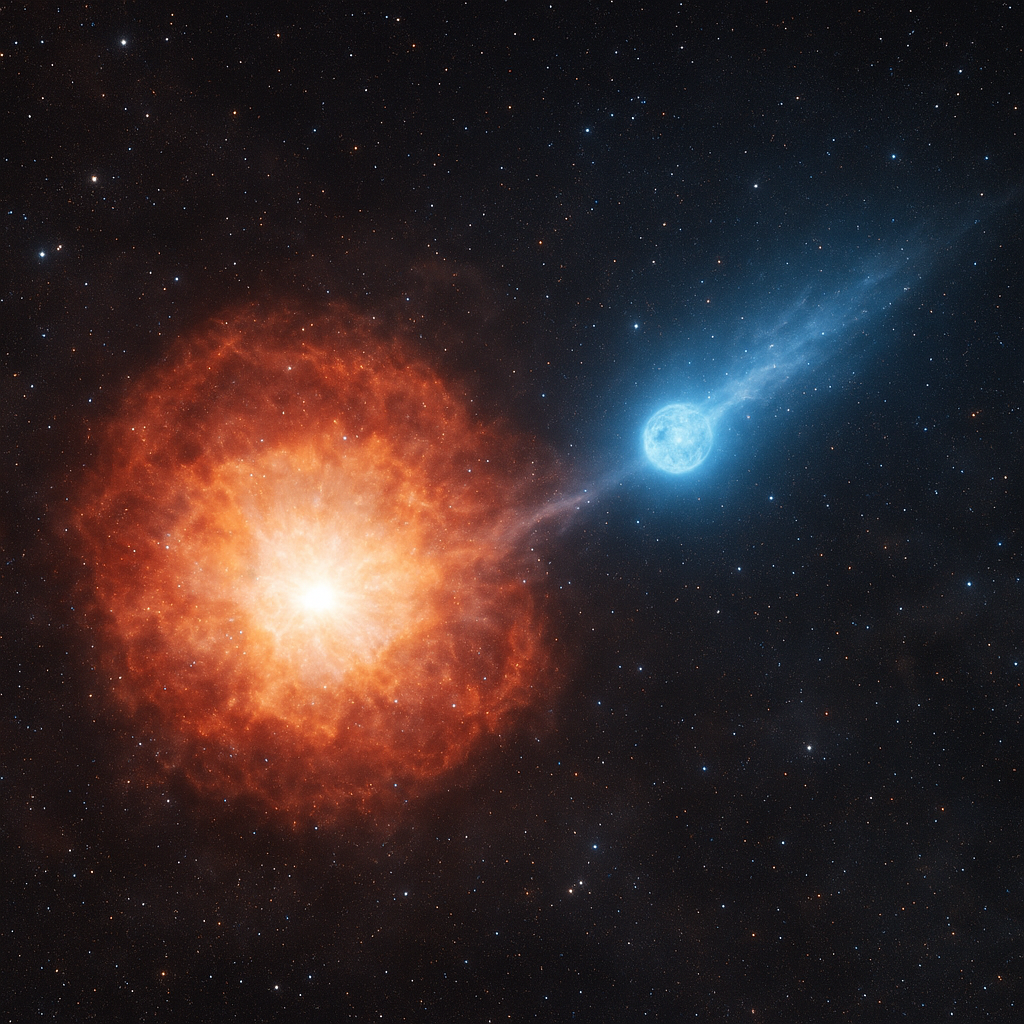
Massive stars face a more violent fate. After fusing elements up to iron, the energy output can no longer support the star against gravitational collapse. In a rapid core collapse, the core implodes and rebounds, unleashing a supernova shock wave that blasts the star’s outer layers into space. This titanic explosion briefly outshines entire galaxies and disperses a wealth of synthesized elements into the interstellar medium.
Exotic End States
Neutron Stars and Pulsars
If the stellar core left after a supernova is between about 1.4 and 3 times the mass of the Sun, it compresses into an ultradense neutron star. Here, protons and electrons merge to form neutrons, creating an object of remarkable density—one teaspoon would weigh billions of tons on Earth. Many neutron stars become pulsars, spinning rapidly and emitting beams of radiation that sweep across the cosmos like cosmic lighthouses.
Black Holes and Beyond
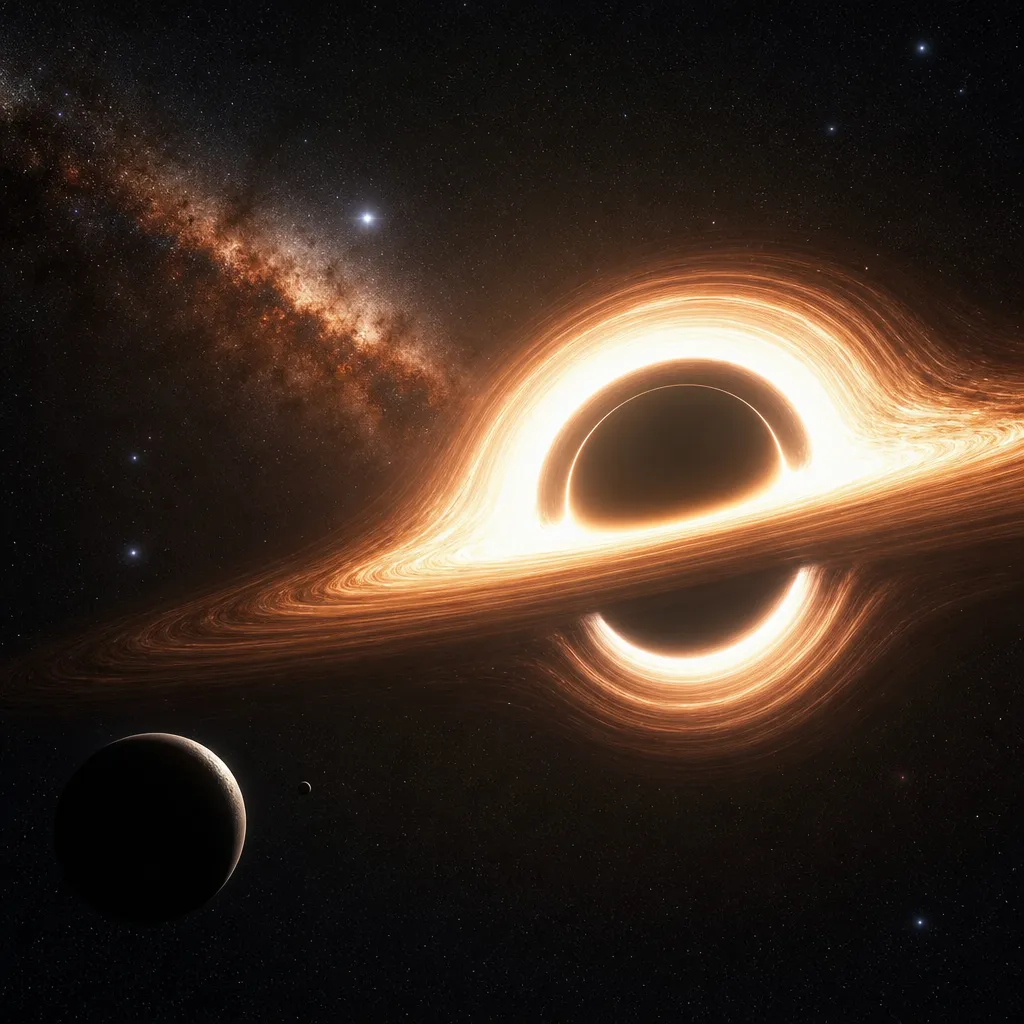
Cores exceeding roughly three solar masses collapse into black holes, points of infinite density from which not even light can escape. Surrounding gas and dust spiral into an event horizon, heating up and emitting intense X-rays. Black holes influence their surroundings through powerful gravitational fields and can merge, generating ripples in spacetime known as gravitational waves.
Cosmic Legacy of Dying Stars
Production of Heavy Elements
Stellar deaths play a crucial role in the chemical enrichment of the universe. Supernovae and neutron star mergers forge and scatter heavy elements like gold, uranium, and platinum. These ingredients later become part of new stars, planets, and ultimately life itself. The carbon in our cells and the iron in our blood owe their existence to generations of ancient, exploded stars.
Influence on Galactic Evolution
The energy and matter expelled by dying stars shape the structure of galaxies. Shock waves from supernovae trigger waves of star formation, while stellar winds carve cavities in interstellar clouds. Over billions of years, this feedback regulates the growth of galactic arms and influences the formation of star clusters. Observations of supernova remnants and nebulae reveal ongoing cycles of creation and destruction that drive the dynamic evolution of the galaxy.
- Protostar collapse and ignition
- Main sequence stability
- Red giant expansion
- White dwarf cooling
- Core-collapse supernova
- Neutron star and black hole formation
By tracing the life and death of stars, astronomers piece together a compelling narrative of cosmic transformation. Each stellar demise writes a new chapter in the ever-unfolding story of the cosmic tapestry.