


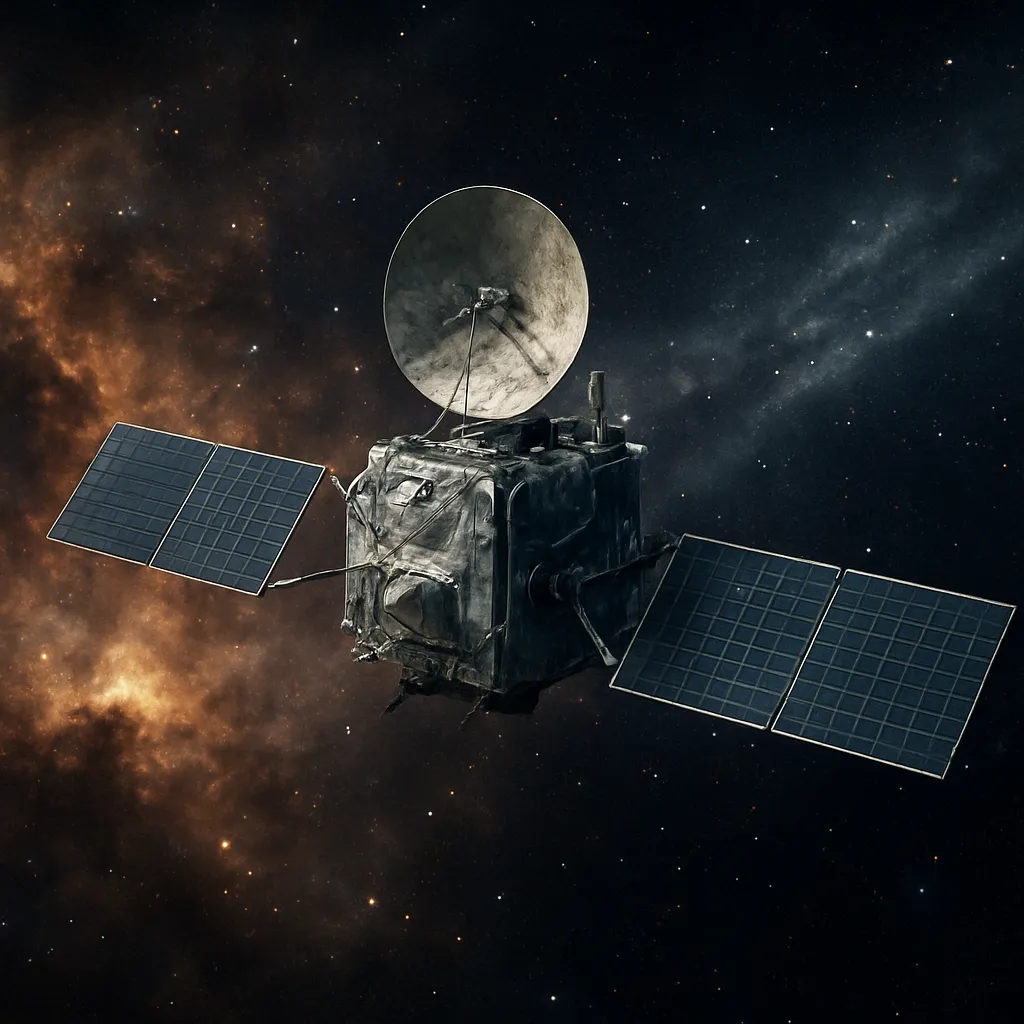
Ever since explorers first pointed telescopes skyward, humanity has dreamed of sending emissaries to the far reaches of the cosmos. Space probes must endure a relentless onslaught of hazards—from searing solar radiation to the silent hail of micrometeoroids—yet they return priceless data about our solar system and beyond. The secret to their survival lies in cutting-edge engineering, meticulous material selection, and clever redundancy schemes that transform fragile instruments into robust pioneers of discovery.
Designing for Radiation Resistance
Outside Earth’s magnetosphere, probes are exposed to charged particles from the Sun and cosmic rays from distant galaxies. This radiation can disrupt electronics, degrade sensors, and even alter the chemical composition of materials.
Radiation-Hardened Electronics
Standard consumer microchips cannot withstand high levels of charged particles. Instead, space missions rely on silicon devices manufactured through specialized processes:
- Enhanced oxide layers to reduce charge buildup.
- Guard rings around transistors to prevent latch-up.
- Redundant circuitry to isolate and correct single-event upsets.
Shielding Strategies
Physical barriers like aluminum or tantalum can attenuate high-energy particles. Designers often layer materials to create graded shields that slow incoming protons and electrons before they reach sensitive components. Innovative concepts, such as electrostatic deflection fields and hydrogen-rich polymers, are under development to boost protection without adding prohibitive mass.
Thermal Control Strategies
In space, temperatures swing from blazing sunlight to frigid darkness. A probe orbiting Mercury may face +430°C on its sunlit side and –180°C in the shade. Maintaining operational temperatures is critical for batteries, gyros, and scientific instruments.
Passive Thermal Regulation
- Multi-layer insulation (MLI): Thin sheets of aluminized Mylar reflect infrared heat and reduce radiative losses.
- Thermal coatings: Surface paints or foils with tailored emissivity control heat absorption and emission.
- Heat pipes: Capillary-driven fluid loops that passively move heat from hot zones to radiators.
Active Thermal Systems
For missions with stringent temperature requirements, active elements become indispensable:
- Heaters: Resistive elements powered on demand to keep instruments above their minimum operating temperatures.
- Louvers: Mechanisms that open or close to regulate heat rejection through adjustable radiative surfaces.
- Pumped fluid loops: Mechanically driven circulation of coolant provides precise temperature control, though at the expense of added complexity.
Shielding Against Micrometeoroids and Debris
Even tiny particles, traveling at tens of kilometers per second, can wreak havoc on a spacecraft. A fleck of paint can puncture a radiator, while a larger meteoroid might damage solar panels.
Whipple Shields
The Whipple shield is a celebrated solution in which a thin outer bumper breaks up an incoming particle, then a standoff distance allows the resulting debris cloud to disperse before striking the main shell. Typical layouts include:
- Outer bumper of aluminum or Nextel ceramic fabric.
- Spacer to allow debris dispersion.
- Inner rear wall to absorb residual fragments.
Self-Healing Materials
Emerging research focuses on polymers capable of sealing small punctures autonomously. Encapsulated microcapsules rupture upon impact, releasing monomers that polymerize and fill holes. Though still in the experimental stage, such innovation promises to reduce the risk of gradual pressure loss in crewed modules or coolant leaks in robotic explorers.
Communication and Navigation in Deep Space
As probes venture farther, maintaining contact with Earth and precisely knowing their position becomes increasingly difficult. Long signal delays, weak transmissions, and limited power availability all complicate mission operations.
Deep Space Network and Antenna Design
The Deep Space Network (DSN) employs giant parabolic dishes—up to 70 meters in diameter—to send and receive faint signals. Onboard, probes use high-gain antennas with rigid reflectors or deployable mesh dishes, engineered for low mass and high pointing accuracy. Key features include:
- Low-noise amplifiers to boost received signals.
- Beam-steering mechanisms for tracking Earth across the sky.
- Redundant transceivers to guard against single-point failures.
Autonomous Navigation
In the outer solar system, round-trip light times can exceed hours. Real-time control from Earth is impossible. Probes must therefore perform autonomous corrections using onboard star trackers, sun sensors, and inertial measurement units (IMUs). Techniques include:
- Optical navigation algorithms that compare images of background stars or planets to preloaded catalogs.
- Doppler and ranging measurements to refine velocity and distance estimates.
- Kalman filters that fuse multiple sensor inputs to compute optimal trajectory updates.
Propulsion and Power Systems for Long-Duration Missions
Surviving cosmic conditions often means reaching distant targets and maintaining operations over decades. Propulsion and power systems must therefore be both reliable and efficient.
Electric and Ion Propulsion
Ion thrusters, which accelerate xenon ions using electric fields, provide high specific impulse and allow gradual trajectory shaping with minimal propellant mass. Their benefits include:
- Continuous low-thrust capability for deep-space maneuvers.
- Extended operational lifetimes; some thrusters have accumulated tens of thousands of hours in flight.
- Integration with solar or nuclear power sources to supply the required electrical energy.
Radioisotope Thermoelectric Generators
Beyond the orbit of Mars, solar irradiance drops sharply. Many outer-solar-system missions utilize radioisotope power. Plutonium-238 decays to produce heat, which is converted into electricity via thermocouples. RTGs are prized for:
- Stable output over decades, unimpeded by dust accumulation or distance from the Sun.
- No moving parts, resulting in high reliability and low maintenance.
- Compact packaging that simplifies integration with spacecraft payloads.
Redundancy and Fault Management
No matter how well designed, components can and will fail. Spacecraft employ multiple layers of backup systems and onboard diagnostics to handle unexpected glitches.
Hardware and Software Redundancy
- Dual or triple-redundant flight computers with voting logic to override a malfunctioning unit.
- Cross-strapped power distribution to reroute electricity around a damaged bus.
- Fail-safe software routines that isolate and reboot suspect subsystems.
Health Monitoring and Recovery
Continuous telemetry streams allow engineers on Earth to track voltages, temperatures, and performance metrics. When anomalies arise, probes may switch to safe modes—minimal operations that conserve power and protect hardware—until ground controllers can assess and command corrective actions. This strategy of redundancy and active fault management has enabled missions like Voyager, Cassini, and New Horizons to exceed their planned lifetimes by decades.
Materials Science at the Frontier
Advances in metallurgy, ceramics, and composites are unlocking new capabilities for space probes. Specialized alloys resist embrittlement under high radiation flux, while carbon-carbon composites offer unmatched strength-to-weight ratios. Future probes might deploy inflatable structures coated with graphene for inflatable habitats or large aperture antennas.
Adaptive Structures
Research into shape-memory alloys and piezoelectric actuators promises spacecraft that can change shape in response to temperature or electric stimuli. Such adaptive systems could self-right solar panels to face the Sun or modify radiator orientation for optimal heat rejection.
Biomimetic Coatings
Inspired by lotus leaves and desert beetles, engineers are developing surfaces that repel dust and ice, keeping solar arrays clean and optical sensors clear. These coatings combine micro-texturing with low-surface-energy materials to achieve passive self-cleaning properties.
Conclusion
Space probes are marvels of modern engineering, their survival hinging on a delicate balance of innovation, rigorous testing, and bold material science. As humanity pushes against the boundaries of our solar system and beyond, the lessons learned from these mechanical pioneers will shape the next generation of interstellar explorers—ensuring they, too, can endure the cold, the radiation, and the unknown perils of the cosmic frontier.