

Exploring the depths of the cosmos reveals some of the most remote and enigmatic objects known to humankind. From ancient galaxies glimmering in the first few hundred million years after the Big Bang to titanic quasars blazing with unimaginable power, these distant beacons challenge our understanding of space, time, and the fundamental laws of physics. Observing them requires ingenuity, patience, and some of the most advanced instruments ever built. Yet each discovery brings us closer to unraveling the tapestry of the universe’s origin and evolution.
The Hunt for the Farthest Galaxies
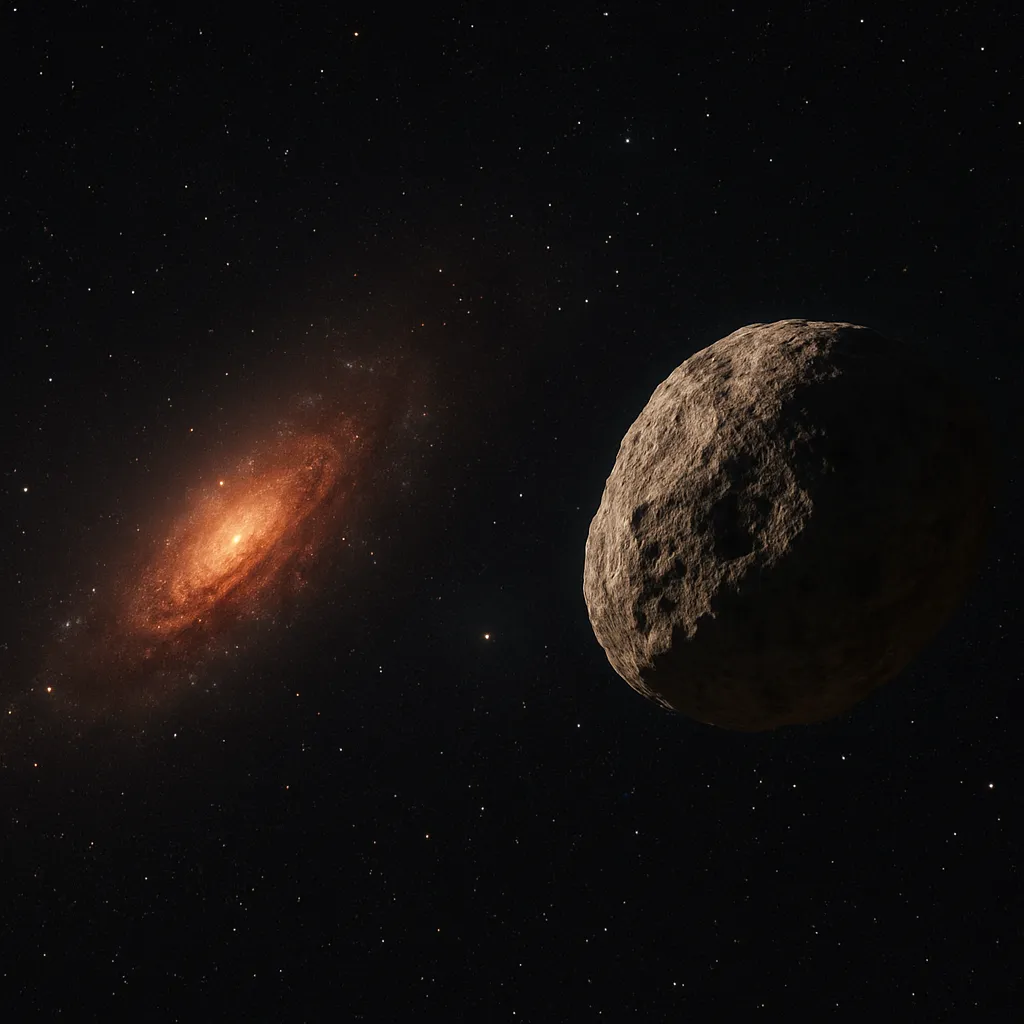
Astronomers have identified galaxies at redshifts exceeding z ≈ 11, placing them less than 400 million years after the Big Bang. These primordial systems are seen when the universe was a tiny fraction of its current age, offering direct insight into early cosmology. Photons emitted by young, hot stars in these galaxies travel across more than 13 billion light-years before reaching Earth, stretched by cosmic expansion into the infrared part of the spectrum. Detecting such faint smudges requires pushing telescopes to their absolute limits.
Techniques and Instruments
Two key methods dominate the search for the most distant galaxies:
- Dropout Surveys: By comparing images in multiple filters, teams spot objects that “drop out” in ultraviolet or optical bands due to absorption by intergalactic hydrogen.
- Spectroscopic Confirmation: Following up candidates with long-exposure spectra reveals characteristic emission lines (e.g., Lyman-α) whose shift directly measures distance.
Ground-based observatories equipped with adaptive optics and space telescopes free from atmospheric interference work in concert. The Hubble Space Telescope pioneered deep-field campaigns, while the JWST (James Webb Space Telescope) has since shattered distance records by capturing galaxies at z > 13. Each new data release sparks excitement as astronomers refine models of galaxy formation, sometimes uncovering unexpectedly massive structures that defy simulations.
Stellar Beacons from the Early Universe
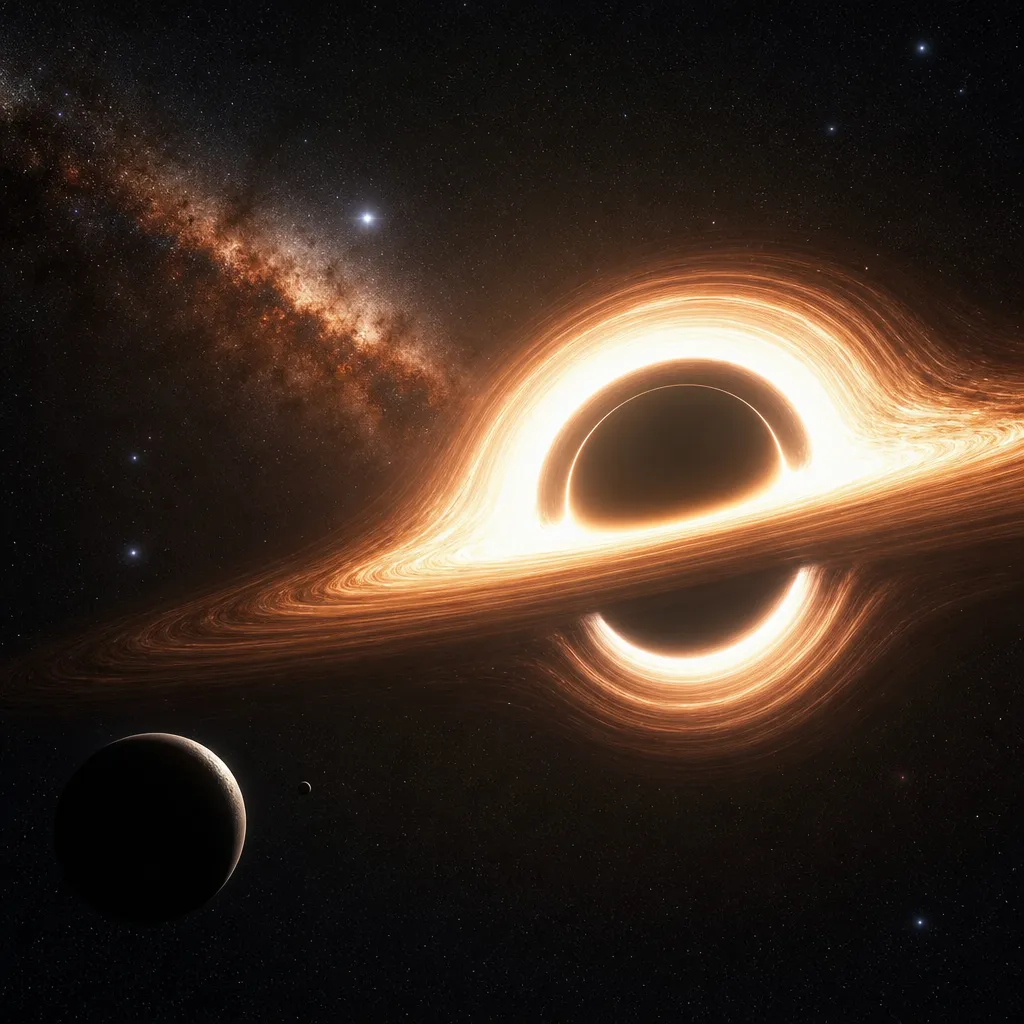
Beyond galaxies, individual exploding stars and active galactic nuclei serve as lighthouses piercing the cosmic darkness. Quasars—supermassive black holes accreting gas—shine with the luminosity of trillions of suns, visible across vast epochs. The record-holder quasar, at z ≈ 7.6, reveals that billion-solar-mass black holes existed when the universe was barely 700 million years old, raising questions about rapid black hole growth mechanisms.
- Gamma-Ray Bursts (GRBs): Brief but intensely bright, GRBs can outshine entire galaxies. A handful have been detected at z > 8, providing time-stamped probes of the interstellar medium in the first galaxies.
- Lyman-α Emitters: Young, star-forming galaxies often emit strong Lyman-α photons. Narrowband surveys hunt these signals, mapping the reionization era when neutral hydrogen became ionized by early stars and black holes.
Each detection of a high-redshift quasar or GRB refines our understanding of dark energy and the pace of structure formation. Observations of their host galaxies, through follow-up imaging and spectroscopy, measure stellar mass, chemical enrichment, and dust content in the universe’s infancy.
Challenges of Detecting Ancient Light
Several obstacles stand in the way of pushing cosmic frontiers:
- Cosmic Dimming: Surface brightness decreases with the fourth power of (1 + z), making distant objects intrinsically hard to see.
- Intergalactic Absorption: Neutral hydrogen clouds absorb ultraviolet photons, obscuring early sources and complicating spectroscopic confirmation.
- Foreground Contamination: Nearby faint stars and low-redshift galaxies can masquerade as high-redshift candidates, demanding rigorous validation.
To overcome these hurdles, astronomers employ deep-field strategies, stacking images over dozens or even hundreds of hours. They also use gravitational lensing—nature’s magnifying glass—to amplify distant sources. Massive galaxy clusters bend spacetime, creating multiple, distorted images of background galaxies that would otherwise be beyond detection thresholds.
The Role of Cutting-Edge Telescopes
Observational breakthroughs often coincide with new technological leaps. The Hubble Ultra Deep Field revealed thousands of faint galaxies in a tiny patch of sky, laying the groundwork for further exploration. More recently, the JWST has delivered unprecedented sensitivity at infrared wavelengths, unveiling galaxies at z ≈ 14 and possibly beyond.
Future facilities promise to extend these achievements:
- The Extremely Large Telescope (ELT), with a 39-meter primary mirror, will conduct detailed spectroscopy of the faintest galaxies and quasars.
- The Square Kilometre Array (SKA) will map neutral hydrogen across cosmic time, tracing large-scale structure and offering indirect distance measurements for millions of galaxies.
- Next-generation X-ray observatories aim to detect accreting black holes in the early universe, probing the high-energy universe at high redshift.
As instrumentation advances, so too does our theoretical framework. Sophisticated simulations now incorporate feedback from supernovae and black hole jets, predicting the distribution and properties of the earliest cosmic inhabitants. Observers test these models by relentlessly hunting for ever more distant objects, each a milestone in our quest to chart the universe’s uncharted stretches.