
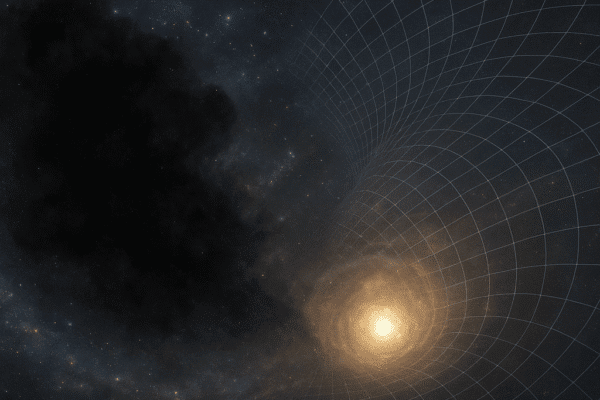
The Physics Behind Gravitational Lensing

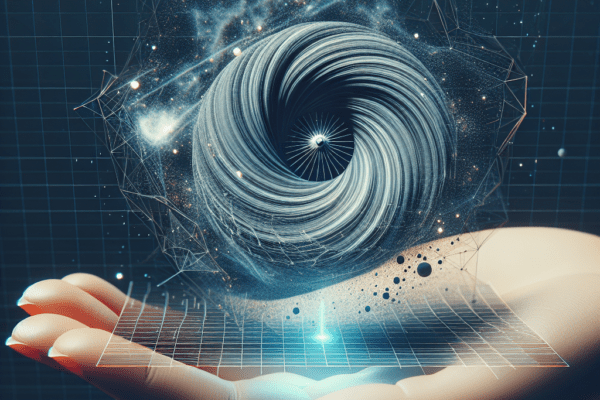
Gravitational lensing arises when massive objects cause a curvature in spacetime, deflecting light from distant sources. This phenomenon, predicted by Einstein’s theory of General Relativity, has become one of the most powerful tools in cosmology and astrophysics. By studying these cosmic distortions, astronomers can map the distribution of dark matter, magnify faint galaxies, and probe…
Read More

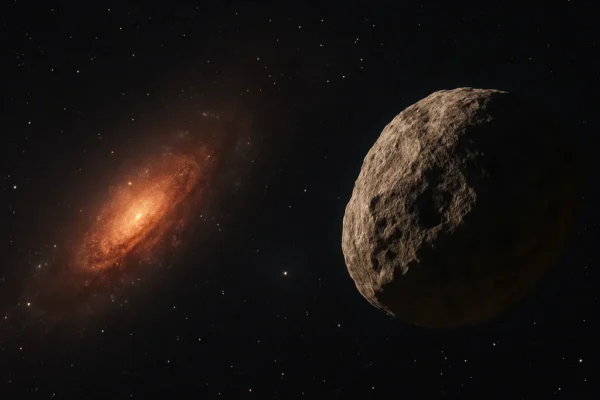
The Most Distant Objects Ever Discovered

Exploring the depths of the cosmos reveals some of the most remote and enigmatic objects known to humankind. From ancient galaxies glimmering in the first few hundred million years after the Big Bang to titanic quasars blazing with unimaginable power, these distant beacons challenge our understanding of space, time, and the fundamental laws of physics….

Read More

Could Wormholes Be the Key to Faster Space Travel?

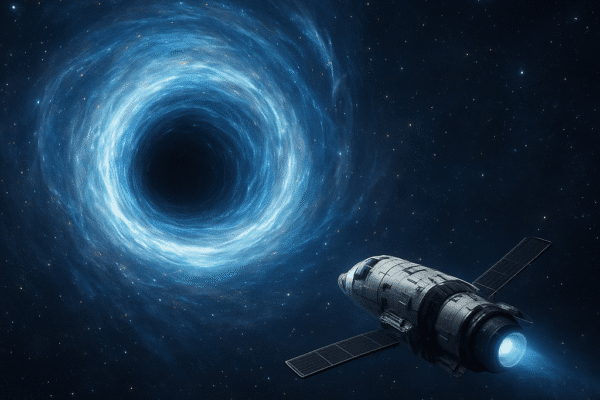
Space exploration has perpetually pushed the boundaries of human imagination, inspiring theories that span from the practical to the seemingly impossible. Among these concepts, wormholes stand out as one of the most captivating solutions for achieving faster travel across the cosmos. As corridors through spacetime, they promise shortcuts between distant regions, offering potential avenues to…

Read More
Mapping Dark Matter with Gravitational Lensing

Mapping Dark Matter with Gravitational Lensing

Mapping dark matter with gravitational lensing is a groundbreaking approach that has revolutionized our understanding of the universe’s most elusive component. Dark matter, which does not emit, absorb, or reflect light, remains invisible to traditional telescopes. However, its presence can be inferred through its gravitational effects on visible matter, radiation, and the large-scale structure of…

Read More