

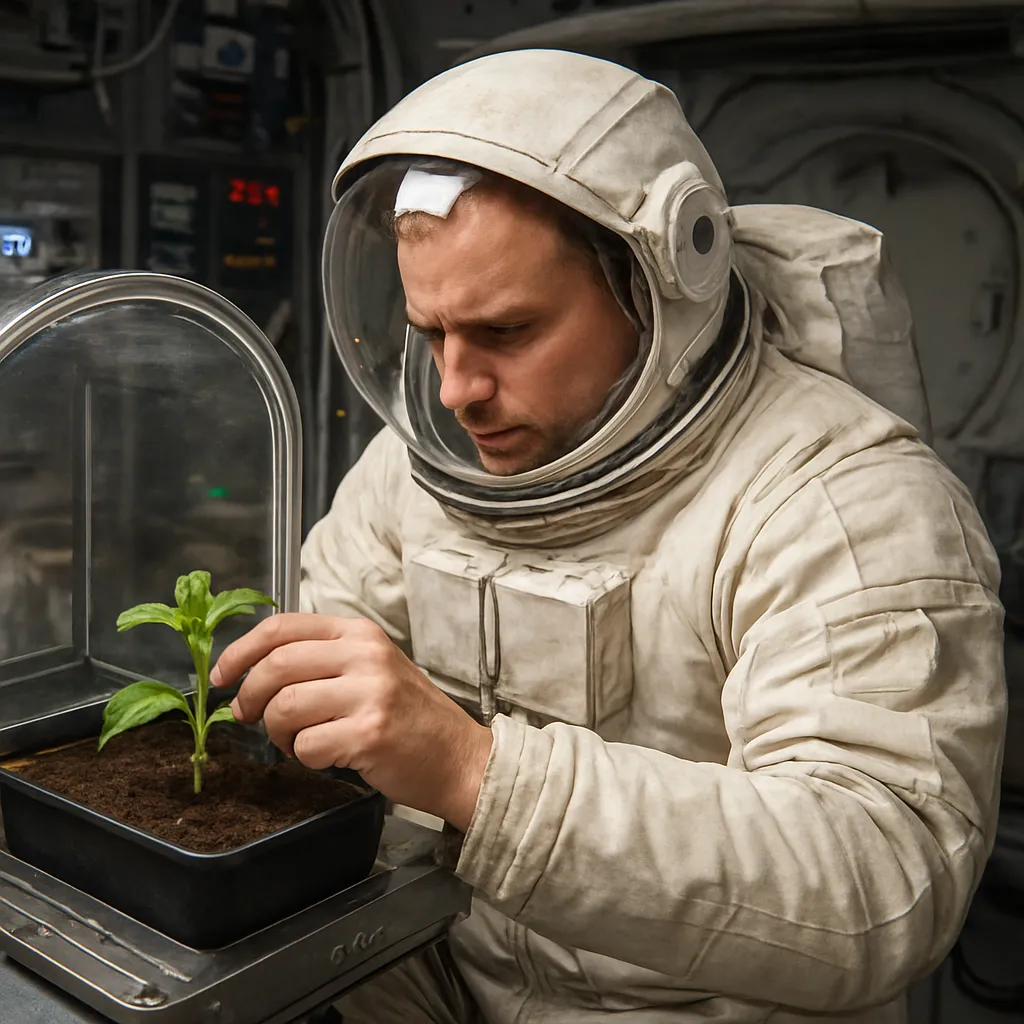
Growing plants beyond Earth’s atmosphere represents one of the most complex and exciting frontiers in modern space exploration. As humanity extends its reach into the cosmos, the ability to cultivate vegetation aboard spacecraft and off-world habitats becomes essential for food production, life support, and psychological well-being. This article examines key challenges and breakthroughs in extraterrestrial agriculture, exploring the interplay of environmental limitations, cutting-edge technologies, and biological adaptations that define the quest to make spacefarms a reality.
Environmental Constraints
The space environment differs drastically from terrestrial conditions. Fundamental factors such as gravity, atmospheric composition, and radiation levels impose severe restrictions on plant growth. Understanding and mitigating these constraints lies at the heart of successful space cultivation.
Microgravity Effects
In microgravity, fluid distribution within plant tissues changes drastically. Without the consistent downward pull of Earth’s gravity, water and nutrients fail to penetrate the root zone uniformly. This phenomenon disrupts root architecture and impairs photosynthesis efficiency. Researchers have observed:
- Abnormal root branching patterns that struggle to anchor plants.
- Altered cellular signaling networks governing growth direction.
- Uneven moisture distribution, leading to both drought-like and waterlogged conditions within the same root system.
Cosmic Radiation
High-energy particles from solar flares and galactic cosmic rays bombard spacecraft, damaging DNA and cellular structures. Astronauts and plants alike face the risk of radiation-induced mutations. Efforts to shield crops include:
- Layering water jackets around growth modules as a radiation barrier.
- Embedding regolith-like material to simulate lunar or Martian soils.
- Implementing magnetic or plasma-based shields under development by NASA.
Atmospheric Composition and Pressure
Closed-loop life-support systems regulate oxygen, carbon dioxide, and humidity for both humans and plants. Maintaining an environment within precise ranges is critical:
- CO₂ levels must be sufficient to drive efficient photosynthesis without inhibiting crew health.
- Relative humidity requires fine-tuning to prevent microbial overgrowth.
- Pressurization systems must ensure seal integrity, as even minor leaks can jeopardize an entire habitat.
Technological Innovations
Engineers and biologists collaborate to design systems that overcome space’s harshness. From hydroponic modules to robotic tenders, innovations focus on automating plant care and optimizing resource use.
Hydroponics and Aeroponics
Soil poses logistical challenges in microgravity, including particle dispersion and contamination risks. As a result, soil-less cultivation methods dominate:
- Hydroponics supplies nutrient-rich solutions directly to root mats.
- Aeroponics mists roots with fine droplets, maximizing gas exchange.
- Closed-loop water recycling systems recover up to 90% of irrigation losses.
Automated Monitoring and Robotics
Continuous observation of plant health is vital where crew time is limited. Advanced sensors and robotic arms perform tasks like:
- Measuring leaf chlorophyll fluorescence to detect stress.
- Adjusting nutrient mix concentrations in real time.
- Pruning and pollinating flowers through precise mechanical actuators.
Modular Growth Chambers
Adaptive modules allow for scalable experiments and quick reconfiguration. Key features include:
- Interchangeable LED arrays tuned to specific light spectra.
- Flexible membrane panels to adjust chamber volume.
- Embedded AI algorithms that learn optimal growing protocols.
Biological Responses and Adaptations
Plants exhibit remarkable adaptability but also unique responses to space conditions. Investigating these responses deepens our understanding of life’s resilience and informs crop selection for future missions.
Genomic and Epigenetic Changes
Exposure to microgravity and radiation triggers shifts at the molecular level. Some observed phenomena include:
- Upregulation of DNA repair genes to combat radiation damage.
- Altered epigenetic markers that influence root and shoot development.
- Potential emergence of stress-tolerant phenotypes suitable for off-world agriculture.
Symbiotic Microbe Partnerships
Beneficial microbes can enhance nutrient uptake and disease resistance. Research in closed habitats focuses on creating closed-loop systems where:
- Rhizobacteria fix atmospheric nitrogen, reducing reliance on chemical fertilizers.
- Mycorrhizal fungi form networks that increase water absorption under microgravity.
- Probiotic strains deter pathogenic microbes through competitive exclusion.
Physiological Traits of Space-Friendly Crops
Selecting suitable crops requires evaluating traits such as:
- Compact growth habits to maximize use of limited volume.
- Rapid maturation cycles for quick turnover.
- Efficient nutrient conversion and high edible biomass yield.
Examples under study include dwarf wheat, Arabidopsis thaliana, and fast-growing lettuce varieties engineered for resilience.
Systems Integration and Sustainability
Astronaut crews depend on bioregenerative life-support systems that intertwine plant cultivation with air and water recycling. Achieving true sustainability demands holistic design approaches.
Atmosphere Revitalization
Plants absorb carbon dioxide and release oxygen, partially offsetting crew respiration. Effective integration entails:
- Balancing plant chamber volume with crew metabolic rates.
- Regulating gas flows to prevent CO₂ spikes harmful to crop photosynthesis.
- Integrating chemical scrubbers for backup during low-light periods.
Water Recovery and Nutrient Cycling
Water is precious in space. Advanced systems merge:
- Condensate harvest from cabin humidity for irrigation use.
- Urine and greywater treatment to recover mineral nutrients.
- Solid waste composting units to convert organic matter into soil amendments.
Planetary Surface Agriculture
On the Moon or Mars, local resources supplement shipped supplies. Key initiatives include:
- Testing regolith simulants as growth substrates, enriched with hydroponic solutions.
- Employing greenhouses with inflatable and rigid components.
- Investigating underground lava tubes for natural radiation shielding and thermal stability.
Future Directions and Research Frontiers
Innovations in astrobiology and space agriculture promise to transform long-duration missions and pave the way for permanent settlements. Ongoing research avenues encompass:
- Gene editing to enhance stress tolerance and nutritional profiles.
- Artificial intelligence that autonomously manages multi-crop ecosystems.
- Integration of animal protein production with plant-based systems for complete nutritional coverage.
- Surface-based demonstration missions on lunar outposts as precursors to Martian agriculture.
The symbiosis of engineering prowess and biological insight brings us closer to self-sufficient habitats among the stars. As experiments aboard the International Space Station and planned lunar gateways advance, each successful harvest bolsters confidence that thriving gardens beyond Earth are within reach.