

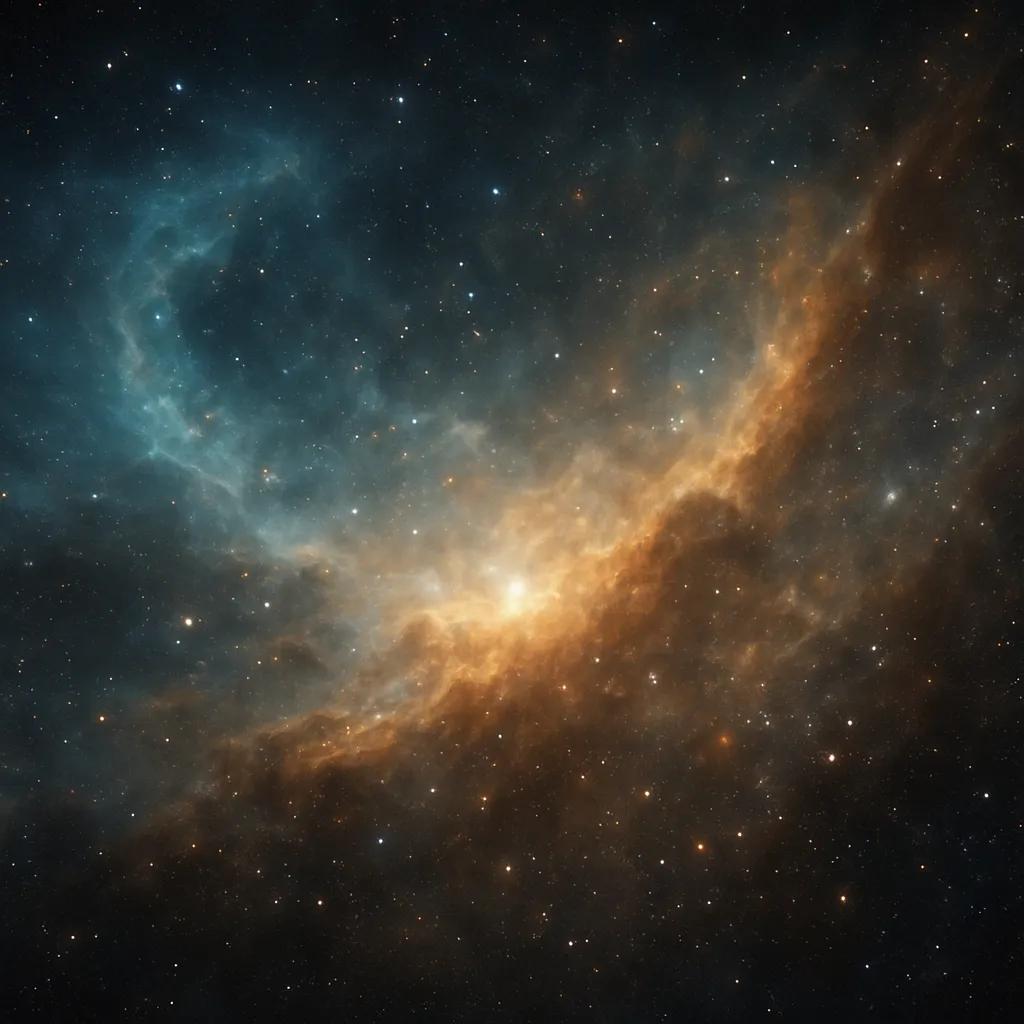
The space between stars is far from empty. It harbors a tapestry of gas, dust, and energetic particles that shape the lifecycle of galaxies and fuel the birth of new stars. Exploring the interstellar medium (ISM) reveals a realm where physical extremes collide: from icy molecular clouds drifting in the dark to searing hot plasma carved by shockwaves. This article delves into the intricate composition, dynamic processes, observational breakthroughs, and future mysteries that define this cosmic frontier.
Composition and Phases of the Interstellar Medium
The ISM consists primarily of hydrogen and helium, mixed with trace amounts of heavier elements such as carbon, oxygen, and iron. Tiny particles, known as dust grains, play an outsized role in scattering starlight and catalyzing chemical reactions on their surfaces. Despite its low average density—often just a few atoms per cubic centimeter—the medium exhibits distinct phases, each governed by temperature and ionization state.
Cold Molecular Phase
In the densest regions, temperatures dip below 20 K, allowing atoms to bond into molecules like H2 and CO. These molecular clouds are the cradles of star formation, providing the raw material for protostellar cores. Shielded by dust, they remain dark in visible light but glow brightly in radio and infrared wavelengths.
Warm Atomic and Ionized Phases
At intermediate densities and temperatures of about 8000 K, hydrogen remains mostly atomic. In regions around hot, young stars, intense ultraviolet radiation ionizes the gas, creating H II regions that emit characteristic spectral lines. The mixing of warm ionized and neutral gas influences large-scale structure and fosters interfaces where complex chemistry can occur.
Hot Coronal Phase
Shocked by powerful events like supernovae, pockets of gas can soar to millions of degrees. This hot, tenuous phase radiates primarily in X-rays and provides pressure that shapes surrounding cooler layers. Its interplay with cooler gas drives bulk flows and seeds turbulence across the ISM.
Physical Processes Shaping the ISM
The interstellar medium is in constant motion, animated by stellar births and deaths. Two major forces govern its ever-changing tapestry:
Stellar Feedback and Shock Waves
When massive stars end their lives, they unleash shock fronts that compress and heat the surrounding gas. These shocks can trigger new waves of star formation or disperse existing molecular clouds, halting further collapse. Over time, cumulative feedback sculpts the large-scale structure of spiral arms and galactic halos.
Turbulence and Magnetic Fields
A tangled web of magnetic fields threads through the ISM, guiding charged particles and stabilizing filaments of gas. Supersonic turbulence stirs the medium, creating density fluctuations that seed gravitational collapse. Together, magnetohydrodynamic effects regulate angular momentum and influence the mass distribution of emerging stars.
Observational Techniques and Breakthroughs
Understanding the ISM relies on multiwavelength observations that probe various components. Advances in instrument sensitivity and resolution continue to unveil hidden facets of the cosmic gas.
- Spectroscopy: Analysis of emission and absorption lines across radio, optical, and ultraviolet bands reveals chemical abundances, temperatures, and velocities.
- Radio Interferometry: Arrays such as ALMA resolve fine-scale structures within molecular clouds, mapping the distribution of molecules like CO and HCN.
- Infrared Surveys: Space telescopes penetrate dust obscuration to study the thermal glow of grains, tracing star-forming regions across the Milky Way.
- X-ray Observations: Telescopes like Chandra capture high-energy signatures from hot plasma and supernova remnants.
These approaches combine to paint a holistic picture of the ISM’s multilayered nature. Through precise measurements of Doppler shifts, astronomers track gas flows and uncover signs of large-scale inflows and outflows connected to galactic dynamics.
The Role of the ISM in Galactic Evolution
The interstellar medium serves as both repository and conduit for matter and energy within a galaxy. Its complex interactions determine the pace of evolution over cosmic timescales.
Gas Accretion and Star Formation
Galaxies draw fresh gas from their surroundings, replenishing reservoirs consumed by star formation. Filaments of cold gas funnel toward the disk, where high-density regions collapse. The ongoing cycle of collapse, feedback, and dispersal governs global star formation rates.
Chemical Enrichment
Fusion products from stellar cores and explosive nucleosynthesis in supernovae enrich the ISM with heavy elements. Subsequent generations of stars inherit these richer compositions, influencing planetary formation and the potential for habitable environments. The study of elemental chemistry in the ISM connects astrophysics to the origins of molecules critical for life.
Unresolved Mysteries and Future Prospects
Despite significant progress, many puzzles about the interstellar medium persist. Among them are the precise mechanisms that regulate the balance between heating and cooling, the true impact of cosmic rays, and the interplay between the ISM and dark matter in shaping galactic outskirts. Next-generation observatories and computational models promise to deepen our grasp of these processes. By charting the unseen currents of the ISM, astronomers edge closer to understanding how the universe evolves from primordial gas to the intricately structured cosmos we inhabit.