
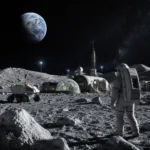


The quest to venture beyond our planetary bounds has long captured the imagination of humankind, driving breakthroughs that reach far beyond rocket engines and satellite trajectories. By fostering a culture of innovation and relentless curiosity, space exploration stands as one of the most potent catalysts for societal transformation. From microgravity experiments that refine our understanding of physics to interplanetary missions that challenge the limits of human endurance, every facet of this grand endeavor holds a mirror to our potential. As we look to the skies, the initiatives we pursue today will shape the minds, values, and opportunities of generations yet to come.
Technological Legacy of Space Missions
Since the dawn of the Space Age, each mission has yielded a rich portfolio of cutting-edge developments. Innovations originally crafted for orbit have found their way into everyday life, revolutionizing industries and enhancing well-being on Earth. The pursuit of efficient propulsion systems led to advanced materials such as heat-resistant alloys and composite fibers. These breakthroughs have been adopted in sectors ranging from automotive manufacturing to renewable energy, proving how fundamental technology transfer can yield cascading benefits.
In the field of telecommunications, satellites have established an unbroken chain of connectivity, delivering global positioning data and high-speed internet access to remote regions. These satellites, powered by miniature microprocessors and specialized optics, highlight the enduring legacy of space-driven research. Additionally, medical devices such as compact imaging systems and remote monitoring tools trace their origins to biomedical experiments conducted on the International Space Station. Here, the absence of gravity creates unique conditions for studying fluid dynamics and human physiology, leading to diagnostic equipment now used in hospitals worldwide.
When we experiment with robotics that can navigate craters on Mars, our terrestrial industries benefit from unprecedented precision in manufacturing and logistics. The dexterity of robotic arms designed to assemble space structures informs automated assembly lines back home, boosting productivity and safety. Thus, the trajectory of every space mission extends outward into the fabric of modern society, shaping a future where cutting-edge inventions become commonplace.
Inspiring Future Generations Through Exploration
For young minds, the allure of distant galaxies and the challenge of reaching new frontiers ignite a profound thirst for knowledge. Educational programs centered on space science and astronomy nurture critical thinking, problem-solving, and creativity. By presenting real-world applications of mathematics, physics, and computer science, these initiatives foster a lifelong passion for education and discovery. Planetariums, interactive museums, and citizen science projects invite students to engage directly with astronomical data, making them stakeholders in the cosmic narrative.
- Exploration challenges the next generation to envision habitats on the Moon and Mars, stimulating imaginative design and engineering projects in schools and universities.
- Competitions like rocket-building contests and satellite design hackathons offer hands-on experiences that bridge theoretical concepts with practical application.
- Mentorship programs connect aspiring scientists with seasoned astronauts and researchers, fostering a sense of belonging within the global space community.
These activities reinforce a mindset that values resilience, teamwork, and ethical decision-making—qualities essential for leadership in any field. As our youngest innovators witness the triumph of human ingenuity in spaceflight, they internalize the belief that even the loftiest goals can be accomplished through dedication and ingenuity. This enduring inspiration ensures that the spark of ambition continues to burn brightly across generations.
Environmental Insights and Sustainability
Observing Earth from orbit has profoundly altered our understanding of planetary health. Satellites continually monitor climate patterns, tracking phenomena such as polar ice melt, deforestation, and atmospheric composition. The data they collect underpins global efforts to combat climate change and safeguard biodiversity. This vantage point fosters a collective awareness that transcends national borders, emphasizing the fragility of our shared home.
Research conducted in controlled space habitats has also yielded innovative approaches to resource management. Closed-loop life support systems, which recycle air, water, and waste on spacecraft, inspire sustainable practices on Earth. Techniques for water purification and hydroponic cultivation, initially developed to nourish astronauts on long-duration missions, now offer solutions for regions facing water scarcity and food security challenges.
Moreover, the concept of off-world mining and resource extraction prompts serious discourse on responsible stewardship. As we contemplate harvesting minerals from asteroids or establishing colonies on other planets, we confront ethical considerations about environmental impact and intergenerational equity. These discussions shape a vision of sustainability that transcends terrestrial boundaries, encouraging humanity to adopt long-term strategies for both Earth and outer space.
Global Collaboration and the New Space Age
The complexity and cost of major space ventures necessitate partnerships that cross geopolitical lines. Collaborative frameworks like the International Space Station demonstrate the power of uniting diverse nations behind a common objective. By pooling financial resources, technical expertise, and cultural perspectives, these alliances accelerate progress and foster mutual understanding.
- Joint missions to study cosmic phenomena cultivate a spirit of collaboration and shared ownership of discoveries.
- Intergovernmental treaties ensure that space remains a domain dedicated to peaceful research rather than conflict.
- Commercial entities partner with national agencies to expand access to launch services, satellite deployment, and lunar exploration programs, broadening participation across the globe.
As emerging economies invest in their own space capabilities, the competitive landscape encourages efficiency and creativity. Small satellite constellations, reusable launch vehicles, and private space stations are transforming the industry, making space more accessible. This democratization amplifies the collective potential to address universal challenges, from disaster response to technological equity.
Charting the Path Forward
Looking ahead, the trajectory of space exploration promises to reshape the trajectory of human civilization. Ambitious initiatives—such as crewed missions to Mars, construction of lunar gateways, and deep-space telescopes—will extend our horizons and deepen our understanding of the cosmos. These ventures will demand unprecedented levels of interdisciplinary teamwork and ethical stewardship.
By embracing the spirit of discovery, fostering equitable access to space resources, and maintaining a commitment to scientific integrity, we ensure that future generations inherit not only advanced tools but also the collective wisdom to use them responsibly. Whether designing new habitats in orbit or decoding the first signs of life on other worlds, the unfolding story of space exploration will continue to inspire, unite, and challenge every explorer at heart.