


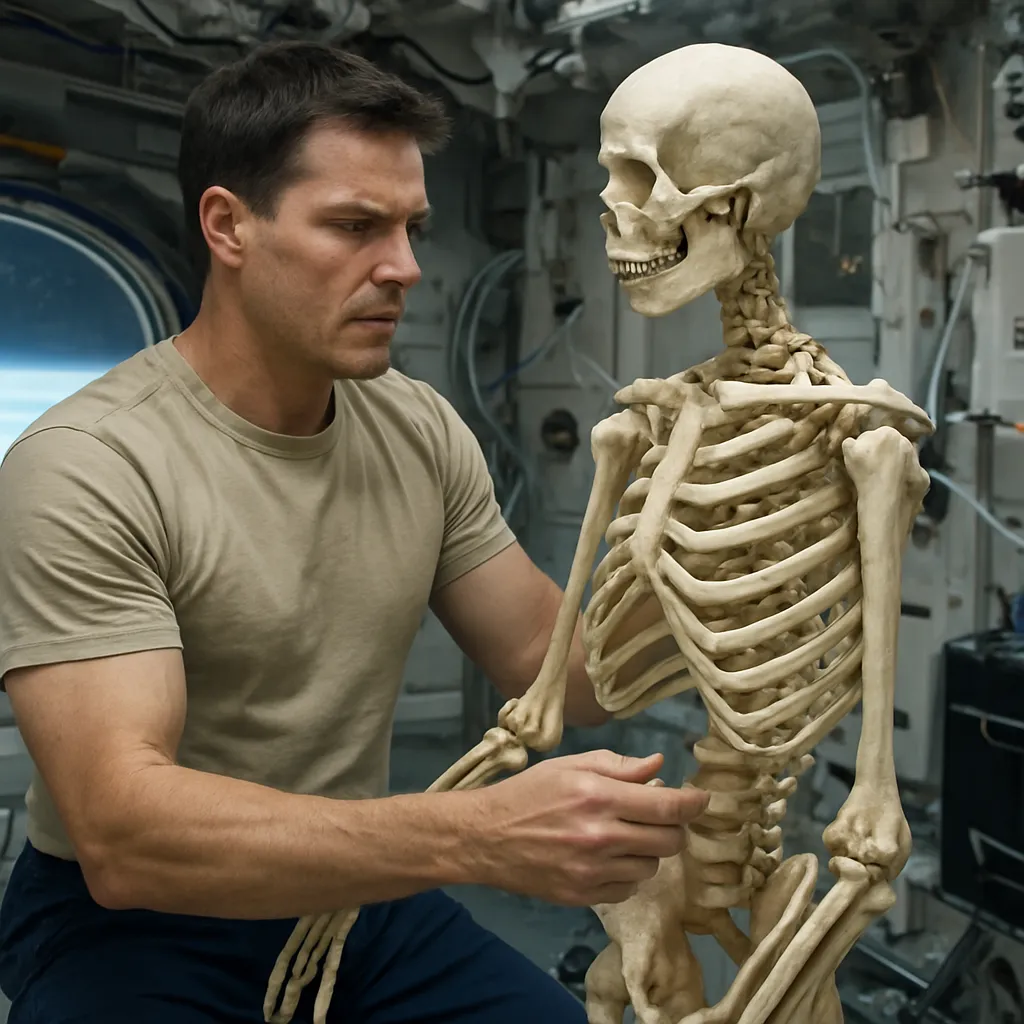
The exploration of space has long captured human imagination, but the physiological challenges posed by prolonged exposure to microgravity demand rigorous scientific investigation. As astronauts venture beyond Earth’s protective envelope, their bodies confront an environment that disrupts the delicate balance of bone remodeling, muscle maintenance, and overall biomechanics. Understanding these changes is critical not only for the success of deep-space missions but also for potential applications in treating terrestrial disorders like osteoporosis and muscle atrophy.
Effects on Bone Density
Bone Remodeling Imbalance
In the absence of Earth’s gravitational pull, the skeletal system experiences a dramatic shift in the rates of bone formation and resorption. Osteoblasts, the cells responsible for forming new bone matrix, become less active, while osteoclasts increase their rate of breakdown. This imbalance leads to a net loss of bone mass, predominantly affecting weight-bearing regions such as the spine, pelvis, and lower limbs.
Calcium Homeostasis Disruption
The dissolution of bone matrix releases calcium and phosphate into the bloodstream. Elevated levels of these minerals can precipitate in the kidneys, heightening the risk of renal stones for astronauts. Moreover, the reduction in bone density resembles accelerated osteoporosis, with reported losses reaching up to 1–2% per month on missions lasting several months.
Clinical Manifestations
- Reduced trabecular thickness and cortical bone density
- Mineralization defects observable via DEXA and QCT scans
- Increased fracture risk upon return to a gravitational environment
Muscular Atrophy in Space
Shift in Muscle Fiber Composition
Muscle tissues require constant mechanical loading to maintain mass and strength. In microgravity, the lack of gravitational resistance triggers a shift from slow-twitch (Type I) fibers toward fast-twitch (Type II) fibers, which are more prone to atrophy. This transformation compromises endurance and postural stability, essential for both extravehicular activities and daily tasks on spacecraft.
Molecular Pathways of Decline
Key signaling pathways, such as the ubiquitin-proteasome system and the autophagy-lysosome pathway, become upregulated, promoting protein breakdown. Concurrently, anabolic signals like IGF-1 (Insulin-like Growth Factor 1) are downregulated, reducing protein synthesis. The result is a net loss of muscle cross-sectional area, particularly in antigravity muscles like the quadriceps and calf muscles.
Functional Consequences
- Decreased maximum voluntary contraction force
- Impaired balance and coordination upon reentry to gravity
- Extended rehabilitation time due to muscle weakness
Countermeasures and Rehabilitation
Resistive Exercise Devices
Resistance training remains the cornerstone for mitigating musculoskeletal deconditioning. Specialized equipment, such as the Advanced Resistive Exercise Device (ARED) on the International Space Station, allows astronauts to perform squats, deadlifts, and presses under high loads. These exercises stimulate mechanical stress on bones and muscles, promoting formation and maintenance of tissue integrity.
Pharmacological Interventions
To complement physical training, researchers investigate medications that modulate bone and muscle metabolism. Bisphosphonates, for instance, inhibit osteoclast-mediated resorption, helping preserve bone density. Similarly, selective androgen receptor modulators (SARMs) and myostatin inhibitors are under study for their potential to curb atrophy and enhance muscular growth.
Nutrition and Supplementation
A well-balanced diet rich in vitamin D, calcium, and high-quality proteins is vital. Tailored nutritional protocols include high-leucine supplements to stimulate mTOR pathways, fostering muscle protein synthesis. Omega-3 fatty acids and antioxidants also play roles in reducing inflammation and supporting recovery.
Post-Flight Rehabilitation
Upon return to Earth’s gravity, astronauts engage in structured rehabilitation programs. These combine progressive resistance training, balance exercises, and physiotherapy to restore muscle strength and bone mass. Early mobilization and weight-bearing activities accelerate recovery, minimizing long-term deficits.
Future Perspectives
Artificial Gravity Solutions
Creating a continuous gravitational force within spacecraft is a promising avenue. Concepts range from rotating habitats to centrifuge-based exercise modules. By simulating Earth-like gravity, these systems could offer near-constant mechanical loading, reducing reliance on resistive equipment and pharmaceuticals.
Advanced Biomechanical Monitoring
Wearable sensors and in-situ imaging techniques are being developed to track bone density and muscle mass in real time. These technologies aim to personalize countermeasure regimens, adjusting exercise intensity and nutritional support based on ongoing physiological data.
Implications for Earth-bound Medicine
Insights from space research translate directly to healthcare on Earth. Understanding the mechanisms of bone loss and muscle atrophy guides therapies for bed-bound patients, the elderly, and those with immobilizing conditions. Innovations like remote rehabilitation protocols and pharmacological strategies have the potential to transform treatment paradigms worldwide.
Key Terms:
- Microgravity
- Osteoporosis
- Atrophy
- Biomechanics
- Calcium
- Osteoclasts
- Osteoblasts
- Exercise
- Nutrition
- Rehabilitation