


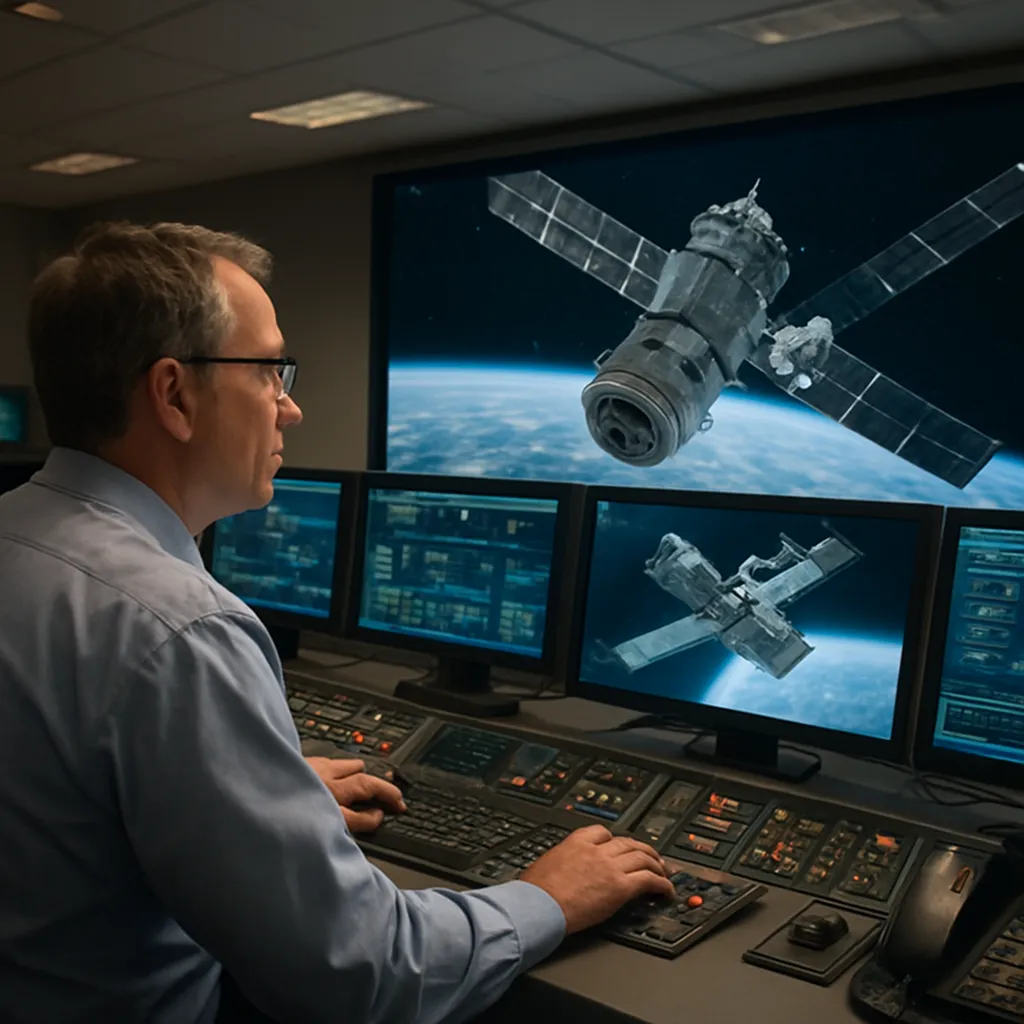
The domain of space exploration relies heavily on the unseen maestros working behind the scenes. Ground control teams, distributed across multiple continents, form the cornerstone of every mission’s success. They facilitate continuous communication, precise guidance, and rapid response capabilities that keep the spacecraft safe and objectives on track. This article delves into the critical roles that ground control fulfills, from data handling to real-time decisions, illustrating why no voyage beyond Earth can thrive without a robust ground segment.
Backbone of Communication Networks
Signal Relay and Data Links
As a spacecraft traverses the vacuum of space, it depends on ground stations to relay commands and return scientific readings. A global network of antennas ensures uninterrupted uplink and downlink sessions. By coordinating frequency allocations and scheduling passes, ground control engineers maintain a real-time data pipeline. This allows mission specialists to monitor health metrics, upload software patches, and adjust experimental parameters.
High-Gain and Low-Gain Antennas
- High-gain dishes provide focused, long-range connections for deep-space probes.
- Low-gain antennas offer omnidirectional coverage at shorter distances, ideal during launch and initial orbit insertion.
- Multiple ground stations operate in concert to hand off tracking when a satellite moves beyond a single station’s horizon.
Redundancy and Reliability
Ground control networks are engineered with redundancy to prevent single points of failure. Diverse geographical locations, backup power supplies, and independent communication channels ensure that even if one node goes offline—due to weather or technical issues—others can pick up the slack. This multi-layered approach to reliability bolsters the mission’s resilience in the face of unexpected events.
Mission Monitoring and Anomaly Resolution
Telemetry Analysis
Every spacecraft continuously streams thousands of parameters back to Earth. Engineers decode these telemetry packets to assess system performance. Critical subsystems—propulsion, thermal control, power, and attitude—are scrutinized for deviations. Early detection of anomalies enables ground controllers to devise corrective commands before minor glitches escalate into major failures.
Fault Detection and Isolation
- Automated algorithms sift through telemetry data to flag unusual trends.
- Ground teams run diagnostic protocols to pinpoint faulty components.
- Backup hardware or software contingencies are activated when primary systems exhibit distress.
Rapid Response Drills
Simulation exercises keep controllers sharp. By practicing scenarios such as sensor dropouts or thruster malfunctions, ground crews refine procedures and communication channels among flight dynamics, mission planners, and engineering support. These rehearsed protocols prove indispensable when on-the-fly adjustments are needed to safeguard a valuable mission asset.
Navigation, Trajectory Design, and Planning
Precision Orbit Determination
Accurate navigation hinges on processing range and Doppler shift measurements from multiple ground stations. Specialized software computes the spacecraft’s exact position and velocity vectors. With this information, flight dynamics teams craft precise course corrections to maintain the desired orbit or to chart a transfer trajectory toward distant targets.
Trajectory Design and Optimization
Before any maneuver, trajectory experts use high-fidelity models of celestial mechanics, gravitational perturbations, and spacecraft dynamics. By simulating various impulse burns and gravity assists, they identify fuel-efficient paths to the Moon, Mars, or the outer planets. This meticulous planning extends mission lifespans and maximizes scientific return.
Long-Term Mission Planning
- Sequencing operations for multi-year missions to capture peak observation windows.
- Allocating onboard resources—power, propellant, data storage—across overlapping campaign phases.
- Coordinating international ground assets to expand coverage and share tracking duties.
Human Factors and Team Coordination
Shift Handover Protocols
Ground control centers operate around the clock, requiring seamless transitions between teams. Detailed handover reports document ongoing tasks, unresolved issues, and upcoming communication passes. By adhering to strict protocols, controllers maintain situational awareness and prevent information loss during shift changes.
Cross-Disciplinary Collaboration
Successful missions draw on expertise from flight controllers, engineers, scientists, and software developers. Regular coordination meetings and integrated mission dashboards keep everyone aligned. When a scientific instrument requests an unexpected slew or calibration, ground control evaluates system constraints and negotiates adjustments that serve the broader mission goals.
Continuous Training and Certification
- Controllers undergo periodic certification to stay current with evolving spacecraft systems.
- Live-fire rehearsals on hardware-in-the-loop simulators expose hidden vulnerabilities.
- Knowledge transfer sessions ensure institutional wisdom is retained as personnel rotate.