


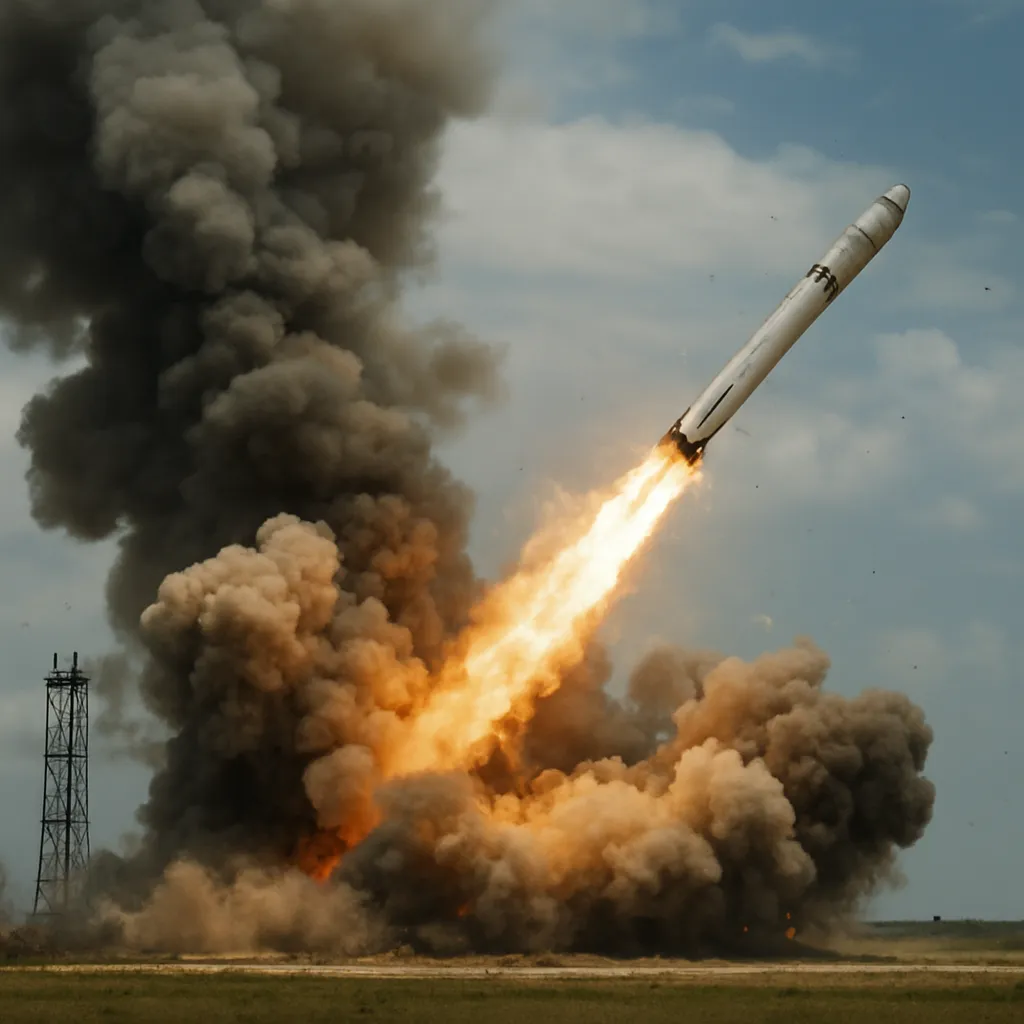
The annals of space exploration are marked by both triumphant achievements and sobering setbacks. Understanding the complexities of rocket launch failures is essential for designing safer, more reliable systems. From rudimentary experiments in the early 20th century to the cutting-edge commercial vehicles of today, the lessons learned from each catastrophe have driven profound advances in propulsion, guidance, and mission resilience. This article traces key episodes of launch failures and highlights the innovations they sparked.
The Pioneering Age: Early Rocket Experiments
In the era before formal space programs, inventors and engineers tested their creations in isolated fields and deserts. Many of these early rockets were little more than glorified fireworks, but they laid the groundwork for future successes. One of the most notable pioneers, Robert H. Goddard, launched the world’s first liquid-fueled rocket on March 16, 1926. While the flight lasted only 2.5 seconds and reached an altitude of 41 feet, it represented a seismic shift away from solid-propellant designs.
Frequent Structural Failures
In those fledgling experiments, tanks ruptured, engine nozzles melted, and fins sheared off mid-flight. The absence of sophisticated materials meant many rockets suffered from structural weaknesses. Engines would overheat or suffer from combustion instability, leading to explosive disassembly. These failures underscored the necessity of rigorous ground tests and the development of high-strength alloys.
Lessons in Measurement and Control
Early pioneers realized quickly that without accurate data, diagnosing problems was impossible. Simple instruments often failed under extreme conditions. The introduction of basic telemetry systems, capable of measuring pressure, temperature, and acceleration in real time, became a turning point. By embracing systematic data collection, engineers could refine designs and mitigate the most critical issues.
The Space Race: Cold War Launch Disasters
The rivalry between superpowers fueled an intense push to deploy satellites, send probes to the Moon, and ultimately germinate plans for human spaceflight. The competition, while accelerating progress, often came at the cost of rushed schedules and inadequate testing.
- Sputnik 1 Failure Attempts: Before the successful launch on October 4, 1957, several boosters malfunctioned during testing, suffering from stage separation failures and turbopump seizures.
- Luna 1963 Crashes: The Soviet Union suffered multiple unmanned lunar mission failures due to guidance software errors, resulting in impact short of lunar orbit insertion.
- Apollo 1 Tragedy: On January 27, 1967, a cabin fire during a ground test on the launch pad claimed the lives of three astronauts. The incident prompted a sweeping redesign of spacecraft safety standards, including flame-resistant materials and quick-release hatches.
Guidance System Glitches
During the Mercury and Gemini programs, inertial guidance systems occasionally drifted beyond acceptable margins, leading to aborts or off-target trajectories. Engineers implemented redundant gyroscopes and more reliable finite-state computers, improving accuracy and mission success rates.
Propellant and Engine Malfunctions
Several early Saturn boosters experienced J-2 engine icing and high-frequency combustion instabilities. The response included acoustic baffles, propellant chill-down procedures, and enhanced injector designs. Each fix, born from failure, propelled the Apollo program toward its victorious Moon landings.
Post–Cold War and Commercialization Challenges
With government budgets shrinking in the 1990s, private companies began to stake their claims in orbit. The transition to a commercial model introduced new dynamics: cost pressures, ambitious schedules, and a diverse array of stakeholders.
Emergence of Private Launch Providers
Companies like Sea Launch, Orbital Sciences, and later SpaceX and Blue Origin, encountered teething problems as they adapted military-derived engines and novel manufacturing techniques. Early flights revealed issues in manufacturing quality control, weld integrity, and telemetry integration.
- Sea Launch Zenit-3SL Failures (2007–2009): Multiple failures due to software errors and sensor faults led to lost payloads, prompting a complete overhaul of the flight computer architecture.
- Orbital Sciences’ Antares Anomaly (2014): A turbopump failure in an AJ26 engine caused the rocket to explode seconds after liftoff. This incident accelerated a switch to the more reliable RD-181 engine.
- SpaceX CRS-1 Explosion (2015): The Falcon 9’s upper stage suffered a helium pressurization line rupture. In response, engineers redesigned helium tanks, adding redundancy and improved burst discs.
Regulatory and Insurance Impacts
Commercial failures drive insurance premiums skyward. The industry responded by enforcing stricter acceptance tests and continuous auditing of supplier processes. Regulatory bodies, including the Federal Aviation Administration (FAA), integrated failure review boards into their licensing process to ensure lessons are institutionalized.
Lessons Learned and the Path Forward
The tapestry of rocket launch failures reveals a pattern: each disaster, no matter how devastating, becomes a crucible for innovation. From materials science breakthroughs to advanced autonomyThe annals of space exploration are marked by both triumphant achievements and sobering setbacks. Understanding the complexities of rocket launch failures is essential for designing safer, more reliable systems. From rudimentary experiments in the early 20th century to the cutting-edge commercial vehicles of today, the lessons learned from each catastrophe have driven profound advances in propulsion, guidance, and mission resilience. This article traces key episodes of launch failures and highlights the innovations they sparked.
The Pioneering Age: Early Rocket Experiments
In the era before formal space programs, inventors and engineers tested their creations in isolated fields and deserts. Many of these early rockets were little more than glorified fireworks, but they laid the groundwork for future successes. One of the most notable pioneers, Robert H. Goddard, launched the world’s first liquid-fueled rocket on March 16, 1926. While the flight lasted only 2.5 seconds and reached an altitude of 41 feet, it represented a seismic shift away from solid-propellant designs.
Frequent Structural Failures
In those fledgling experiments, tanks ruptured, engine nozzles melted, and fins sheared off mid-flight. The absence of sophisticated materials meant many rockets suffered from structural weaknesses. Engines would overheat or suffer from combustion instability, leading to explosive disassembly. These failures underscored the necessity of rigorous ground tests and the development of high-strength alloys.
Lessons in Measurement and Control
Early pioneers realized quickly that without accurate data, diagnosing problems was impossible. Simple instruments often failed under extreme conditions. The introduction of basic telemetry systems, capable of measuring pressure, temperature, and acceleration in real time, became a turning point. By embracing systematic data collection, engineers could refine designs and mitigate the most critical issues.
The Space Race: Cold War Launch Disasters
The rivalry between superpowers fueled an intense push to deploy satellites, send probes to the Moon, and ultimately germinate plans for human spaceflight. The competition, while accelerating progress, often came at the cost of rushed schedules and inadequate testing.
- Sputnik 1 Failure Attempts: Before the successful launch on October 4, 1957, several boosters malfunctioned during testing, suffering from stage separation failures and turbopump seizures.
- Luna 1963 Crashes: The Soviet Union suffered multiple unmanned lunar mission failures due to guidance software errors, resulting in impact short of lunar orbit insertion.
- Apollo 1 Tragedy: On January 27, 1967, a cabin fire during a ground test on the launch pad claimed the lives of three astronauts. The incident prompted a sweeping redesign of spacecraft safety standards, including flame-resistant materials and quick-release hatches.
Guidance System Glitches
During the Mercury and Gemini programs, inertial guidance systems occasionally drifted beyond acceptable margins, leading to aborts or off-target trajectories. Engineers implemented redundant gyroscopes and more reliable finite-state computers, improving accuracy and mission success rates.
Propellant and Engine Malfunctions
Several early Saturn boosters experienced J-2 engine icing and high-frequency combustion instabilities. The response included acoustic baffles, propellant chill-down procedures, and enhanced injector designs. Each fix, born from failure, propelled the Apollo program toward its victorious Moon landings.
Post–Cold War and Commercialization Challenges
With government budgets shrinking in the 1990s, private companies began to stake their claims in orbit. The transition to a commercial model introduced new dynamics: cost pressures, ambitious schedules, and a diverse array of stakeholders.
Emergence of Private Launch Providers
Companies like Sea Launch, Orbital Sciences, and later SpaceX and Blue Origin, encountered teething problems as they adapted military-derived engines and novel manufacturing techniques. Early flights revealed issues in quality control, weld integrity, and telemetry integration.
- Sea Launch Zenit-3SL Failures (2007–2009): Multiple failures due to software errors and sensor faults led to lost payloads, prompting a complete overhaul of the flight computer architecture.
- Orbital Sciences’ Antares Anomaly (2014): A turbopump failure in an AJ26 engine caused the rocket to explode seconds after liftoff. This incident accelerated a switch to the more reliable RD-181 engine and stricter component certification.
- SpaceX CRS-1 Explosion (2015): The Falcon 9’s upper stage suffered a helium pressurization line rupture. In response, engineers redesigned helium tanks, adding redundancy and improved burst discs.
Regulatory and Insurance Impacts
Commercial failures drive insurance premiums skyward. The industry responded by enforcing stricter acceptance tests and continuous auditing of supplier processes. Regulatory bodies, including the Federal Aviation Administration (FAA), integrated failure review boards into their licensing process to ensure lessons are institutionalized and shared across the industry.
Lessons Learned and the Path Forward
Analysis of past failures reveals patterns that continue to shape modern rocketry. Recognizing these trends has fueled a shift in how engineers approach design, testing, and operations.
Design Philosophy Shifts
The traditional “test–fix” cycle has evolved into a concurrent design methodology, where multiple subsystems are developed in parallel. This approach emphasizes reliability and fault tolerance from the outset. Concepts such as “graceful degradation”—where a vehicle can tolerate partial subsystem failures and still complete its mission—are now built into core architectures.
Advanced Testing and Simulation
High-fidelity simulations, including Monte Carlo analyses and digital twin models, allow teams to explore millions of scenarios virtually. Hardware-in-the-loop (HIL) testbeds replicate flight conditions on the ground, exposing latent defects long before launch. The result is a dramatic reduction in unforeseen anomalies during actual flight operations.
Supply Chain and Quality Assurance
The complexity of modern rockets demands rigorous oversight of suppliers. Traceability of every component—from raw alloys to avionics boards—ensures that nonconformances are caught early. Collaborative platforms for defect reporting have transformed isolated incidents into industry-wide alerts, accelerating corrective actions and strengthening overall robustness.
The New Era: Reusability, Commercial Crew, and Interplanetary Ambitions
Today’s launch vehicles are not just expected to succeed once—they must return for multiple missions. Reusability has emerged as a game-changer, but it also introduces fresh challenges in design and maintenance.
Reusability and Turnaround
SpaceX’s Falcon 9 boosters land propulsively, then undergo rapid inspections and refurbishment. Each recovered stage must be checked for heat damage, structural integrity, and engine performance. This iterative process informs improvements in heat shield materials and landing leg designs, driving down turnaround time and overall mission cost.
Commercial Crew Safety
The Commercial Crew Program, featuring SpaceX’s Crew Dragon and Boeing’s Starliner, has faced its share of hurdles. Abort system tests and parachute qualification flights have uncovered failure modes that, while not fatal, required significant hardware and software modifications. Enhanced flight termination systems and real-time health monitoring now contribute to a higher standard of sustainability and crew protection.
Beyond Earth Orbit
Ambitions to return humans to the Moon and reach Mars hinge on unprecedented levels of system integration. NASA’s Artemis missions, coupled with SpaceX’s Starship development, push the envelope of heavy-lift performance. Failure modes at this scale—such as cryogenic propellant slosh, long-duration engine dwell times, and radiation-induced electronics faults—are being addressed through extensive ground tests, component hardening, and in-situ resource utilization experiments.
Charting the Future of Launch Reliability
As the aerospace community marches toward ever more ambitious goals, the legacy of past failures remains a guiding force. By weaving lessons into every stage of development—from material selection to flight operations—engineers continue to enhance the innovation, cost-effectiveness, and safety of space access. The next breakthrough in rocket design will almost certainly arise from meticulous study of what went wrong yesterday, ensuring that tomorrow’s explorers can reach the stars with confidence.