


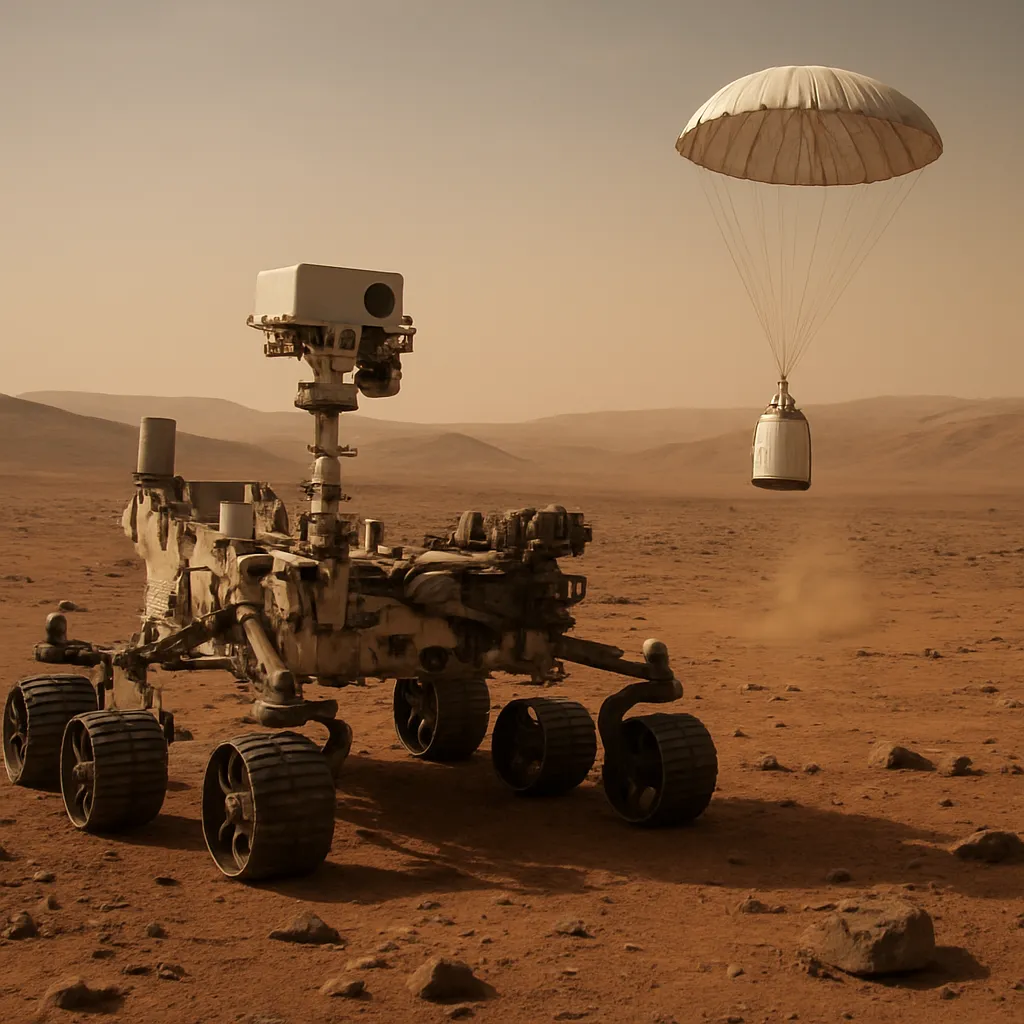
The endeavor to bring back Mars specimens to our planet is one of the most ambitious projects in modern space exploration. Success requires overcoming unprecedented obstacles in engineering, biosafety, and interplanetary trajectory design. This article explores the multifaceted challenges of returning Martian samples safely and reliably.
Mission Planning: From Concept to Launch
Every sample return campaign starts with rigorous planning phases. First, mission designers define scientific objectives: to analyze Martian soil for traces of past life, evaluate surface mineralogy, and understand geological history. Next comes the design of a spacecraft system capable of operating in the harsh Red Planet environment. A typical mission architecture includes an orbiter, a lander with a rover, a Mars Ascent Vehicle (MAV), and an Earth Return Orbiter (ERO). Each component demands specialized planetary protection protocols to prevent forward and backward contamination.
Critical considerations during planning:
- Site selection: Regions with high potential for preserving biosignatures, such as ancient lake beds.
- Landing precision: Achieving a landing ellipse of a few kilometers to target scientifically rich locations.
- Rover autonomy: Robust mobility and sampling arms to collect diverse rock and soil cores.
- System redundancy: Backup power, communication channels, and fail-safe mechanisms.
These elements integrate into an overarching schedule accounting for launch windows, cruise phase, entry, descent, and surface operations. Interdisciplinary teams of astronomers, geologists, astrobiologists, and aerospace engineers collaborate to mitigate risks and maximize scientific return.
Key Technical Obstacles
Designing hardware that can operate on Mars and then lift off again presents unique hurdles. The propulsion system for the MAV must be lightweight yet capable of generating sufficient thrust in a thin atmosphere. Chemical propellants may be preloaded on the vehicle, or future missions might produce fuel in situ from Martian resources via the Sabatier reaction.
Thermal control is another challenge: equipment must survive surface temperatures ranging from –125°C at night to +20°C during the day. Insulation materials, active heating elements, and thermal radiators work together to maintain critical systems within operational limits.
Precision Sample Acquisition
Collecting and caching samples with minimal cross-contamination involves:
- Drilling tools with replaceable sterile bits.
- Sealable containers that maintain vacuum or inert gas environment.
- Sample transfer mechanisms that avoid exposure to ambient dust.
Each container must be hermetically sealed and periodically tested in-flight for sterilization integrity. The rover’s sampling arm must be agile yet sturdy enough to extract cores from hard rock without jamming.
Launch from the Martian Surface
The ascent stage must detach from the lander platform and ignite precisely to achieve low Mars orbit. Factors complicating this process include:
- Thin atmospheric density reducing aerodynamic stabilization.
- Vibrations and dust ingestion during takeoff.
- Communication blackouts during the critical first seconds of ignition.
Recovery of the ascent stage by an orbiter relies on advanced autonomous rendezvous, docking, and sample transfer operations—all executed millions of kilometers from Earth with limited real-time control.
Earth Return and Biosafety Considerations
After rendezvous, the return vehicle carries sealed sample canisters back toward Earth. Maintaining the integrity of these specimens is paramount; temperature, radiation exposure, and mechanical shocks during transit must be monitored. A heat shield protects the capsule on atmospheric entry, while parachutes and retro-propulsion systems ensure a gentle landing.
Upon touchdown, recovery teams must secure the capsule in a designated quarantine zone to uphold biosafety standards. International protocols, such as those outlined by the Committee on Space Research (COSPAR), define stringent procedures for:
- Handling potential Martian microorganisms.
- Transporting the capsule to containment laboratories.
- Performing initial examinations within high-containment facilities.
These measures protect both Earth’s biosphere and the scientific integrity of the samples.
Preventing Backward Contamination
Backward contamination refers to the introduction of extraterrestrial life forms to Earth’s environment. Minimizing this risk involves:
- Sealing all sample containers to Category V (restricted Earth return).
- Continuous monitoring for breaches using biosensors and pressure differentials.
- Robust decontamination procedures for external capsule surfaces.
Any leak detection triggers emergency protocols, including remote sterilization and isolation of the contaminated area.
Future Prospects and Innovation
Emerging technology promises to streamline sample return missions. Concepts under development include:
- Autonomous aerial drones for rapid sample scouting in rugged terrain.
- 3D-printed launch platforms to reduce payload mass.
- Advanced propulsion like nuclear thermal rockets to shorten transit time.
- Reconfigurable spacecraft architectures adaptable to multiple mission profiles.
These innovations could reduce cost, minimize risk, and expand the diversity of returned materials.
International cooperation remains essential. Joint ventures between NASA, ESA, JAXA, and other agencies can pool resources and expertise. Private companies may also play a role in lunar or Mars sample return, partnering on technology development and mission operations.
In the coming decades, the successful return of pristine Martian materials will open new frontiers in planetary science, offering clues about the planet’s evolution and its potential to harbor life. Overcoming the contamination and trajectory challenges will mark a milestone for humanity’s quest to understand our place in the cosmos.