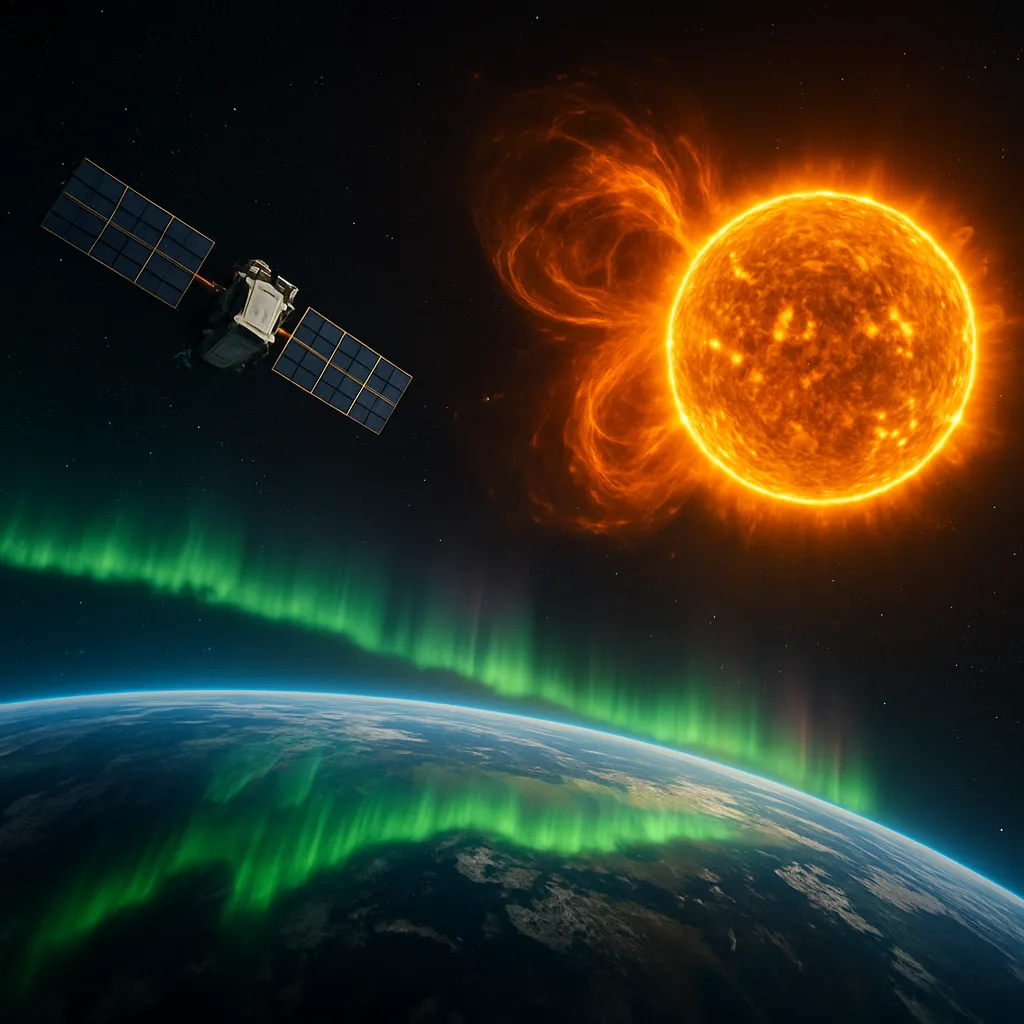
The volatile interaction between the Sun and the cosmos unfolds a tapestry of dynamic phenomena that can ripple across the entire solar system. With increasing reliance on orbital platforms, high-frequency communications, and crewed missions to other worlds, understanding the behaviour of energetic particles and magnetic fields in space has become more than a scientific curiosity—it has evolved into a critical component of modern infrastructure and human safety. Rapid advances in observational techniques, coupled with sophisticated prediction algorithms, are transforming the way we anticipate and respond to space weather events.
Understanding Solar and Cosmic Phenomena
At the heart of space weather forecasting lies a deep appreciation for the mechanisms driving solar activity. The Sun periodically unleashes bursts of energy through solar flares and vast clouds of plasma known as coronal mass ejections (CMEs). These expulsions propel billions of tons of solar material into space at speeds that can exceed a million miles per hour. When these charged particles encounter Earth’s protective magnetosphere, they can trigger dramatic geomagnetic fluctuations.
Another pivotal factor is the steady stream of charged particles, termed the solar wind, which sculpts our planetary magnetic environment. Embedded within the solar wind are regions of intensified magnetic activity, including shocks and discontinuities. When these features sweep past a planet, they can compress or distort the magnetosphere, influencing radiation belts and auroral displays. Beyond our home world, similar processes affect other planets and even interplanetary spacecraft, underscoring the universal relevance of space weather in the universe.
Key physical processes such as magnetic reconnection enable the rapid conversion of magnetic energy into particle acceleration, fueling high-energy bursts that can jeopardize onboard electronics and human life. Meanwhile, cosmic rays—high-energy particles originating from distant supernovae or active galactic nuclei—add another layer of radiation risk for long-duration missions beyond low Earth orbit.
Tools and Techniques in Space Weather Forecasting
Modern forecasting harnesses a synergy of remote sensing, in situ measurements, and ground-based observatories. Satellites like GOES (Geostationary Operational Environmental Satellites), DSCOVR (Deep Space Climate Observatory), and Parker Solar Probe provide real-time data on solar wind parameters, magnetic field orientations, and energetic particle fluxes. By continuously monitoring the Sun’s surface and corona in multiple wavelengths, these platforms detect emergent sunspots, flares, and filament eruptions that serve as precursors to disruptive events.
- In situ spacecraft measure local particle densities and magnetic field strengths, offering immediate alerts when conditions exceed safe thresholds.
- Ground-based magnetometer arrays track minute perturbations in Earth’s magnetic field, refining our understanding of ongoing disturbances.
- Radio telescopes capture solar radio bursts, which often precede the arrival of high-energy coronal material.
Numerical Models and Prediction Frameworks
Raw observational data alone cannot deliver timely warnings; advanced prediction models are indispensable. Magnetohydrodynamic (MHD) simulations recreate the behaviour of charged fluids in magnetic fields, predicting how CMEs propagate through the interplanetary medium. Ensemble forecasting techniques, borrowed from terrestrial weather science, run multiple scenarios with slightly varied inputs to quantify uncertainties and identify worst-case trajectories.
Empirical models, grounded in decades of historical events, yield rapid assessments by correlating real-time solar measurements with past geomagnetic storm intensities. More recently, machine learning algorithms have shown promise in recognizing subtle patterns in high-dimensional datasets, improving lead times for alerts by discerning precursors that might elude conventional methods.
Impacts on Technology, Infrastructure, and Human Exploration
The stakes of accurate space weather forecasting extend far beyond academic interest. On Earth, powerful geomagnetic storms can induce currents in long conductors, threatening power grids and leading to widespread outages. The famous blackout in Quebec in 1989 exemplified how vulnerable large transformers are to geomagnetically induced currents.
Satellite operators face constant challenges as enhanced radiation levels degrade sensitive electronics and disrupt high-precision instruments. Effective forecasting empowers mission controllers to place spacecraft into safe modes, reorient solar panels, and adjust orbits to mitigate damage. Robust advance warnings also benefit the aviation industry: polar routes experience elevated cosmic radiation, and flights often reroute to lower latitudes to protect passengers and crew from excess exposure.
Crewed missions, whether to the International Space Station or crewed lunar ventures, hinge on safeguarding astronauts from solar particle events. Without timely alerts, crews performing extravehicular activities (EVAs) could be exposed to dangerously high radiation doses. Forecasting tools enable careful scheduling of spacewalks and guide decisions about seeking shelter in shielded modules.
Mitigation Strategies
Engineers and policymakers implement a combination of hardening measures and operational protocols to buffer critical systems against space weather hazards. These include:
- Designing spacecraft electronics with radiation-tolerant components and redundant architectures.
- Installing surge arresters and transformer neutral ground systems to protect terrestrial power infrastructure.
- Developing standardized alert levels and response plans for airlines, satellite fleets, and grid operators.
Future Directions and Challenges
Despite impressive progress, forecasting remains a formidable challenge. The complexity of solar magnetic fields, combined with incomplete observational coverage, injects significant uncertainty into predictions. Greater spatial resolution near the Sun and improved understanding of particle acceleration mechanisms are vital goals for the next decade.
International collaboration is crucial: coordinating satellites across different agencies enhances early detection capabilities and ensures a more comprehensive picture of evolving solar storms. Incorporating artificial intelligence into data assimilation pipelines promises faster processing and more accurate forecasts, but also requires extensive training datasets and rigorous validation.
As humanity extends its reach to Mars and beyond, mastering space weather forecasting will be indispensable for the survival of robotic and human explorers alike. Whether safeguarding terrestrial technologies or pioneering new frontiers among the stars, the ability to anticipate and respond to cosmic disturbances underscores the enduring interplay between our planet and the wider universe.