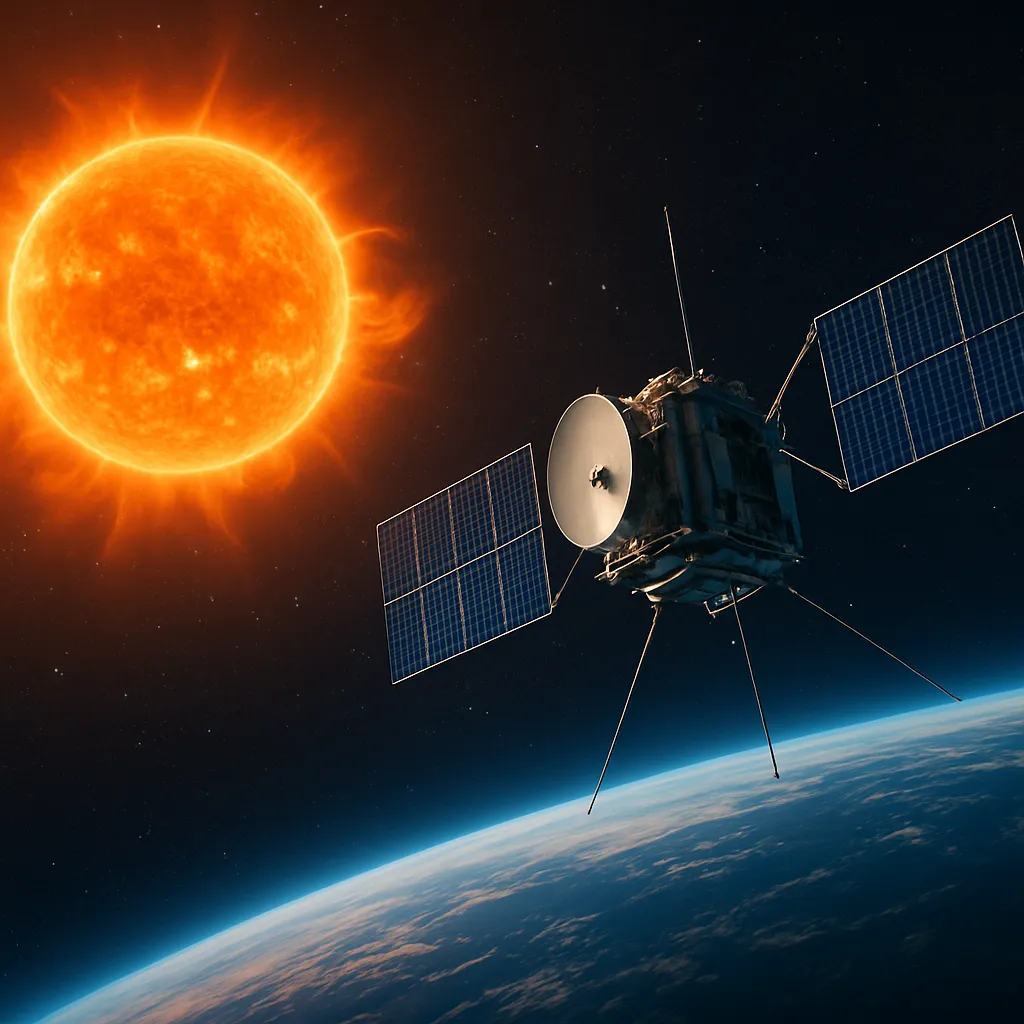
Monitoring the unpredictable forces flowing through our cosmic neighborhood is crucial for safeguarding modern technology and human life. Space weather phenomena, ranging from powerful solar eruptions to subtle geomagnetic fluctuations, constantly interact with Earth’s near-space environment. This article delves into the pivotal role played by satellites dedicated to observing and analyzing these phenomena. By examining the science behind solar activity, the design of specialized spacecraft, and the far-reaching applications of real-time data, we highlight why a robust network of space weather monitoring platforms is indispensable for our planet’s resilience and future exploration.
Space Weather Phenomena and Their Terrestrial Impacts
Solar activity manifests in a variety of energetic events that can dramatically influence the near-Earth environment. Among the most significant are solar storms, including solar flares and coronal mass ejections (CMEs). When these eruptions propel vast clouds of charged particles and magnetic fields toward Earth, they can trigger severe consequences across multiple domains.
- Geomagnetic Disturbances: Rapid fluctuations in the magnetosphere induce currents in power lines and pipelines, threatening the stability of infrastructure such as electrical grids.
- Radiation Hazards: Energetic particles become trapped in the Van Allen radiation belts, elevating radiation levels for satellites and posing serious risks to astronauts in orbit.
- Communication Blackouts: High-frequency radio signals can be absorbed or reflected irregularly, disrupting communication and navigation systems relied upon by aviation, maritime, and emergency services.
- Satellite Anomalies: Charging effects and single-event upsets (SEUs) caused by energetic particles can damage onboard electronics or lead to loss of control.
These phenomena underscore the need for accurate monitoring to issue timely warnings and implement countermeasures. By continuously tracking solar and geomagnetic conditions, scientists can forecast potential disturbances and mitigate their effects on both civilian and military assets.
Design and Capabilities of Space Weather Monitoring Satellites
Specialized spacecraft form the backbone of any effective space weather observing network. Equipped with a suite of instruments, these satellites perform comprehensive measurements of solar emissions, interplanetary magnetic fields, and Earth’s magnetospheric dynamics. Key components typically include:
- Particle Detectors: Measure fluxes of protons, electrons, and heavy ions across a broad energy spectrum, enabling characterization of solar energetic particle events.
- Magnetometers: Provide high-precision readings of local magnetic field vectors, essential for tracking CME-driven perturbations as they approach Earth.
- Solar Imagers: Capture ultraviolet and X-ray emissions from the Sun’s atmosphere, allowing early detection of flare activity and filament eruptions.
- Radio and Plasma Wave Instruments: Monitor plasma density, wave-particle interactions, and radio bursts associated with shock fronts in the solar wind.
Orbit selection is another crucial design choice. Satellites at the Sun–Earth Lagrange Point 1 (L1) offer up to an hour of advance notice for inbound solar wind disturbances. Others in polar orbits sweep across the poles to observe high-latitude auroral processes, while geostationary platforms provide continuous coverage of the equatorial magnetosphere. Combining data from multiple vantage points enhances spatial resolution and predictive reliability.
Applications of Real-Time Space Weather Data
The continuous stream of information from monitoring satellites feeds a variety of operational systems and scientific models. By integrating these data into predictive frameworks, stakeholders can proactively respond to emerging threats. Prominent applications include:
- Aurora Forecasting: Visualizing potential displays of the northern and southern lights helps tourism industries and informs power utilities about geomagnetic risk levels.
- Power Grid Management: Grid operators adjust load distributions or implement protective islanding to prevent transformer damage and cascading blackouts.
- Aviation Route Planning: Airlines reroute transpolar flights to lower altitudes and latitudes when radiation exposure or HF communication fades during severe space weather events.
- Satellite Operations: Manufacturers and operators can switch off vulnerable systems, modify pointing strategies, or schedule maintenance windows to circumvent damaging conditions.
- Deep-Space Mission Support: Robotic probes and crewed missions beyond Earth orbit benefit from timely alerts to shelter sensitive electronics or seek safe harbor behind planetary magnetic shields.
Through these practical implementations, decision-makers transform raw observational inputs into actionable recommendations. This seamless pipeline of information is only possible because of the precision and coverage provided by dedicated monitoring spacecraft.
Future Directions and Challenges
As our society becomes increasingly dependent on space-based and ground-oriented technologies, the demand for more sophisticated space weather monitoring grows. Several trends and challenges shape the next generation of observational capabilities:
Miniaturization and Constellations
Advances in small-satellite technology promise to deploy constellations of CubeSats and microsatellites equipped with miniaturized sensors. These networks can offer higher temporal and spatial resolution, filling observational gaps left by larger, solitary platforms. Distributed sensing enhances the accuracy of predictive models and provides redundancy against single-point failures.
Artificial Intelligence and Data Analytics
Machine learning algorithms are increasingly applied to vast archives of solar and magnetospheric data. AI-driven pattern recognition can identify subtle precursors to major eruptions, enabling more reliable forecasts. Real-time anomaly detection also accelerates response times for critical infrastructure providers.
International Collaboration
Space weather is a global phenomenon that demands cooperative monitoring and data sharing across national boundaries. Initiatives by international bodies foster standardized measurements and alert protocols. Collaborative missions reduce costs and leverage expertise from multiple space agencies, strengthening resilience worldwide.
Resource Constraints and Funding
Despite its importance, space weather research often faces budgetary pressures. Prioritization of observational missions competes with other scientific and commercial endeavors. Demonstrating tangible returns on investment, such as reduced economic losses from disrupted services, remains vital to secure long-term support.
Embracing these developments will ensure that our predictive capabilities keep pace with growing technological vulnerabilities. A resilient network of space weather monitoring satellites, enhanced by cutting-edge analytics and global partnerships, stands as the cornerstone for protecting both current and future human endeavors in space and on Earth.