
The quest to establish permanent human presence beyond Earth has driven researchers to explore creative solutions for mitigating the adverse effects of zero gravity. One promising approach involves the generation of artificial gravity through rotational motion. By simulating gravitational pull, rotating structures can address the physiological and psychological challenges faced by astronauts during extended stays in space. This article examines the scientific principles, design concepts, health benefits, and engineering challenges associated with implementing artificial gravity in future space habitat projects.
Principles of Rotational Artificial Gravity
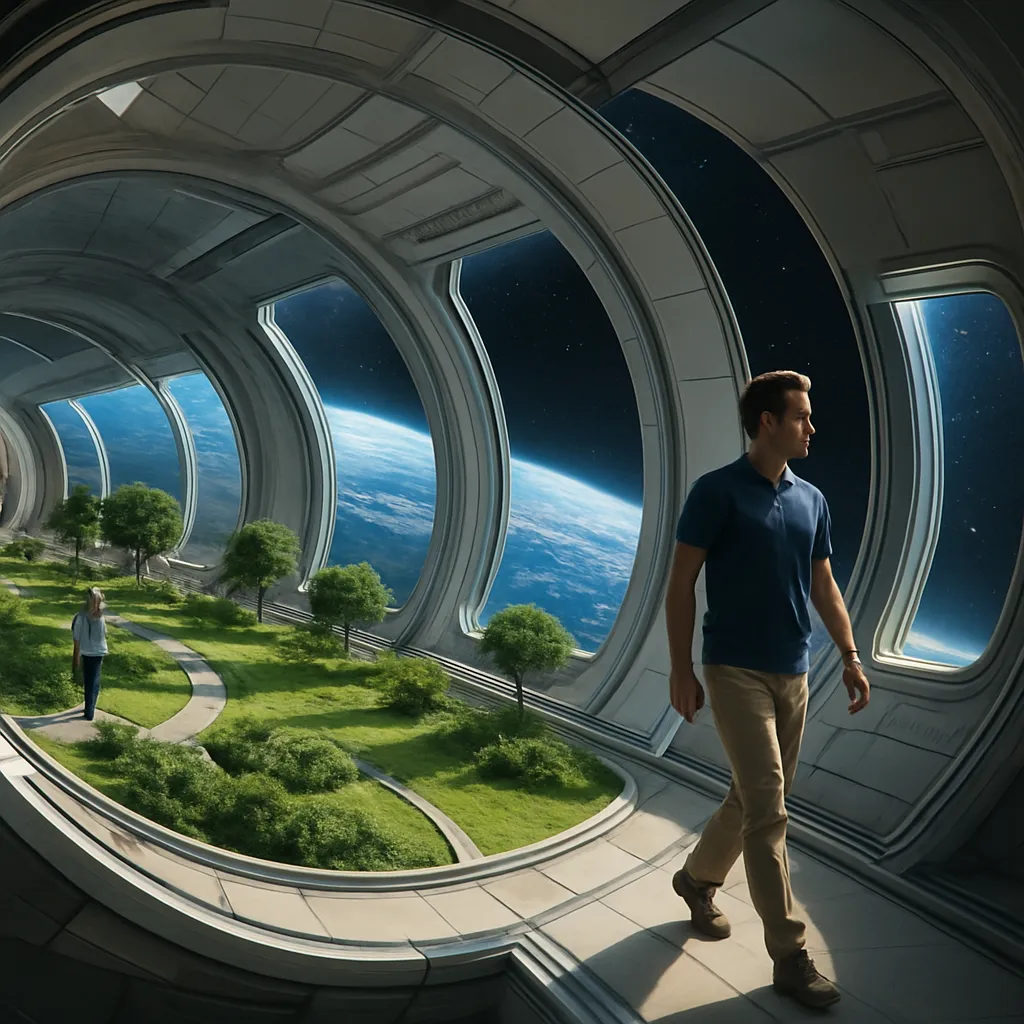
At the core of any rotating habitat is the concept of centripetal force, the inward force required to keep an object on a circular path. In a rotating cylinder or torus, inhabitants feel an outward push against the outer wall, which can mimic the sensation of gravity. Two key variables govern the magnitude of this force: the radius of the rotation and the angular velocity.
Rotational Radius and Angular Velocity
To achieve Earth–like gravity, a habitat must balance radius (r) and angular velocity (ω). The relationship is defined by the equation a = ω²r, where “a” is the artificial acceleration. A larger radius allows for slower rotation rates, reducing discomfort from rapid spin. For example, a 100-meter-radius ring rotating at 1 revolution per minute can produce near-1g conditions. Conversely, smaller structures require faster spins, potentially inducing motion sickness due to exaggerated Coriolis effect sensations.
Understanding the Coriolis Effect
In a rotating frame, moving objects appear to deflect due to the Coriolis force. This phenomenon impacts daily activities within a habitat: pouring liquids, walking between modules, or conducting medical procedures. Minimizing adverse effects often means optimizing rotation speed so that the radial acceleration remains smooth and predictable. Designers must conduct human factor studies to ensure that inhabitants can adapt quickly and safely to the induced rotation.
Design Concepts for Space Habitats
Various architectural proposals explore how best to incorporate rotation into long-term orbital facilities. Each design prioritizes different aspects of functionality, cost, and adaptability to mission profiles.
- Stanford Torus: A doughnut–shaped ring roughly one mile in diameter, envisioned to generate Earth‐level gravity on its inner surface. Solar arrays and agricultural areas line the exterior, while living quarters face inward.
- O’Neill Cylinder: Two counter-rotating cylinders, each several miles long, connected by a central docking hub. This dual-cylinder approach counters gyroscopic forces and provides abundant living space.
- Rotating Wheel: A simpler wheel design that can be attached to a non-spinning hub via spokes. Advantages include modular assembly and the potential for incremental expansion.
- Tethered Systems: Two masses (such as a habitat and a counterweight) connected by a long tether. Rotation of the two-body system creates artificial gravity without constructing a rigid structure.
Health and Psychological Benefits of Artificial Gravity
Extended exposure to microgravity leads to muscle atrophy, bone density loss, fluid redistribution, and cardiovascular deconditioning. Rotating habitats can mitigate these effects by providing a continuous gravitational stimulus, offering multiple health advantages:
- Preservation of muscle strength and skeletal mass, reducing reliance on intensive exercise regimes.
- Normalization of fluid distribution, decreasing intracranial pressure and the risk of vision impairment.
- Enhanced vestibular adaptation, lowering nausea and dizziness compared to periodic short-arm centrifuges.
- Improved psychological well-being, as a stable “downward” direction can alleviate spatial disorientation and emotional stress.
Studies indicate that as little as one hour of artificial gravity per day may substantially offset bone and muscle deterioration. For truly sustainable long-term missions, however, continuous or near-continuous gravity may prove essential.
Engineering and Construction Challenges
Building a rotating habitat in space entails complex structural and logistical hurdles. Ensuring structural integrity under rotational loads requires robust materials and precise fabrication techniques. Key challenges include:
- Mass–to–Strength Ratio: All components must resist cyclic stresses while minimizing launch mass.
- Attitude Control: Maintaining stable rotation axis orientation demands active control of gyroscopic torques and external perturbations (e.g., solar pressure).
- Docking Interfaces: Transitioning between non–rotating and rotating sections requires rotating sleeves or convertible airlocks to prevent discontinuities in artificial gravity.
- Thermal Management: Rotating structures experience uneven solar heating, necessitating sophisticated thermal regulation systems.
- Assembly in Orbit: Modular construction via robotics or commercial astronauts must account for alignment precision and contamination control.
Emerging solutions involve advanced composites, self-deploying structures, and in-space 3D printing to reduce the reliance on pre-manufactured parts. Demonstration missions could deploy small centrifuge modules to validate technologies at a smaller scale before committing to full-size habitats.
Case Studies and Future Prospects
Several space agencies and private ventures are investigating rotational habitats through ground simulations and parabolic flight experiments. Notable initiatives include:
- NASA’s Artificial Gravity Collaboration, focusing on human adaptation to variable rotational speeds.
- ESA’s Vestibular Function Tests in rotating chambers to refine design parameters for Coriolis mitigation.
- Commercial startups exploring small centrifugal modules for research on the International Space Station.
Looking ahead, the integration of artificial gravity into lunar or Martian orbital stations may serve as stepping stones for deep–space exploration. Coupled with life-support innovation and radiation shielding, rotating habitats could become central to the vision of off-Earth civilization. As material science and robotic assembly techniques advance, the dream of a stable, self-sustaining space habitat drawing lifesustaining force from motion moves ever closer to reality.