

What Is Space?

What Is Space?

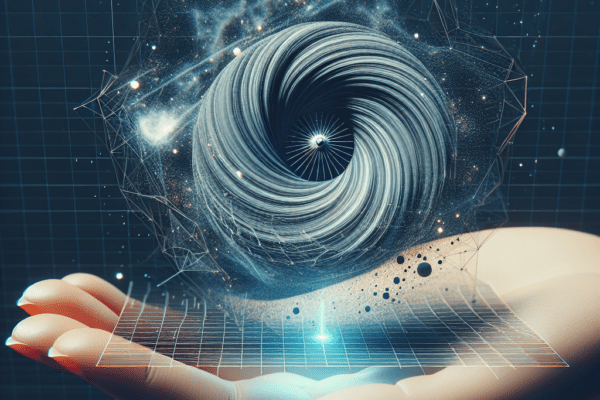
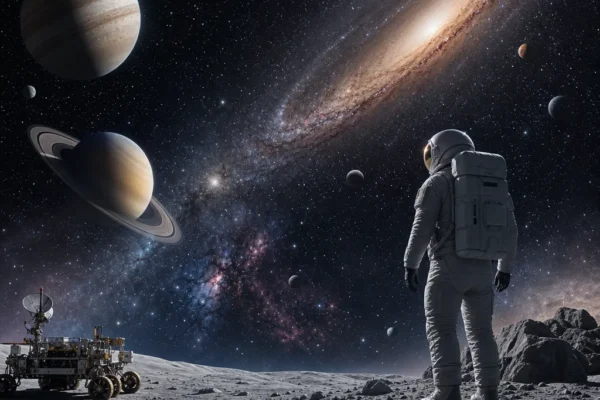
Space is the vast physical realm beyond Earth’s atmosphere, but in science it is more than “empty nothingness.” It contains matter, radiation, magnetic fields, and the structure of spacetime itself. Space begins gradually rather than at a perfectly sharp boundary, and on the largest scales it includes everything from the region around Earth to galaxies,…
Read Full News
How Old Is the Universe?

How Old Is the Universe?

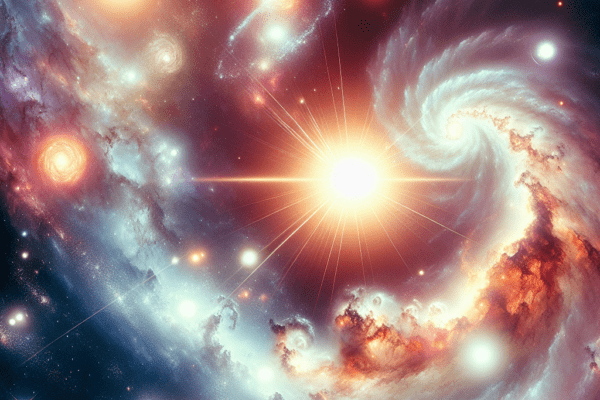
The best current estimate is that the universe is about 13.8 billion years old. More precisely, modern cosmology places its age at roughly 13.8 billion years based on measurements of how fast space is expanding and what the early universe looked like. This number does not come from a single clock, but from several independent…

Read Full News

The Physics Behind Gravitational Lensing

Gravitational lensing arises when massive objects cause a curvature in spacetime, deflecting light from distant sources. This phenomenon, predicted by Einstein’s theory of General Relativity, has become one of the most powerful tools in cosmology and astrophysics. By studying these cosmic distortions, astronomers can map the distribution of dark matter, magnify faint galaxies, and probe…

Read Full News

The Discovery of the Expanding Universe

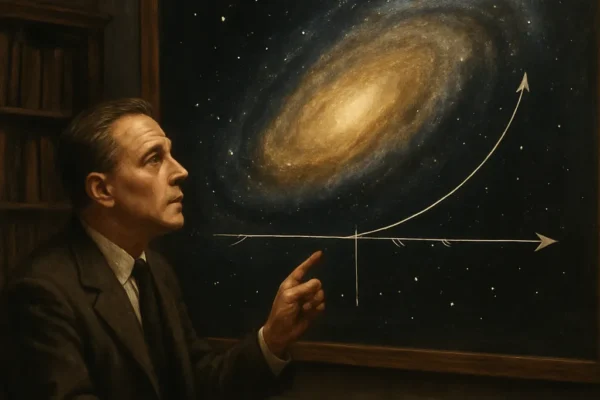
The night sky has fascinated humanity for millennia, inspiring both wonder and scientific inquiry. Over time, astronomers unraveled the vast tapestry of stars, nebulae, and distant galaxies, gradually uncovering the dynamic nature of the cosmos. The journey toward understanding the expanding universe represents one of the most profound leaps in modern cosmology, reshaping our perception…

Read Full News

The Discovery and Importance of Cosmic Background Neutrinos

Since the dawn of modern cosmology, scientists have sought to unravel the secrets of relic particles that permeate the entire universe. Among these elusive messengers, the cosmic background neutrinos are prime carriers of information about the earliest moments following the Big Bang. With their incredibly small masses and near-zero electric charge, they interact only via…

Read Full News
Mapping Dark Matter with Gravitational Lensing

Mapping Dark Matter with Gravitational Lensing

Mapping dark matter with gravitational lensing is a groundbreaking approach that has revolutionized our understanding of the universe’s most elusive component. Dark matter, which does not emit, absorb, or reflect light, remains invisible to traditional telescopes. However, its presence can be inferred through its gravitational effects on visible matter, radiation, and the large-scale structure of…

Read Full News