
Recreating the Red Planet’s harsh environment in terrestrial laboratories requires a blend of cutting-edge technology, ingenuity, and meticulous attention to detail. Scientists worldwide strive to emulate Mars’s unique conditions to test equipment, study potential life forms, and prepare for future crewed missions. By simulating soil chemistry, atmospheric composition, and the relentless interplay of radiation and temperature, researchers unlock vital insights into the challenges that await explorers on the fourth world from the Sun.
Martian Soil Simulants: Composition and Applications
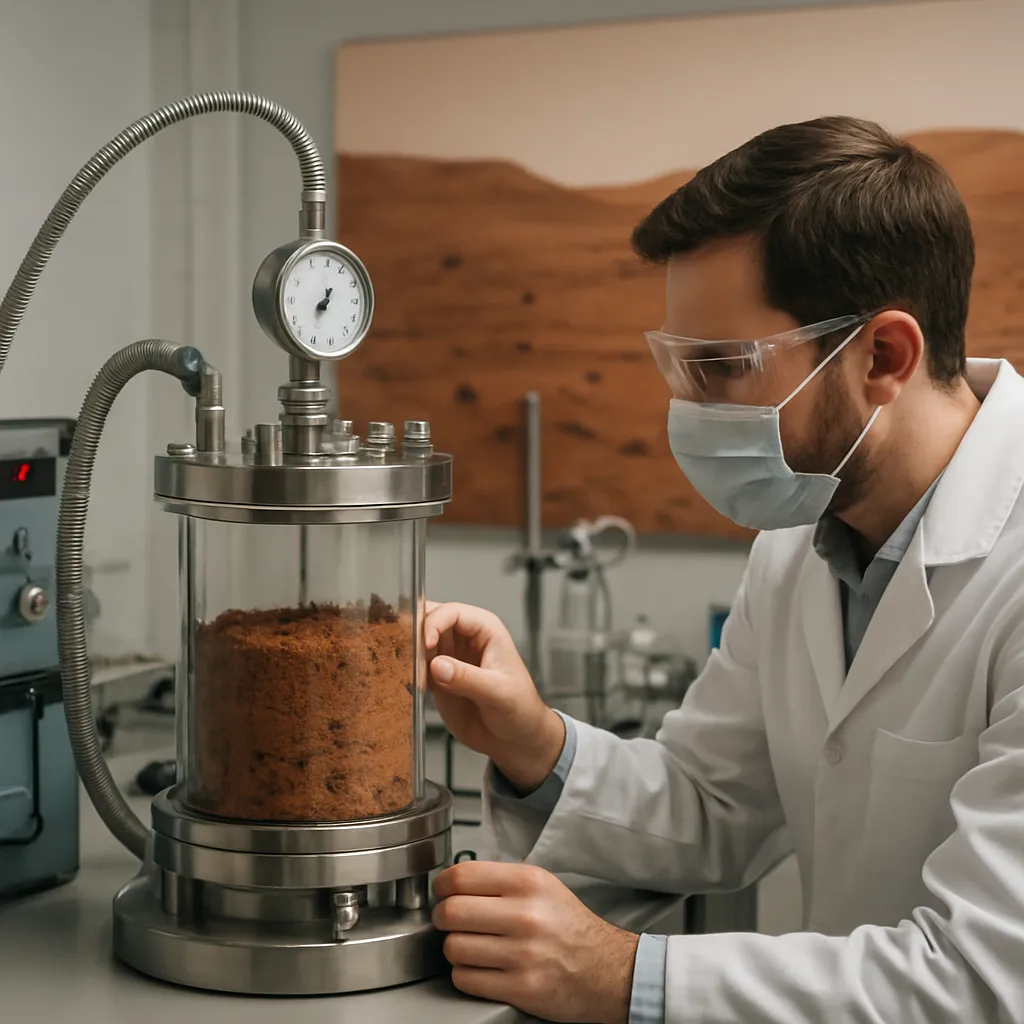
At the heart of many experiments lies a finely crafted analog of the Martian surface: a regolith simulant. Drawing inspiration from terrestrial volcanic deposits, these mixtures mimic the mineralogy and particle size distribution found in rover-collected samples. Key components include iron oxides, silicates, sulfates, and perchlorates, which impart the characteristic reddish hue and reactive chemistry of the real thing.
Creating a reliable simulant demands precise geochemical analysis. Spectroscopic studies of data from orbiters and rovers guide mineral proportions, ensuring the analog’s behavior under mechanical and thermal stress mirrors that on Mars. Researchers also tailor simulants to mirror regional variations: the basaltic sands of Gale Crater differ from the lighter, dustier soils near the polar caps.
Applications of regolith simulants are diverse:
- Testing excavation and drilling tools for habitat construction.
- Assessing the performance of dust shields on solar panels.
- Examining plant growth media for future agriculture experiments.
Each trial yields crucial feedback for engineers and biologists planning the first microbial gardens in controlled Martian greenhouses.
Moreover, the high perchlorate content—which can be toxic to humans—offers a chance to study mitigation strategies. By adding small quantities of simulant to hydroponic setups or microbial cultures, scientists evaluate decontamination techniques and the resilience of extremophiles to these reactive salts.
Simulating the Martian Atmosphere: Pressure, Temperature, and Radiation
Recreating Mars’s thin, predominantly carbon dioxide atmosphere poses a formidable challenge. Laboratory vacuum chambers, sometimes spanning several meters in diameter, enable researchers to adjust pressure to the planet’s average of approximately 6 millibars—less than 1% of Earth’s sea-level pressure. These chambers also regulate temperature cycles from –125°C during polar nights to around 20°C at the equator at midday.
Within these sealed environments, instruments record how materials respond to extreme thermal gradients. Engineers test mechanical seals, lubricants, and electronic components to prevent brittleness or failure. Insulation materials are scrutinized for their ability to maintain internal habitat temperatures without consuming excessive energy.
Equally critical is the study of cosmic and solar radiation. Mars lacks a robust magnetic field, exposing its surface to a constant barrage of high-energy particles. In specialized labs, particle accelerators and gamma-ray sources mimic galactic cosmic rays and solar particle events. Biological samples, from plant seeds to bacterial cultures, are subjected to radiation doses akin to a multi-year Mars mission.
These experiments inform the development of shielding materials—ranging from regolith-based bricks to advanced polymers enriched with hydrogen. Such innovations aim to reduce doses inside habitats to levels comparable to or lower than those experienced by astronauts in Earth orbit.
Water and Life Experiments: The Quest for Habitability
Water, in its various forms, is the linchpin of potential life on Mars. Scientists simulate briny solutions by dissolving perchlorates, chlorides, and sulfates into cold aqueous media to mirror transient flows observed on Martian slopes. These perchlorate-laden brines remain liquid at temperatures well below freezing, offering a plausible habitat for hardy organisms.
Astrobiologists introduce extremophiles—microbes that thrive in Earth’s most inhospitable niches—into these synthetic brines. By tracking growth rates and metabolic byproducts, they gauge the limits of life under astrobiology-driven constraints. DNA sequencing techniques detect mutations and repair mechanisms triggered by combined stressors of cold, salt, and radiation.
Parallel plant growth chambers employ regolith simulant mixed with nutrient solutions. Wheat, potatoes, and hardy legumes are cultivated under replicated Martian light spectra, generated by LED arrays. Researchers monitor root penetration, nutrient uptake, and water retention to optimize watering regimes while minimizing resource consumption.
One experimental breakthrough involves closed-loop systems: wastewater from plant chambers undergoes microbial bioremediation, recycling water back into growth media. Such integrated cycles advance the vision of self-sustaining – or at least highly efficient – greenhouses that would support astronauts on long-duration missions.
Advanced Instrumentation Testing: Rover and Habitat Prototypes
Before any hardware leaves Earth, it must perform flawlessly under Martian conditions. In simulated dust storms—achieved by recirculating fine simulant particles within wind tunnels—rovers’ seals and vent filters are evaluated for clogging risks. Mobility tests on slopes coated with regolith dust determine wheel designs that maximize traction while minimizing slippage.
Atmospheric sensors, such as pressure transducers and methane detectors, are calibrated in chambers filled with a precise atmosphere mix. Variations in CO2 concentration, humidity, and trace gases provide a realistic backdrop for verifying sensitivity and selectivity.
Habitat modules undergo full-scale trials in analog environments like desert sites or polar ice fields. Yet laboratory testing remains indispensable for pinpointing weaknesses before deployment. Life support systems – from oxygen recyclers to CO2 scrubbers – are stressed in closed chambers where oxygen levels, humidity, and microbial loads are tightly monitored.
Challenges and Future Directions
Despite remarkable progress, replicating Mars remains an imperfect art. Local geological anomalies, unexpected perchlorate behavior, and the complex interplay of factors like ultraviolet flux continue to surprise researchers. New simulant recipes incorporate glassy spherules found in Martian gullies, while high-fidelity thermal vacuum chambers strive to simulate diurnal temperature swings in real time.
Looking ahead, some propose orbital analogs: deploying small satellites that loop through dust plumes generated by Earth-based impacts to test instruments in genuine extraterrestrial dust environments. Others envision modular testbeds on the Moon’s far side, where lower gravity and partial vacuum afford a more accurate analog than any terrestrial facility.
The pursuit to recreate Martian conditions fosters collaboration across disciplines. Planetary scientists, mechanical engineers, microbiologists, and materials experts converge to unravel the Red Planet’s secrets. Each experiment, whether it validates a drill bit or reveals a microbe’s resilience, brings humanity one step closer to living and working on Mars.