


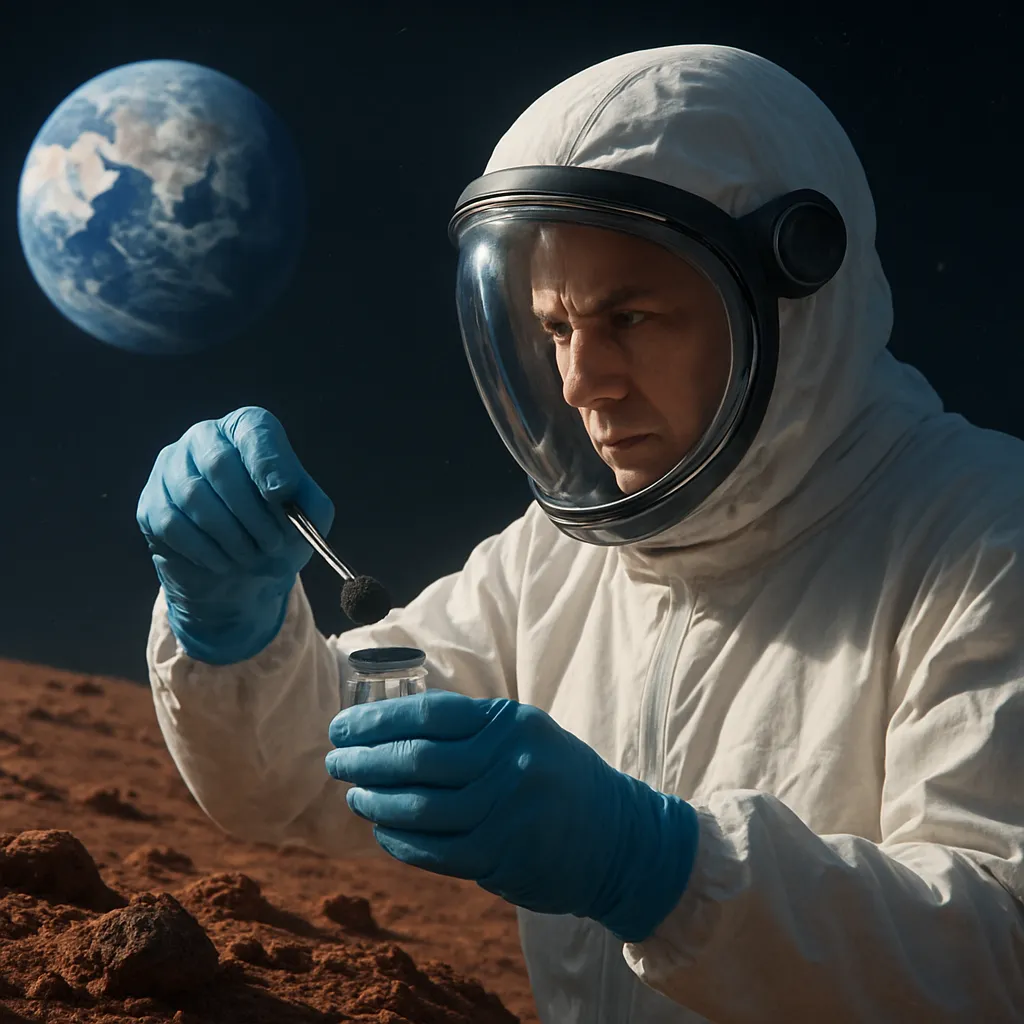
Exploring the frontier of outer space demands a rigorous approach to planetary protection that safeguards both celestial bodies and Earth from harmful contamination. As humanity prepares for ambitious missions to Mars, icy moons, and beyond, the balance between scientific exploration and biosecurity has never been more critical.
Origins and Significance of Planetary Protection
The notion of planetary protection emerged in the mid-20th century as space agencies recognized the risk of introducing Earth-based life to other worlds—a process known as forward contamination. In 1958, the formation of the Committee on Space Research (COSPAR) provided an international framework to establish guidelines and policies. The 1967 Outer Space Treaty further solidified legal responsibilities by obligating signatory nations to avoid “harmful contamination” of space and celestial bodies.
Scientific interest in pristine extraterrestrial environments ties closely to the field of astrobiology, where researchers search for signs of past or present life. If microbial hitchhikers from Earth were to proliferate on Mars, for example, they could obscure or destroy genuine biosignatures, undermining decades of research. Thus, preserving the integrity of extraterrestrial samples and planetary environments remains a paramount concern.
- Early missions to the Moon demonstrated limited contamination due to the harsh lunar environment, but Mars and ocean worlds pose a greater risk.
- International consensus highlights the dual imperative of scientific discovery and ethical stewardship.
- Emerging commercial ventures emphasize the need for rigorous standards to prevent environmentally reckless activities in space.
Understanding Biological Contamination: Forward and Backward Risks
Two primary categories define the contamination landscape: forward contamination (Earth organisms to other worlds) and backward contamination (potential extraterrestrial life reaching Earth). Both scenarios present unique challenges:
Forward Contamination
Robotic landers, probes, and even human missions may inadvertently carry resilient microbes entrenched in cavities, seals, or outer surfaces. These organisms can survive extreme temperatures, radiation, and vacuum conditions. The implications include:
- Obscuring authentic signs of indigenous life.
- Triggering ecological imbalances in sensitive environments, such as subsurface oceans on Europa or Enceladus.
- Compromising high-value scientific samples destined for Earth-based analysis.
Backward Contamination
Sample-return missions intensify concerns about reintroducing unknown microbes to Earth’s biosphere. Any extraterrestrial organism could possess novel metabolic pathways or toxins. To mitigate this, agencies employ strict quarantine protocols on reentry:
- Containment facilities with multi-stage filters and sterilization procedures.
- Life-detection assays to assess potential biohazards before releasing samples for study.
- Coordination with global health authorities to ensure public safety.
Innovative Strategies for Contamination Control
Developing effective methods to limit biological transfer relies on a combination of engineering, microbiology, and policy. Key strategies include:
Spacecraft Sterilization Techniques
- Dry heat microbial reduction (DHMR): Baking components at high temperatures to kill resilient spores.
- Vaporized hydrogen peroxide (VHP): A chemical sterilant that permeates complex geometries.
- Ultraviolet (UV) irradiation: Surface treatment to inactivate microorganisms without chemical residues.
Cleanroom Assembly and Monitoring
Components destined for interplanetary missions are assembled within high-grade cleanrooms designed to maintain extremely low bioburden levels. Continuous monitoring includes:
- Air particle counters and microbial sampling at regular intervals.
- Surface swabs to detect contamination hotspots.
- Strict personnel entry protocols, including gowning and air showers.
Biological Assays and Verification
Before launch, spacecraft parts undergo bioassays to quantify residual organisms. Advanced techniques such as qPCR (quantitative polymerase chain reaction) and next-generation sequencing help identify and enumerate microorganisms down to the genetic level.
Legal, Ethical, and Policy Frameworks
International collaboration underpins the evolving landscape of planetary protection policy. COSPAR’s planetary protection policy classifies missions by target body and mission type, prescribing required levels of sterilization:
- Category I: Missions to bodies with no interest for life science (e.g., Sun, Mercury).
- Category II: Minimal interest (asteroids, atmospheric studies of Venus).
- Category III/IV: Flyby and orbital missions to potentially habitable environments.
- Category V: Sample return missions, demanding the highest biocontainment measures.
Ethical questions also arise around humankind’s responsibility to preserve extraterrestrial ecosystems. As private companies and nations plan crewed missions to Mars, the principle of precautionary action gains traction: ensuring that exploration does not irreversibly alter or destroy unknown habitats.
The Role of Emerging Technologies and Future Directions
Advancements in synthetic biology, robotics, and materials science offer promising avenues for enhanced contamination control:
- Self-sterilizing surfaces with embedded antimicrobial properties.
- Automated robotic assemblers capable of in-situ assembly in sterile conditions.
- Onboard biosensors to detect and neutralize microbial growth during transit.
As missions venture toward Jupiter’s moon Europa, Saturn’s Enceladus, and beyond, the stakes for maintaining uncontaminated environments continue to rise. Protecting potential extraterrestrial life forms and preserving Earth’s biosphere from unknown biosignatures demands ongoing research, international cooperation, and the unwavering commitment to rigorous biosecurity standards.