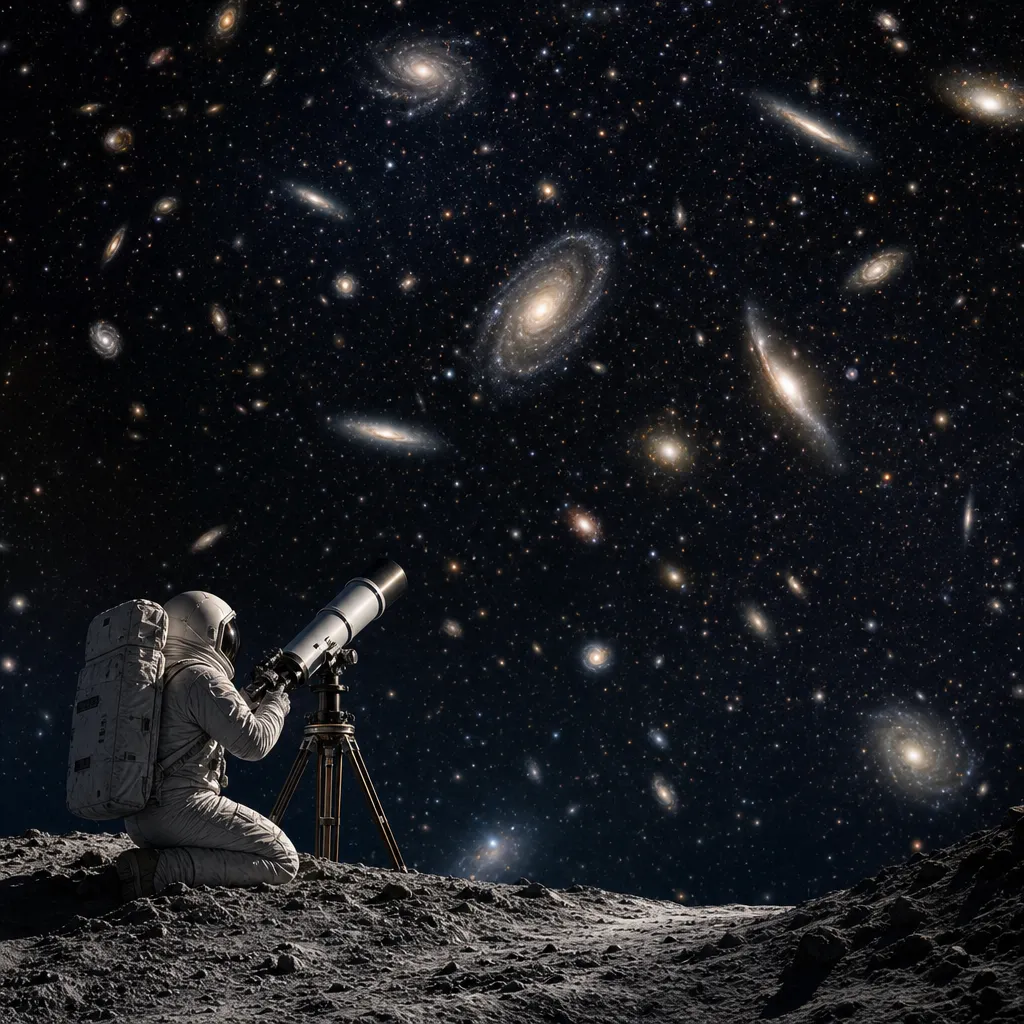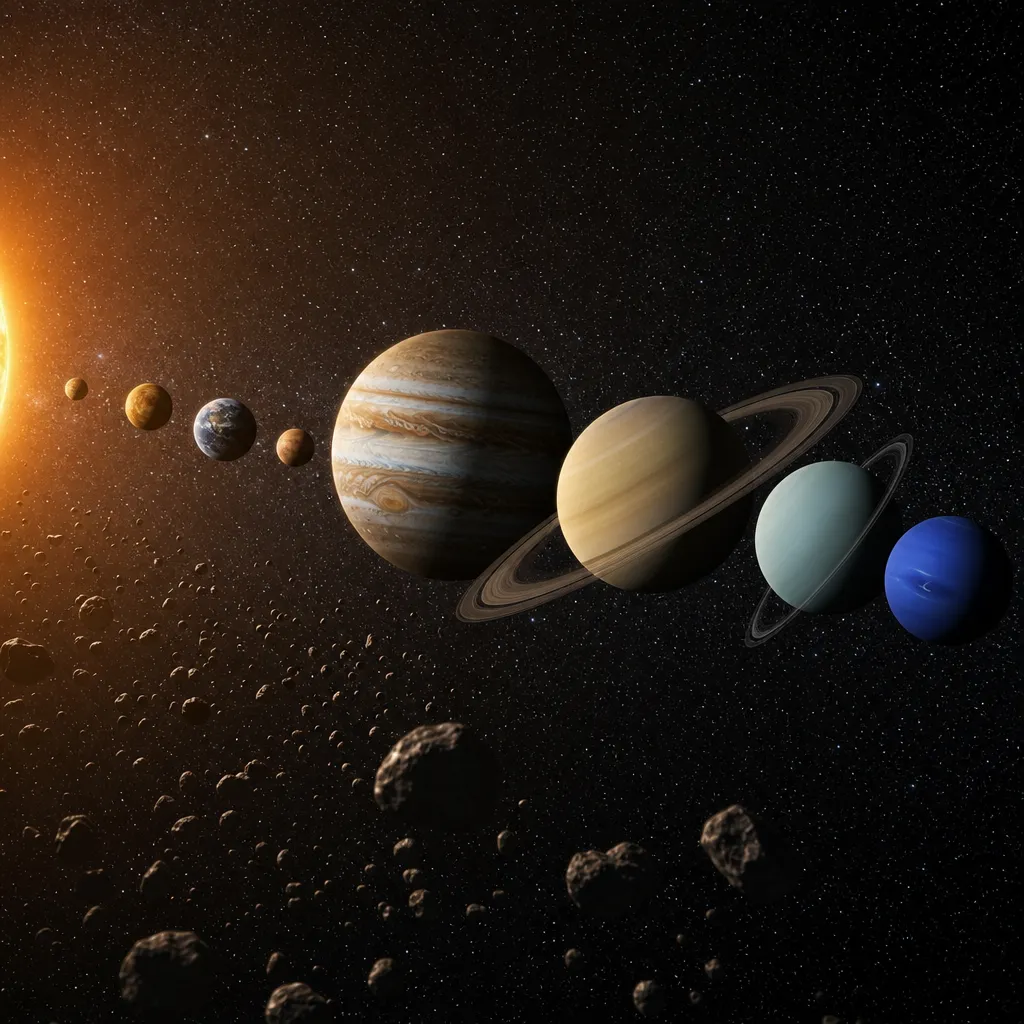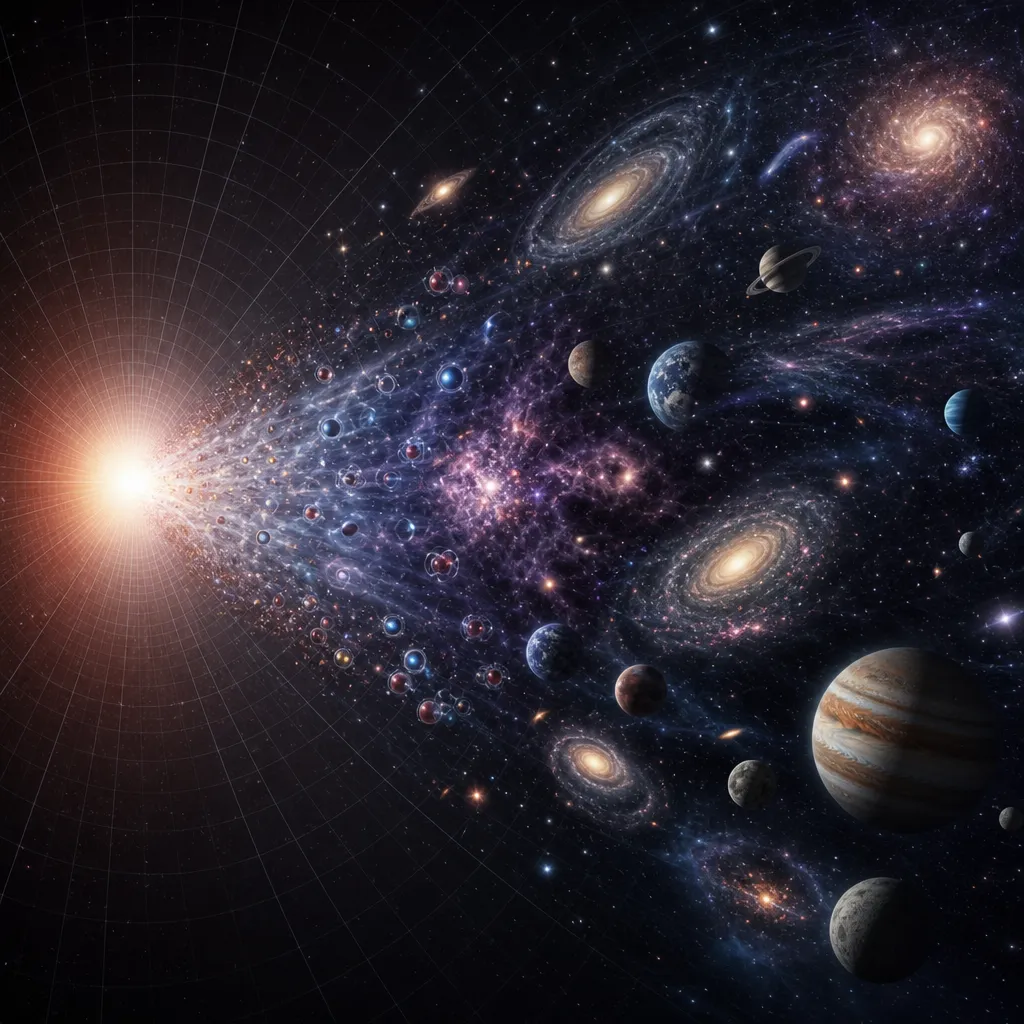
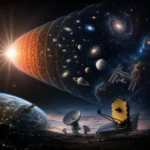
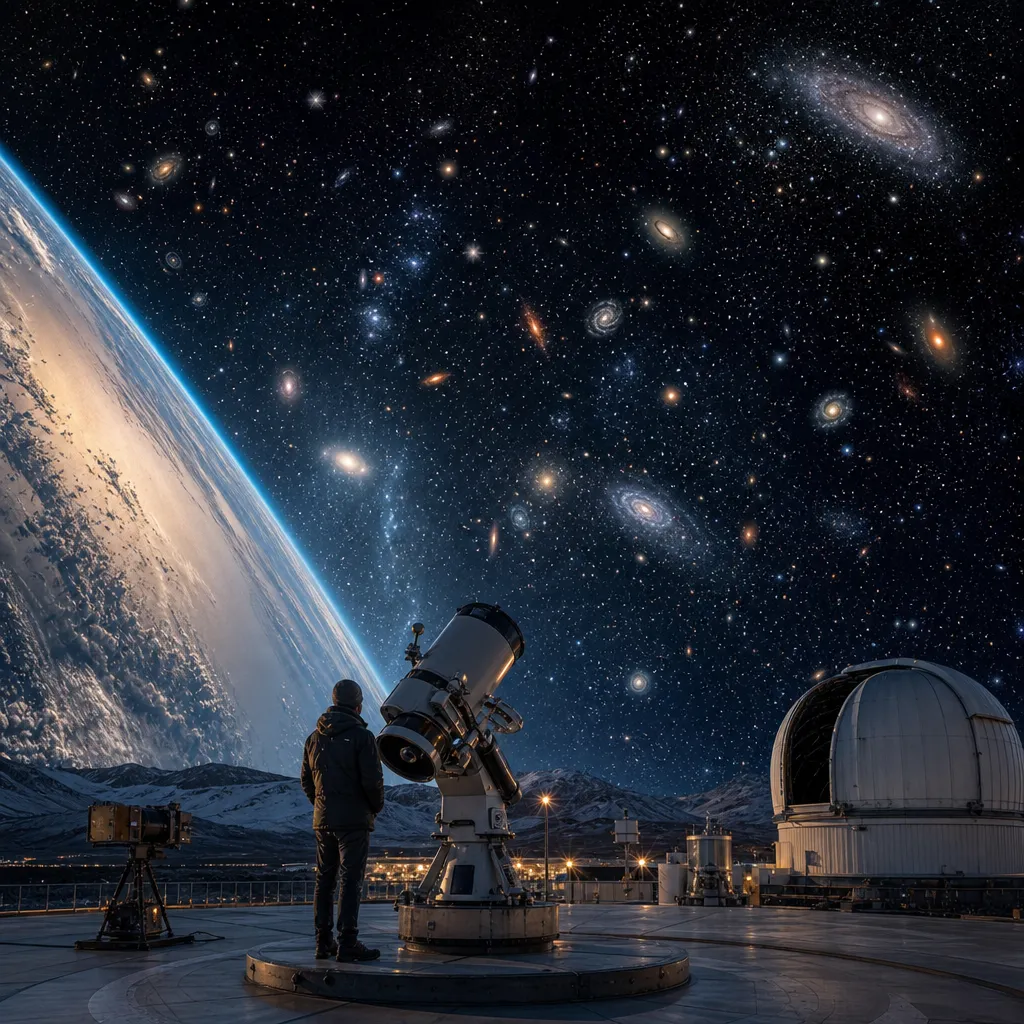
No one can count every star in the universe one by one, but astronomers can make a careful estimate. The best current estimate is that the observable universe contains on the order of 1022 to 1024 stars, often described in plain language as roughly ten sextillion to one septillion stars. That enormous range reflects real uncertainty, because it depends on how many galaxies exist, how massive they are, and how many stars each contains. What matters most is that the number is vastly larger than anything in everyday human experience, and it is inferred from observations rather than directly counted.
The question sounds simple, but it sits at the intersection of astronomy and cosmology. To answer it, scientists combine observations of nearby stars, surveys of galaxies billions of light-years away, and models of how galaxies form and evolve over cosmic time. The result is not a single exact total, but a well-grounded estimate for the part of the universe we can observe.
What does “stars in the universe” actually mean?
First, astronomers usually mean the observable universe, not the entire universe. Because light travels at a finite speed and the universe has a finite age, we can only observe regions from which light has had time to reach us since the Big Bang. There may be much more beyond that horizon, but it is currently inaccessible to observation.
A star is a self-luminous ball of plasma powered for most of its life by nuclear fusion in its core. Stars range from small, cool red dwarfs to rare, massive blue stars. They are grouped into galaxies, and galaxies in turn are distributed across the cosmic web of filaments, clusters, and voids.
So the real scientific version of the question is this: how many stars are likely to exist inside the observable universe, based on the galaxies we can detect and infer?
Why there is no exact count
Counting stars directly across the cosmos is impossible. Even within the Milky Way, dust blocks parts of our view, many faint stars are hard to detect, and the galaxy is far too large for a simple census. Beyond the Milky Way, individual stars are usually too faint to separate except in the nearest galaxies. Most distant galaxies appear as unresolved collections of light.
Instead of counting stars individually, astronomers estimate star numbers indirectly. They measure how bright galaxies are, determine their masses, study the kinds of stars they contain, and then infer the total stellar population. That means the answer depends on models as well as observations.
There is also uncertainty in the number of galaxies. Some are bright and easy to detect; many more are small, faint, or very distant. Deep surveys with space telescopes have shown that the early universe contained huge numbers of faint galaxies that are difficult to see directly.
| Challenge | Why it matters | How astronomers respond |
|---|---|---|
| Most stars outside nearby galaxies cannot be resolved individually | Direct counting is impossible at large distances | Estimate stellar populations from galaxy light and mass |
| Many galaxies are very faint or distant | Galaxy counts are incomplete | Use deep-field surveys and statistical corrections |
| Galaxies contain different mixes of stars | Brightness does not directly equal star count | Apply stellar population models and mass-to-light ratios |
| We can observe only part of the universe | The total beyond the observable horizon is unknown | State estimates only for the observable universe |
How astronomers estimate the total
A classic rough calculation starts with the number of galaxies and multiplies by the average number of stars per galaxy. For many years, a common public estimate used about 100 billion galaxies and about 100 billion stars per galaxy, giving around 1022 stars.
Modern work suggests the picture is more complicated. Deep imaging and analysis of galaxy populations indicate that the observable universe may contain far more galaxies than once thought, including many small, faint ones. A widely discussed estimate published in 2016 argued that the total number of galaxies could be around 2 trillion in the observable universe, though most are beyond current direct detection limits.
That does not mean simply multiplying 2 trillion by 100 billion. Small galaxies usually contain far fewer stars than giant galaxies. Dwarf galaxies may hold millions to billions of stars, while large spirals and giant ellipticals can contain hundreds of billions or more. The average depends on how one weights the galaxy population.
That is why astronomers usually give an order-of-magnitude answer rather than a precise total. Depending on the assumptions used, the total number of stars in the observable universe is plausibly around 1022 to 1024.
What the Milky Way tells us
Our own galaxy provides an important local benchmark. The Milky Way is thought to contain on the order of 100 billion to 400 billion stars, though even this range is uncertain. We cannot step outside the galaxy to photograph it directly, so its structure and stellar content must be inferred from surveys across many wavelengths.
The Milky Way is a barred spiral galaxy with a disk, bulge, halo, and a large population of dim stars that are hard to count. Red dwarfs, the most common stars, are faint and contribute less light than brighter stars, so a galaxy can contain many more stars than its visible brightness alone might suggest.
If one typical large galaxy can already contain hundreds of billions of stars, then a universe filled with hundreds of billions to trillions of galaxies naturally leads to star counts of almost unimaginable scale.
How telescopes and surveys provide the evidence
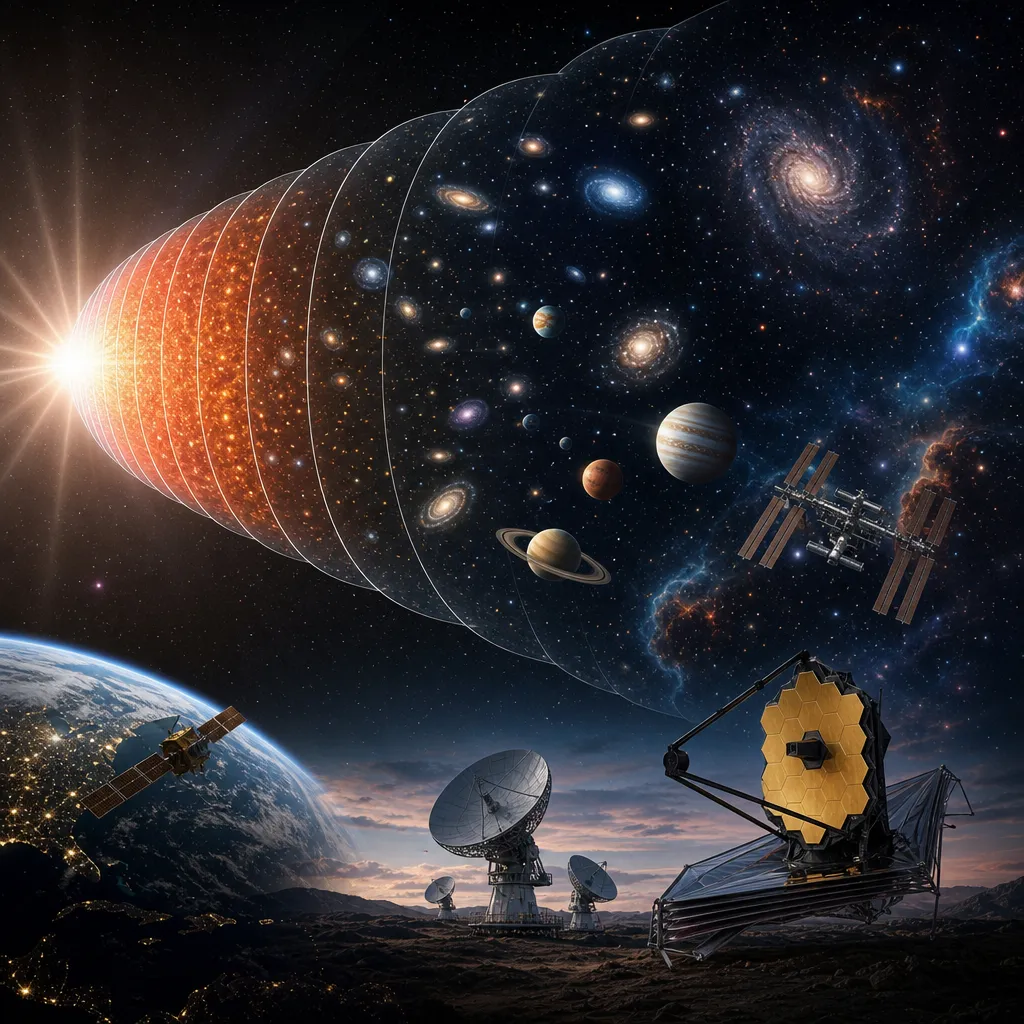
The estimate comes from several lines of evidence. Nearby stars can be counted more directly, helping astronomers understand the distribution of stellar masses and luminosities. In nearby galaxies, powerful telescopes such as the Hubble Space Telescope can resolve individual stars in some regions, calibrating methods used at larger distances.
For distant galaxies, astronomers measure total brightness, color, shape, and spectra. These reveal how much starlight is present, what kinds of stars dominate, and how much stellar mass likely exists. Infrared observations are especially useful because they can trace older stellar populations and penetrate some dust.
Deep-field observations are crucial. Hubble’s deep surveys, including the Hubble Ultra Deep Field, revealed thousands of galaxies in tiny patches of sky. By extrapolating from such fields over the whole sky and correcting for galaxies too faint to detect, astronomers estimate the total galaxy population.
More recently, the James Webb Space Telescope has expanded the view of the early universe by detecting extremely distant galaxies. Webb is helping astronomers refine how quickly galaxies assembled stars in the first few hundred million years after the Big Bang. That improves estimates of total stellar content, especially at early cosmic times.
| Method | What is observed | What it helps estimate |
|---|---|---|
| Star counts in the Milky Way | Positions, brightness, and types of nearby stars | How stellar populations are distributed |
| Resolved stars in nearby galaxies | Individual stars in local group and nearby systems | Calibration of galaxy-wide stellar estimates |
| Galaxy photometry | Total brightness and color of galaxies | Approximate number and type of stars present |
| Spectroscopy | Galaxy spectra across wavelengths | Ages, composition, and stellar mass of galaxies |
| Deep-field surveys | Large samples of faint distant galaxies | How many galaxies exist in the observable universe |
Why the number changes with cosmic time
The total number of stars in the observable universe is not fixed forever. Stars are continuously born and die. The rate of star formation was much higher in the past, peaking several billion years after the Big Bang, and has declined since then.
When astronomers ask how many stars are in the universe, they usually mean now, in the current observable universe. But the answer depends on cosmic history. Early on, there were fewer stars because galaxies were still forming. In the distant future, star formation is expected to continue at a lower rate until galaxies run short of cold gas.
Not all stars survive forever. Massive stars live fast and die young, often in spectacular supernova explosions. Small stars can endure for trillions of years. This mix affects how many stars exist at any given moment and what fraction are bright enough to dominate a galaxy’s light.
Why this question matters scientifically
At first glance, the total number of stars may seem like a curiosity. In fact, it connects to some of the biggest questions in astrophysics. Stars are the factories that make most of the chemical elements needed for planets and life. Knowing how many stars exist helps scientists estimate how much ordinary matter has collapsed into galaxies and how cosmic structure developed.
Star counts also matter for exoplanet studies. If most stars host planets, then the number of planetary systems in the observable universe is also enormous. This does not tell us how many living worlds exist, but it shows why the search for habitable environments is scientifically reasonable.
On the cosmology side, stellar totals help test models of galaxy formation. If observations of galaxy light, stellar mass, and star-formation history do not fit together, then our understanding of how matter assembled over cosmic time needs revision.
What remains uncertain
Several uncertainties remain important. One is the true number of faint galaxies. Many are below the detection threshold of current telescopes, especially at very early times. Their presence must be inferred statistically.
Another uncertainty is the initial mass function, the distribution of star masses when stars form. Because low-mass stars are common but faint, small changes in assumed stellar demographics can alter total star counts significantly without greatly changing a galaxy’s brightness.
Dust also complicates the picture. Dust absorbs and scatters visible light, making galaxies appear dimmer or redder than they otherwise would. Infrared observations reduce this problem, but corrections are still needed.
Finally, the entire estimate applies only to the observable universe. Cosmology does not currently provide a direct measured count for all stars in everything that exists beyond our horizon. The universe may be much larger, perhaps vastly larger, than the part we can see. That possibility is consistent with modern cosmology, but it is not something we can directly count.
A useful way to think about the scale
Human intuition is not well built for numbers like 1022 or 1024. A helpful comparison is that the number of stars in the observable universe likely exceeds the number of grains of sand on all Earth’s beaches by a wide margin, although such comparisons are themselves rough.
The more important lesson is not the exact figure but what the estimate represents: a universe rich in galaxies, shaped by gravity over billions of years, and filled with stars of many kinds and ages. Every improved telescope sharpens that picture, but it has not changed the basic conclusion. The cosmos contains an extraordinary abundance of stars, and we know this not by simple counting, but by careful inference from light.
How do scientists know how many stars are in the universe?
They estimate the number indirectly by combining galaxy counts, measurements of galaxy brightness and mass, models of stellar populations, and deep surveys from telescopes such as Hubble and James Webb.
Can astronomers see every star individually?
No. Individual stars can be resolved in the Milky Way and some nearby galaxies, but most stars in distant galaxies blend together into the total light of the galaxy.
How many stars are in the Milky Way alone?
The Milky Way is generally estimated to contain about 100 billion to 400 billion stars. The range is broad because many faint stars are difficult to count directly.
Is the number of stars in the universe increasing or decreasing?
Both processes happen at once. New stars continue to form, while others die. Overall, star formation has slowed compared with its peak in the distant past, but the current total still changes over time.
Does the total include stars we cannot see?
Yes, in a statistical sense. Estimates try to account for faint stars inside galaxies and faint galaxies below present detection limits. These are inferred from models and surveys, not directly observed one by one.
Could the true number be much larger than current estimates?
Within the observable universe, future observations may refine the estimate, especially by improving counts of faint galaxies. For the universe beyond the observable horizon, the true total could be much larger, but that cannot currently be measured directly.
Why do deep-field images matter so much?
They show that tiny patches of sky contain huge numbers of distant galaxies. By studying those fields and correcting for observational limits, astronomers can estimate the total population across the whole sky.
Sources
- NASA, Hubble Space Telescope: Hubble Ultra Deep Field
- Conselice, C. J. et al., The Evolution of Galaxy Number Density at z < 8 and Its Implications, The Astrophysical Journal, 2016
- ESA/Webb and NASA/CSA: James Webb Space Telescope science overview