
The quest to reach beyond our planet’s atmosphere demands a deep understanding of the propulsion systems and intricate engineering that power modern spacecraft. One of the most critical innovations in rocketry is the concept of multi-stage boosters, where each section of the launch vehicle contributes to achieving the desired orbit by shedding unneeded weight and optimizing performance. This article explores the technical principles behind rocket staging, examining design strategies, separation mechanisms, and the ongoing evolution of launch vehicles.
Fundamentals of Rocket Staging
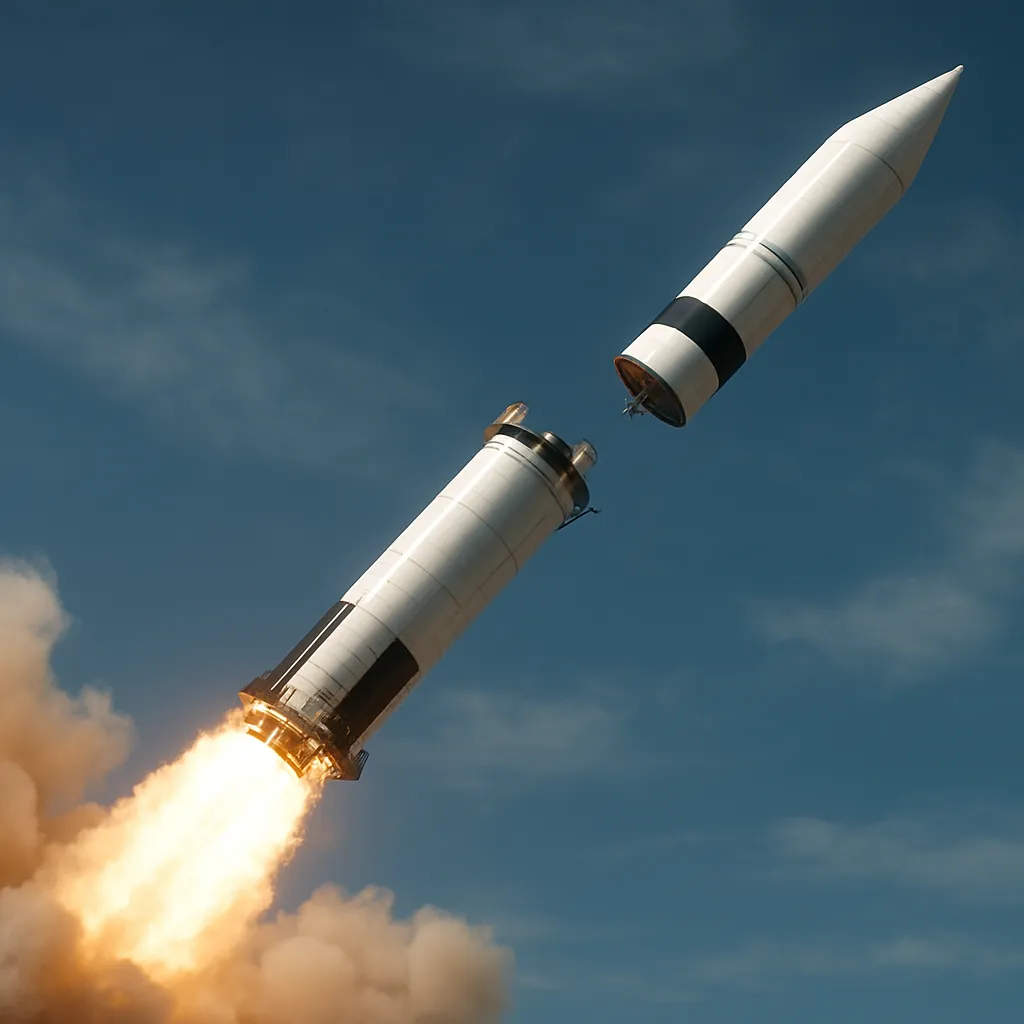
Multi-stage rockets are founded on the principle of discarding hardware that is no longer useful once its fuel is expended. This approach dramatically improves overall efficiency by ensuring that each remaining stage carries less mass, requiring less thrust to accelerate. The idea can be traced back to Konstantin Tsiolkovsky’s early theoretical work, formalized in the Tsiolkovsky rocket equation which highlights the exponential benefits of staging. Without shedding empty tanks and engines, a rocket would need exponentially more fuel to carry the same payload to a given speed.
Why Staging Matters
- Each stage carries only the fuel and structure needed for its segment of the ascent.
- Separation reduces dead weight, lowering the thrust required for the next stage.
- Optimized staging profiles allow for diverse engine types tailored to atmospheric or vacuum conditions.
Design and Materials for Optimal Performance
Designing a stage involves a careful trade-off between strength and weight. Advanced composites and high-strength alloys are used to create tanks and airframes that can withstand extreme pressures without adding excessive mass. Engineers also apply computational modeling to predict dynamic loads during ignition, ascent, and separation events. The choice of propellant—liquid hydrogen and liquid oxygen, kerosene-based RP-1, or hypergolic mixtures—affects tank insulation, structural design, and engine configuration.
Stage Configuration Options
- Parallel staging, where boosters fire alongside the core stage (e.g., Space Shuttle Solid Rocket Boosters).
- Serial staging, where each stage ignites after the previous one separates (e.g., Saturn V).
- Asynchronous staging, with delayed ignition to fine-tune velocity and trajectory.
Materials and Thermal Considerations
At high altitudes, temperatures can plummet to cryogenic levels, while aerodynamic heating at max-Q demands robust thermal protection. Engineers apply multi-layer insulation, spray-on foam, and active cooling systems around cryogenic tanks. The integration of light alloys such as aluminum-lithium with carbon fiber composites allows stages to maintain integrity under both heat and cold while minimizing structural weight.
Separation Mechanisms and Reliability
Reliable separation is one of the most critical moments in a launch sequence. Failure to cleanly jettison a spent stage can lead to catastrophic mission loss. Common separation systems include mechanical pyrotechnic bolts, pneumatic pistons, and spring-driven pushers. More recent designs favor non-explosive actuators that reduce shock and fragmentation risks. Each separation event is meticulously tested under simulated loads to ensure flawless operation during the actual ascent.
Key Separation Technologies
- Pyrotechnic Devices: Fast-acting but generate significant shock.
- Frangible Bolts: Designed to break under controlled detonation, ensuring precise release.
- Non-Explosive Release Mechanisms: Utilize shape-memory alloys or mechanical actuators for smoother staging.
Ensuring Safe Stage Jettison
Telemetry and onboard sensors monitor separation sequences, activating contingency protocols if anomalies arise. Cameras mounted on the vehicle provide real-time visual confirmation of clean detachment. In multi-core designs, such as the Falcon Heavy, aerodynamic interaction between cores must be accounted for to prevent collision post-separation.
Performance Trade-Offs and Mission Profiles
Staging strategy is tailored to mission requirements. LEO (Low Earth Orbit) insertions often use more stages or boosters to rapidly accelerate through thick atmosphere, minimizing gravity losses. For GTO (Geostationary Transfer Orbit) or interplanetary missions, upper stages might rely on high-specific-impulse engines optimized for vacuum, trading off low-thrust for exceptional efficiency. Reusability introduces new challenges: recovering stages demands fuel reserves, additional landing gear, and heat protection, which slightly reduces the maximum payload mass but brings down launch costs over multiple flights.
Typical Mission Profiles
- LEO: Two-stage rockets with powerful first-stage engines.
- GTO: Three-stage vehicles, with cryogenic upper stage reignitions.
- Deep Space: Multiple burns with restartable engines and depots for refueling.
Innovations Shaping Future Launchers
Advancements in additive manufacturing (3D printing) are enabling complex engine geometries and integrated stage components that were impossible a decade ago. New propellant combinations, such as liquid methane and liquid oxygen (methalox), promise cleaner combustion and easier stage refurbishment. Emerging concepts like aerospike engines maintain high thrust over wide altitude ranges, potentially reducing the number of stages needed for a given mission profile.
Reusable Stage Recovery
Companies are perfecting vertical propulsive landings, leveraging grid fins and throttleable engines to guide boosters back to precise landing zones. Autonomous droneships stationed at sea offer flexibility for high-energy missions. The evolution of recovery techniques may eventually allow single-stage-to-orbit designs for small satellites, though the mass penalties of heat shielding and landing hardware remain a barrier.
Conclusion of Engineering Insights
Rocket staging epitomizes the marriage of physics, materials science, and precision engineering. By systematically shedding weight and deploying specialized engines, modern launch vehicles convert chemical energy into orbital motion with remarkable efficiency. As technology marches forward, the fundamental principle of staging continues to unlock new frontiers in space exploration, making the journey from Earth’s surface to the stars ever more accessible.