


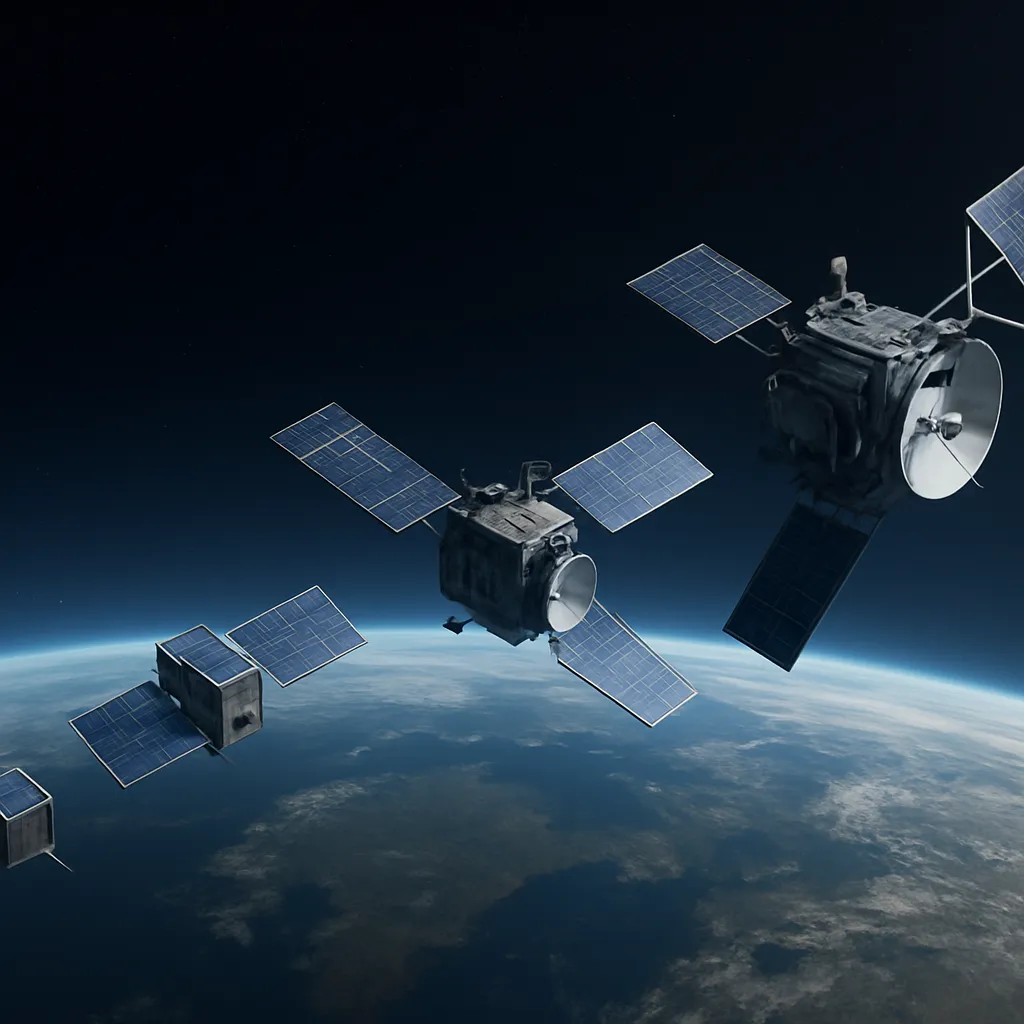
Satellite constellations represent a transformative force in our exploration and utilization of space, reshaping how humanity perceives global connectivity and observation. From pioneering missions that launched solitary spacecraft to today’s dense networks of hundreds or even thousands of satellites, this journey reflects rapid technological progress and shifting strategic priorities. As nations and private enterprises vie to deploy expansive orbital fleets, the implications for communication, science, and security continue to expand. This article examines the evolution of satellite constellations through historical milestones, key technological breakthroughs, modern large-scale deployments, and emerging challenges that will define the next era of orbital systems.
Historical Foundations of Orbital Networks
Long before the advent of densely packed fleets, early experiments in space relied on single, standalone spacecraft. The launch of Sputnik 1 in 1957 marked humanity’s first leap into orbit, showcasing that a solitary satellite could circle Earth and transmit simple signals back to the ground. Over the next decade, projects like Telstar and Syncom demonstrated the feasibility of relaying transatlantic television broadcasts and pioneering geostationary orbit operations. These initial ventures laid the groundwork for networks designed not merely as individual nodes but as coordinated systems.
During the 1970s and 1980s, the concept of an orbital constellation gained traction. The Iridium project, initiated by Motorola, sought to blanket the globe with mobile phone coverage, leveraging 66 low Earth orbit (LEO) satellites. Its architecture introduced the idea of crosslinks enabling inter-satellite data transfer, reducing latency and dependence on ground stations. Although Iridium faced bankruptcy soon after its 1998 launch due to high costs and limited user adoption, it eventually revived and highlighted how systemic design could deliver truly global services.
Simultaneously, the United States Department of Defense deployed the Global Positioning System (GPS), a medium Earth orbit (MEO) network that would redefine navigation. By maintaining synchronized atomic clocks across 24+ satellites, GPS provided pinpoint geolocation and timing services. This program underscored how precision constellations could serve both civilian and military applications, cementing the role of orbital fleets in modern infrastructure.
Technological Breakthroughs and Miniaturization
The turn of the 21st century ushered in dramatic reductions in satellite size, weight, and cost. Traditional spacecraft weighing hundreds of kilograms gave way to microsatellites and small sats, with CubeSats emerging as standardized 10x10x10 cm modules. This standardization democratized access to space, allowing universities and startups to collaborate on scientific missions for a fraction of previous budgets. Miniaturization sparked unprecedented levels of innovation in payload design, power management, and propulsion.
Advances in electric propulsion, such as Hall-effect thrusters and ion engines, enabled small satellites to perform orbital maneuvers previously limited to larger platforms. These efficient propulsion systems increased mission lifetimes and permitted dynamic coverage adjustments, empowering operators to reposition assets to meet real-time demand. Meanwhile, developments in phased-array antennas and digital beamforming allowed tightly focused links between satellites and ground terminals, enhancing bandwidth while reducing interference in crowded frequency spectrum.
Another pivotal breakthrough was the integration of onboard processing and machine learning capabilities. Rather than streaming raw data to Earth, modern constellations can preprocess imagery, detect anomalies, or autonomously reroute traffic. This intelligent network approach minimizes downlink requirements and accelerates decision-making during critical operations, such as natural disaster response or maritime tracking.
Rise of Mega-Constellations in Low Earth Orbit
Fueled by affordable launches and modular satellite buses, the past decade has witnessed the emergence of mega-constellations—networks comprising thousands of satellites in LEO. Companies like SpaceX, OneWeb, and Amazon’s Project Kuiper aim to deliver low-latency, high-speed internet services to even the most remote regions. By maintaining a shell of satellites at altitudes between 500 and 1,200 km, these constellations minimize signal delay and boost global connectivity.
Key to this expansion is ride-sharing on reusable launch vehicles. SpaceX’s Falcon 9 can deploy 60 Starlink satellites in a single mission, driving down per-unit launch cost and enabling rapid replenishment. The modular nature of small satellites also simplifies mass production, drawing on assembly-line techniques and commercial off-the-shelf components. As deployments accelerate, the world may soon see over 10,000 operational satellites at once, dwarfing all previous networks.
- Enhanced latency performance under 30 ms
- Dynamic beam steering for targeted regional coverage
- On-orbit servicing and refueling compatibility
- Deorbit mechanisms for end-of-life sustainability
These features promise transformative impacts on industries such as remote education, telemedicine, and IoT connectivity. However, the density of modern constellations raises concerns about orbital debris, collision avoidance, and spectral congestion. Regulatory bodies and operators collaborate on best practices to ensure safe operations, including coordinated collision warnings and standardized deorbit timelines.
Challenges, Sustainability, and the Next Frontier
Looking ahead, satellite networks must address a spectrum of technical, environmental, and policy challenges. Space traffic management is becoming essential as orbits fill with active and defunct spacecraft. Innovations in autonomous maneuver planning and advanced space situational awareness sensors will be critical to mitigating collision risks. Moreover, the development of reusable orbital platforms and robotic servicing vehicles offers potential solutions for repairing, refueling, or upgrading existing assets without launching replacements.
Environmental impact extends beyond Earth’s immediate vicinity. Light pollution from large constellations affects astronomical observations, prompting collaborations between astronomers and operators to dim satellite brightness. At the same time, operators are exploring materials and designs that reduce fragmentation upon reentry, supporting long-term orbital health. The principle of “design for demise” ensures that retired satellites burn up harmlessly in the atmosphere, promoting lasting orbital sustainability.
Future constellations will likely incorporate higher degrees of autonomy, leveraging distributed AI to optimize network performance in real time. Interlinked systems of inter-satellite laser communications could form resilient mesh networks, enabling faster-than-ever data relay across continents and oceans. As humanity contemplates manned missions to the Moon and Mars, orbital communication grids around other celestial bodies may become as vital as those encircling Earth today.
Through continuous innovation and cooperative governance, satellite constellations stand poised to redefine our relationship with space—advancing scientific discovery, expanding global connectivity, and charting new frontiers in the cosmic arena.