

Establishing a permanent human presence on Mars represents one of the most ambitious ventures in the history of space exploration. This endeavor demands meticulous planning, innovative engineering solutions, and a deep understanding of Martian environments. By overcoming severe challenges such as cosmic radiation, extreme temperatures, and resource scarcity, we can create a habitat where astronauts not only survive but thrive. The following sections explore key strategies for selecting the optimal site, designing robust life support systems, constructing infrastructure with indigenous materials, and maintaining seamless communication between Earth and Mars.
Selecting the Ideal Mars Location
Choosing the right landing and settlement area is crucial for mission success. Factors such as elevation, proximity to water ice, geological stability, and solar exposure all influence the long-term habitability of a Martian base. Low-lying regions near the polar ice caps offer access to frozen water resources, while equatorial areas receive more consistent sunlight for power generation. Each potential site must be evaluated for its balance of resource availability and environmental hazards.
Key Criteria for Site Evaluation
- Availability of in-situ resource utilization (ISRU) materials like water ice and regolith.
- Natural terrain features for enhanced radiation shielding, such as lava tubes or craters.
- Stable weather patterns and minimized dust storm frequency.
- Optimal solar irradiance for energy capture.
Robotic scouts and orbiting satellites will conduct detailed surveys to determine soil composition, radiation levels, and sub-surface ice deposits. With this data, mission planners can pinpoint sites that maximize safety and resource efficiency.
Designing Self-Sustaining Life Support Systems
Beyond landing safely, astronauts require an ecosystem that recycles air, water, and waste indefinitely. Closed-loop systems on Earth have demonstrated the feasibility of near-total water recovery, but Mars’ lower gravity and lower atmospheric pressure introduce new complications. Life support modules must handle dynamic fluid behavior in microgravity, maintain stable atmospheric composition, and protect inhabitants from harsh external conditions.
Atmospheric Management
- Electrochemical conversion of CO₂ to oxygen via modified Sabatier reactors.
- High-efficiency filtration systems to remove dust and potential toxins.
- Redundant circulation fans and sensors to monitor air quality.
Water reclamation will rely on advanced distillation and membrane purification units, ensuring that every drop is reused. Solid and liquid waste processors will convert organic materials into fertilizers for greenhouses, closing the nutrient loop crucial for growing food crops.
Building Infrastructure with Local Resources
Transporting construction materials from Earth is prohibitively expensive, so leveraging Martian regolith and ice becomes a mission imperative. Through a combination of 3D printing, sintering techniques, and autonomous robotics, we can fabricate habitats, landing pads, and protective berms directly on Mars. This approach reduces payload mass and fosters a self-reliant settlement.
Robotic Construction and Additive Manufacturing
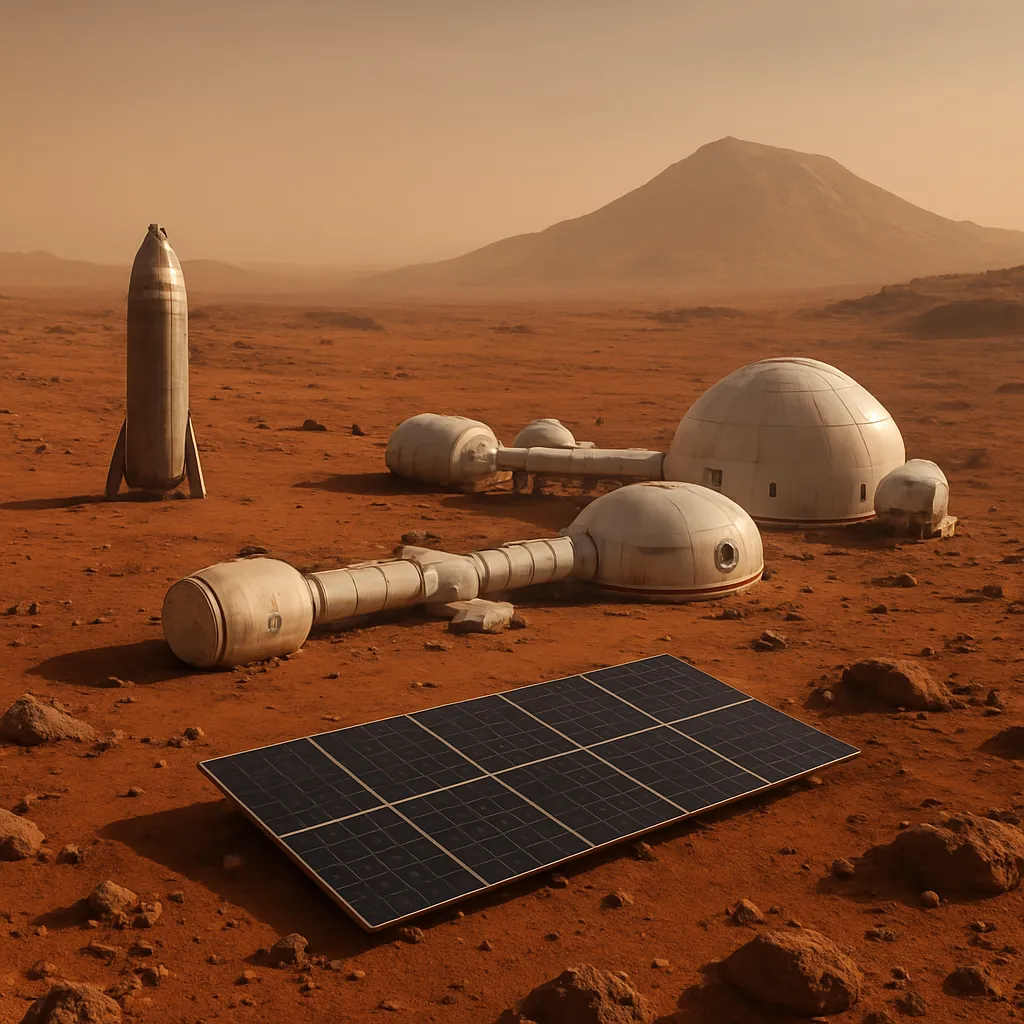
Autonomous robotics and rovers equipped with regolith processing units will mix soil with binding agents to form brick-like modules. Layer-by-layer sintering using concentrated solar energy or microwaves will produce durable building blocks. Once the initial shells are in place, inflatable or rigid dome structures can be attached, providing immediate shelter and working space.
- 3D-printed habitat shells with integrated piping and cabling.
- In-ground heat exchangers using permafrost to stabilize internal temperatures.
- Radiation-absorbing composite walls embedded with water or ice layers.
This kind of infrastructure harnesses local materials for enhanced resilience against micrometeoroid impacts and cosmic rays. It also paves the way for incremental expansion as the colony grows.
Ensuring Communication and Operational Continuity
Reliable data links between Mars and Earth are vital for remote medical consultations, scientific coordination, and psychological support. Because signal delays can range from four to 24 minutes one-way, the base must operate with a high degree of autonomous capability. On-site crews need advanced diagnostic tools, AI-driven maintenance protocols, and robust contingency plans.
Communication Network Architecture
- Orbital relay satellites ensuring near-constant connectivity.
- High-gain antennas and laser communication terminals for large data transfers.
- Local mesh networks integrating surface vehicles, habitats, and power stations.
Integrated command hubs on Mars equipped with predictive analytics can preempt equipment failures. Virtual reality interfaces will allow astronauts to troubleshoot Earth-built systems, while remote laboratories on Earth analyze incoming samples and send back optimized experimental protocols.
Leveraging Sustainable Energy and Resource Operations
Powering a Martian base requires a combination of solar arrays, nuclear reactors, and energy storage solutions. Solar panels provide clean, readily deployable energy, but dust accumulation and seasonal variations demand robust dust-cleaning systems and backup options. Compact fission reactors offer steady, high-output power to support intensive manufacturing and life support loads.
Energy Infrastructure Components
- Modular solar farms with automated dust mitigation brushes and electrostatic cleaners.
- Small-scale nuclear reactors with passive cooling and minimal crew maintenance.
- Advanced battery banks and hydrogen fuel cells for peak-load balancing.
By combining multiple energy sources, the settlement achieves redundancy and reduced reliance on Earth-based resupply. This power network underpins critical processes such as water electrolysis, regolith processing, and habitat climate control.
Advancing Research, Culture, and Governance
A long-term Martian settlement will evolve beyond a mere outpost into a thriving community. Scientific research on local geology, biology, and atmospheric sciences will enrich our understanding of planetary processes. Recreational and cultural initiatives—such as virtual concerts, interplanetary sports, and shared art projects—will foster social cohesion. Effective governance models, possibly incorporating democratic assemblies or AI-based decision support, will ensure fair resource distribution and conflict resolution.
Education programs adapted for microgravity conditions and limited bandwidth will keep new generations of settlers informed and engaged. Collaborations with Earth-based institutions will continue to drive innovation and maintain a strong sense of connection to our home planet.
Charting the Path to Future Expansion
Once the initial base reaches operational stability, its footprint can expand through additional modules, research outposts, and agricultural zones. Partnerships with commercial entities could accelerate the development of tourism, mining operations for rare minerals, and interplanetary cargo hubs. Ultimately, the lessons learned from building a permanent Martian base will pave the way for further human exploration of the outer Solar System.