Astronauts live in space by turning a spacecraft or space station into a carefully controlled artificial habitat. They breathe recycled air, drink recovered water, eat packaged food, sleep in small crew quarters, exercise every day, and follow strict schedules to stay healthy and keep the station running. Life in orbit feels weightless, but it is not carefree: microgravity changes the body, radiation adds risk, and even simple tasks such as washing, cooking, and using the toilet must be redesigned. Modern human spaceflight is therefore a mix of biology, engineering, and constant monitoring.
Most long-duration human spaceflight today happens aboard the International Space Station, or ISS, which circles Earth in low Earth orbit. Astronauts there live inside pressurized modules filled with equipment for life support, science, communications, and maintenance. Their way of life shows what humans need to survive away from Earth and provides essential knowledge for future missions to the Moon and, eventually, Mars.
Living in orbit: a home that is also a laboratory
Astronauts do not live in space the way people live in a house on Earth. A space station is both a home and a machine. Every part of it must help keep the crew alive: walls hold pressure, filters clean the air, electronics control temperature, and systems remove carbon dioxide and humidity. The station also serves as a laboratory where astronauts conduct research in biology, materials science, medicine, Earth observation, and physics.
The ISS is in continuous free fall around Earth, which creates the condition commonly called microgravity. Astronauts appear weightless because they and the station are falling together around the planet. In this environment, objects do not stay on tables, liquids form floating blobs, and the human body no longer experiences the same loading on bones and muscles as it does on Earth.
Although space may seem empty, the interior of a station is a tightly managed environment. Pressure, oxygen concentration, carbon dioxide levels, temperature, humidity, and trace contaminants must all stay within safe limits. Crew members spend part of every day checking systems, replacing components, and cleaning surfaces to prevent equipment failures and microbial growth.
How astronauts breathe, drink, and manage waste
The most basic requirement for life in space is environmental control and life support. On the ISS, these systems supply breathable air, maintain cabin pressure, recycle part of the water supply, and handle waste. Oxygen can be delivered in stored tanks, but it can also be generated onboard. A key method is electrolysis, which uses electricity to split water into oxygen and hydrogen. The oxygen is added to the cabin atmosphere, while the hydrogen may be vented or used in other processes.
Carbon dioxide removal is equally important. Humans exhale carbon dioxide continuously, and in a closed environment it can build up quickly. Space stations use scrubbers and other air-processing hardware to remove it. Trace contaminants from equipment, materials, and human activity also have to be filtered out.
Water is too valuable to waste. On the ISS, water recovery systems reclaim moisture from cabin air and process wastewater, including urine, into water that can be purified for reuse. This does not mean astronauts live with unlimited water, but recycling greatly reduces the amount that must be launched from Earth.
Waste management is more complex in microgravity than on Earth because gravity cannot pull liquids and solids downward. Space toilets rely on airflow and careful positioning. Hygiene systems are also adapted: astronauts typically use rinseless wipes, no-rinse shampoos, and controlled water dispensing rather than showers.
| Need | How it is handled in space | Why it matters |
|---|---|---|
| Breathable air | Oxygen supply, air circulation, carbon dioxide removal, contaminant filtering | Prevents suffocation, toxicity, and poor crew performance |
| Water | Stored reserves plus recycling of humidity and wastewater | Reduces dependence on cargo deliveries from Earth |
| Food | Packaged meals designed for storage and easy use in microgravity | Provides energy, nutrients, and psychological comfort |
| Waste removal | Airflow-based toilets and controlled collection systems | Maintains hygiene and protects station systems |
| Temperature control | Active thermal control and internal airflow | Keeps crew and electronics within safe operating limits |
Food, sleep, and the routines of daily life
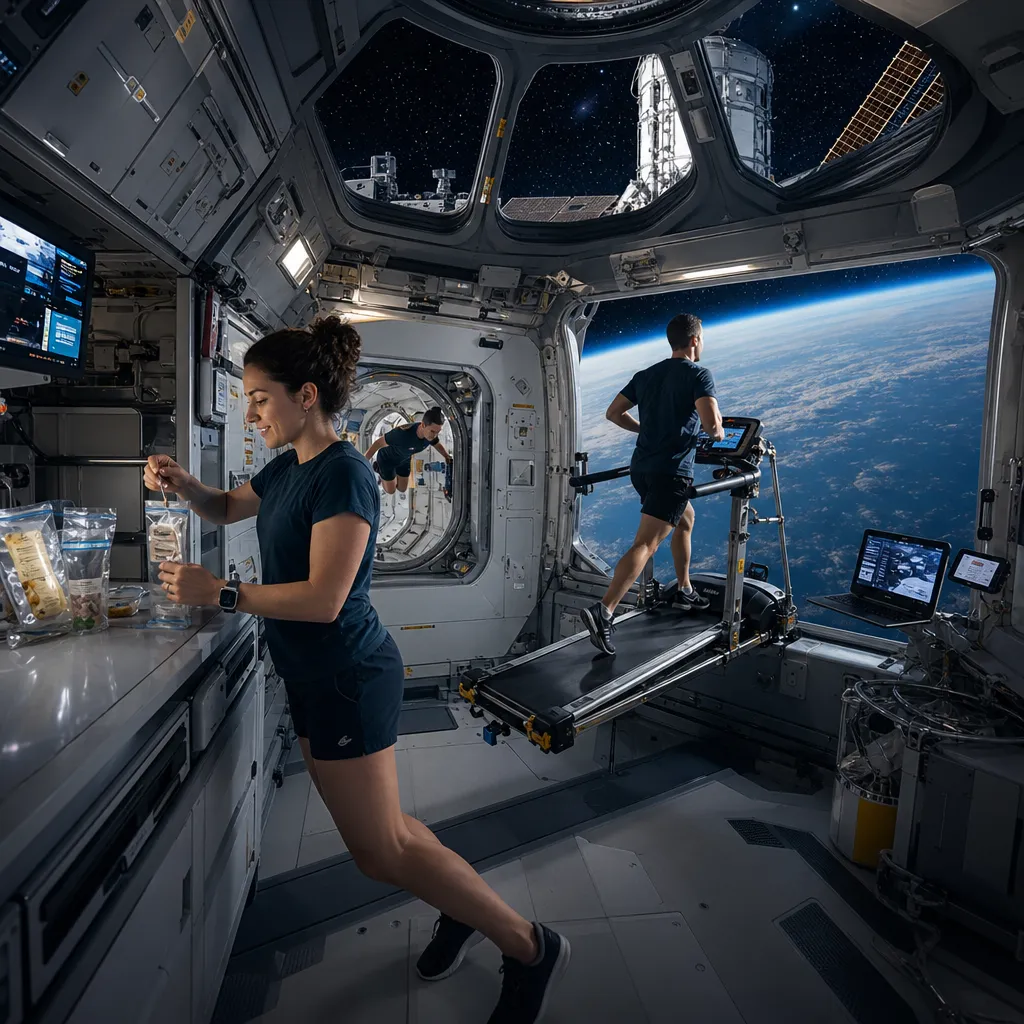
Astronauts eat carefully planned meals that must be safe, stable, and easy to handle in microgravity. Food is often packaged in sealed containers or pouches so crumbs and droplets do not drift into equipment. Some meals are thermostabilized, some are rehydratable, and some can be eaten more or less as packaged. Fresh food may arrive on cargo spacecraft, but it does not last long.
Meals are not just about nutrition. They also support morale, cultural connection, and crew cohesion. Space agencies pay attention to menu variety because appetite can change in orbit, especially early in a mission when body fluids shift toward the head and alter taste and smell.
Sleeping in space also requires adaptation. Astronauts usually sleep in small crew cabins or designated areas while strapped into sleeping bags attached to a wall or ceiling. In microgravity there is no practical difference between those directions, but restraint prevents drifting into equipment. Noise control, lighting schedules, and workload planning all matter because sleep quality can suffer in orbit.
Daily life is highly scheduled. A typical day includes mission planning conferences, scientific work, exercise, station maintenance, meals, communication with family when possible, and sleep. This structure reduces errors and helps coordinate an international crew working with control centers on Earth.
What microgravity does to the human body
Space is challenging for the human body because it evolved under Earth’s gravity. In microgravity, bones are no longer loaded in the usual way, so they can lose mineral density over time. Muscles, especially those used for posture and walking, also weaken if not actively trained. This is why exercise is not optional aboard the ISS; it is a medical countermeasure.
Body fluids shift upward toward the chest and head because gravity no longer pulls them strongly toward the legs. This contributes to the characteristic “puffy face” seen in many astronauts early in flight. It can also affect the cardiovascular system and is linked to a set of vision-related changes studied under the term spaceflight-associated neuro-ocular syndrome.
The vestibular system, which helps control balance and orientation, can also be disrupted. Many astronauts experience motion sickness in the first days of flight while the brain adapts to a new sensory environment. Over time, most crew members adjust, but returning to Earth’s gravity requires readaptation again.
Radiation is another major concern. Even in low Earth orbit, astronauts receive more radiation than people on the ground because Earth’s atmosphere no longer provides full protection and geomagnetic shielding is reduced. This exposure is a serious planning issue for longer missions beyond low Earth orbit, where crews would face a harsher radiation environment.
Why exercise is essential
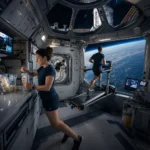
To limit muscle loss, bone loss, and cardiovascular deconditioning, astronauts spend a significant part of each day exercising. The ISS carries specialized equipment including a treadmill, a stationary-cycle device, and a resistive exercise machine that simulates weightlifting without conventional weights.
Exercise in orbit is not primarily for fitness in the ordinary sense. It is part of medical care. Without it, long missions would leave astronauts much weaker and make post-flight recovery more difficult. Even with exercise, some physiological changes still occur, which is why researchers continue studying improved countermeasures.
These studies matter beyond spaceflight. Research on bone loss, muscle atrophy, fluid shifts, and cardiovascular adaptation can also inform medicine on Earth, especially in aging, immobilization, and rehabilitation.
Work, science, and maintenance aboard a space station
Astronauts are not simply passengers. They are operators, researchers, repair technicians, and test subjects in carefully supervised studies. On the ISS, crews perform experiments that use microgravity as a research tool. Without strong buoyancy and sedimentation, cells, flames, fluids, crystals, and materials can behave differently than they do on Earth.
Maintenance is equally important. A space station is constantly exposed to wear from temperature cycling, vibration, equipment aging, and the demands of continuous occupation. Filters clog, pumps fail, seals wear out, and software must be updated. Crews inspect systems and replace components because in orbit there is no ordinary repair shop to visit.
Sometimes astronauts leave the station to perform spacewalks, formally called extravehicular activities. These are among the most complex and risky tasks in human spaceflight. Spacesuits act as miniature spacecraft, providing pressure, oxygen, temperature regulation, and communications while protecting the wearer from the external vacuum.
| Activity | Purpose | Main challenge in space |
|---|---|---|
| Eating | Nutrition and crew well-being | Preventing crumbs and floating liquids from escaping |
| Sleeping | Rest and recovery | Noise, schedules, and staying secured in place |
| Exercising | Protecting bones, muscles, and cardiovascular health | Creating useful physical loading without gravity |
| Hygiene | Health and comfort | Using minimal free water in microgravity |
| Scientific experiments | Research in biology, physics, Earth science, and technology | Managing delicate equipment in a confined habitat |
| Maintenance | Keeping the station safe and functional | Limited spare parts, time, and repair options |
Psychology, teamwork, and living in confinement
Human spaceflight is also a psychological challenge. Astronauts live for months in a confined, isolated, and highly structured environment, far from family and with limited privacy. Good team dynamics are therefore as important as technical skill. Crews train extensively before launch so they can work smoothly across languages, procedures, and cultures.
Mission planners pay close attention to workload, communication, recreation, and mental health. Astronauts can usually contact family, celebrate holidays, and share meals, all of which help maintain emotional stability. Windows are surprisingly important as well. Many astronauts describe looking at Earth as one of the most meaningful parts of life in orbit.
These psychological studies are especially relevant for future exploration missions. A crew traveling to Mars, for example, would face much greater communication delays and no quick return option. What works in low Earth orbit may need significant adaptation for deep-space missions.
How scientists and engineers know what life in space is like
Knowledge about living in space comes from decades of missions, beginning with short early flights and expanding through long stays on stations such as Salyut, Skylab, Mir, and the ISS. Data are gathered from medical monitoring, blood and urine tests, imaging, cognitive tests, exercise records, environmental sensors, and post-flight examinations. Scientists compare preflight, inflight, and post-flight measurements to understand how the body changes and recovers.
Engineers also learn from operations. Every air filter replacement, water-recycling test, software update, and hardware failure teaches something about how to design more reliable habitats. Cargo and crew vehicles have shown how supply chains support orbital living, while accidents and near-misses have led to major safety improvements.
Some knowledge comes from analog environments on Earth, such as underwater habitats, polar stations, bed-rest studies, and isolation experiments. These cannot reproduce all aspects of spaceflight, especially radiation and true microgravity, but they help researchers test procedures and understand confinement, circadian disruption, and operational stress.
Much of the basic picture is well established: microgravity affects bone, muscle, fluids, and balance; astronauts need exercise and life support; and long missions require careful environmental control. What remains uncertain is how best to reduce risk on much longer journeys, especially beyond Earth orbit.
Why it matters for the future of exploration
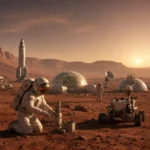
Learning how astronauts live in space is not just about current missions. It is the foundation for future lunar bases, long-duration stays in cislunar space, and possible human missions to Mars. The farther humans travel from Earth, the less practical frequent resupply becomes. That means spacecraft and habitats must recycle more, fail less often, and better protect crews from radiation and isolation.
Current systems are effective, but they are not fully closed-loop. Future habitat designs are expected to improve water recovery, air regeneration, waste processing, food systems, and medical autonomy. Some concepts include growing food in space, though large-scale space agriculture remains an area of active research rather than routine practice.
The central lesson from decades of human spaceflight is clear: surviving in space is possible, but it requires constant support from technology and careful attention to biology. Space does not naturally welcome human life. Astronauts live there by bringing a piece of Earth with them and learning, step by step, how to make that piece more capable and resilient.
How do astronauts shower or stay clean in space?
They generally do not take conventional showers. Instead, they use rinseless wipes, no-rinse soaps and shampoos, towels, and carefully dispensed water to maintain hygiene without letting free-floating water spread through the cabin.
Why do astronauts float inside the space station?
They float because the station and everything inside it are in continuous free fall around Earth. This produces microgravity, which makes astronauts appear weightless even though Earth’s gravity is still acting on them.
Do astronauts cook in space?
Cooking is very limited. Most food is prepackaged, rehydratable, or ready to warm and eat. Open flames and ordinary stovetops are not used because they would be unsafe and impractical in a spacecraft environment.
How dangerous is radiation for astronauts?
Radiation is a significant risk, especially on long missions. In low Earth orbit, Earth’s magnetic field offers partial protection, but exposure is still higher than on the ground. Beyond low Earth orbit, radiation from solar energetic particles and galactic cosmic rays becomes a more serious challenge.
How do scientists know what happens to the body in space?
They use medical monitoring before, during, and after missions, along with blood tests, imaging, exercise data, vision studies, and cognitive assessments. Results from many astronauts over decades provide strong evidence for the main effects of microgravity and spaceflight.
Can astronauts live in space indefinitely?
No evidence shows that humans can live indefinitely in space with current systems. Long-duration missions are possible, but they depend on resupply, maintenance, medical monitoring, and countermeasures such as exercise. The long-term limits for multiyear deep-space missions are still being studied.
Will future astronauts grow their own food in space?
Possibly, but this is not yet the main method of feeding crews. Small-scale plant growth has been demonstrated in space, and future missions may use it to supplement stored food if the systems prove reliable and efficient.
Sources
- NASA, International Space Station Overview
- European Space Agency, Living in Space
- National Academies of Sciences, Engineering, and Medicine, Recapturing a Future for Space Exploration: Life and Physical Sciences Research for a New Era