


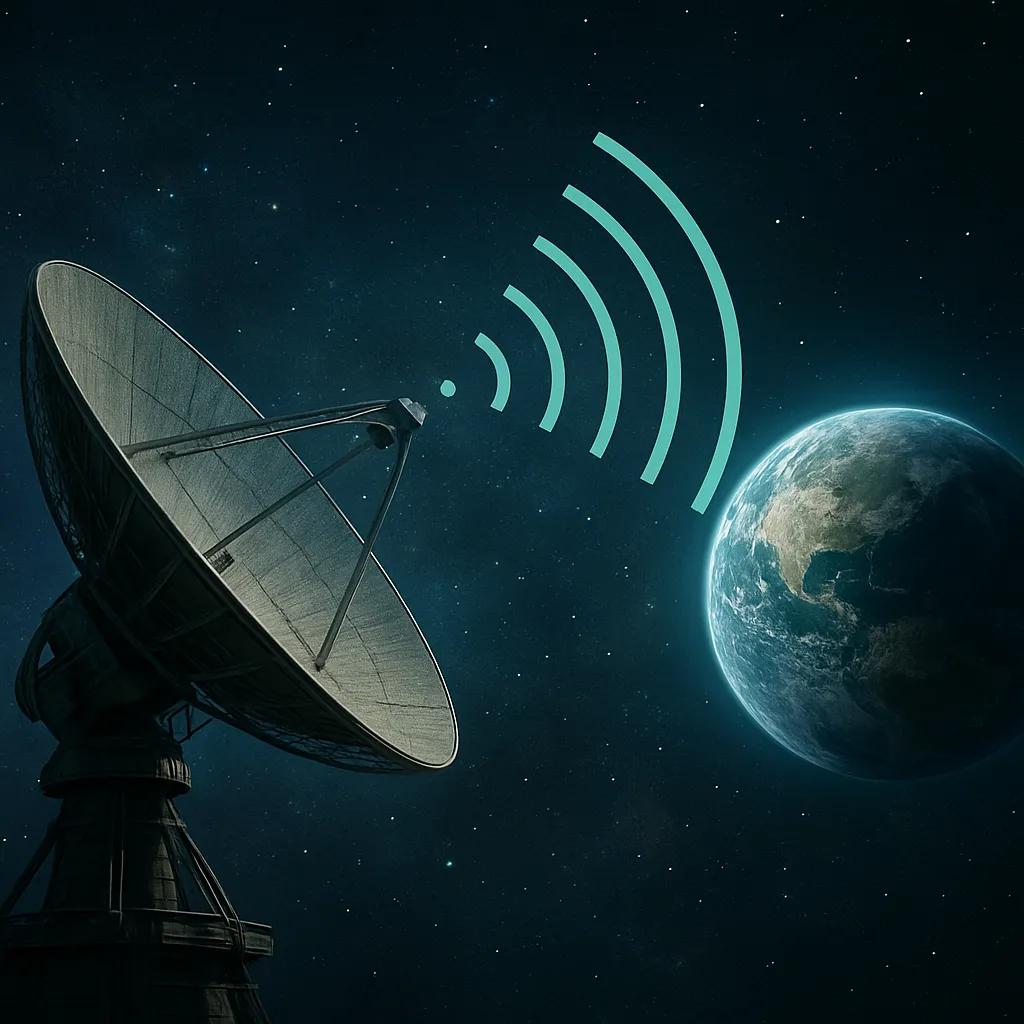
Humanity’s quest to answer the age-old question “Are we alone?” has expanded beyond philosophical debate into the realm of cutting-edge science. By harnessing advanced instruments and analytical techniques, researchers aim to uncover technosignatures—evidence of technologies created by extraterrestrial civilizations. From radio observatories scanning the sky to infrared telescopes hunting for colossal heat sources, our exploration now spans a wide spectrum of possibilities. This article delves into key strategies for detecting alien intelligences and highlights the tools that may one day reveal peers among the stars.
Detecting Radio Signals Across the Cosmos
Since the early days of the Search for Extraterrestrial Intelligence (SETI), radio waves have represented the most promising medium for interstellar communication. Radio photons travel vast distances with minimal absorption by interstellar gas and dust, making them ideal carriers of information.
Targeted vs. All-Sky Surveys
Two main approaches guide radio searches:
- Targeted Searches: Pointing large dishes at specific nearby stars, exoplanetary systems, or the galactic center.
- All-Sky Surveys: Sweeping wide swaths of sky to capture unexpected or transient pulsed emissions.
Both strategies rely on sensitive radio telescopes equipped with wideband receivers. Instruments like the Allen Telescope Array and FAST (Five-hundred-meter Aperture Spherical Telescope) continuously monitor frequencies between 1 and 10 GHz, known as the “water hole,” where cosmic background noise is relatively low.
Signal Processing and Machine Learning
Modern efforts incorporate signal processing pipelines and data analysis techniques that isolate narrow-band or modulated patterns against a sea of natural and human-made interference. Machine learning algorithms sift through petabytes of recordings, flagging anomalies for human review. Underlying this progress is automated pattern recognition, which increases our chance of spotting faint or intermittent beacons that conventional methods might miss.
Searching for Optical and Infrared Technosignatures
Beyond radio frequencies, the optical and infrared regimes present fertile ground for discovering advanced civilizations. Powerful optical lasers could be used as communication beacons, while massive engineering projects might emit copious infrared radiation.
Laser SETI Initiatives
Projects like Laser SETI aim to detect ultra-brief ( Such a discovery would represent a definitive technosignature—a sign of intentional signal design rather than astrophysical processes. According to mid-20th-century physicist Freeman Dyson, a sufficiently advanced species might surround its star with structures to harness energy, creating a so-called Dyson sphere. These megastructures would re-radiate starlight as thermal infrared emissions. Telescopes like the Wide-field Infrared Survey Explorer (WISE) scan the sky for objects with anomalous infrared excess. Key indicators include: Detecting such spectral anomalies could point to mega-engineering on a planetary or stellar scale—a hallmark of a civilization dramatically more advanced than our own. While direct communication signals provide immediate proof, other forms of evidence may arise from passive observations of cosmic artifacts. These include large-scale habitats, orbital structures, or even interstellar probes. Space missions like Kepler and TESS employ transit photometry to detect exoplanets by measuring dips in stellar brightness. Unusual light curves—irregular, asymmetric, or too deep for a natural planet—might reveal artificial objects orbiting a star. Characteristics of potential megastructures: Case studies, such as the enigmatic dimming of Tabby’s Star (KIC 8462852), illustrate how transit anomalies spark intense scrutiny. Though natural explanations like dust clouds often prevail, the possibility of an engineered origin remains intriguing. Another avenue involves detecting artifacts traveling through our Solar System. Long-range robotic probes might be designed to rendezvous with or observe emerging civilizations. Signs of such craft could include: Projects scanning for near-Earth objects (NEOs) could incorporate algorithms tuned to identify artificial interlopers concealed among natural debris. Advanced machine learning models can flag unusual motion or reflectivity profiles for follow-up observations. Detecting alien technologies requires a global effort. Collaborative initiatives pool resources, share data, and coordinate observation campaigns. Key components of this networked approach include: As instrumentation evolves—ushering in next-generation radio arrays, space-based optical interferometers, and far-infrared observatories—the sensitivity to potential technosignatures will improve dramatically. By leveraging both passive and active search strategies, we stand poised at the threshold of a discovery that could redefine our place in the universe.
Infrared Searches for Waste Heat
Uncovering Architectural Remnants of Extraterrestrial Engineering
Transit Photometry and Megastructures
Interstellar Probes and Artifacts
Collaborative Networks and the Future of Technosignature Research