


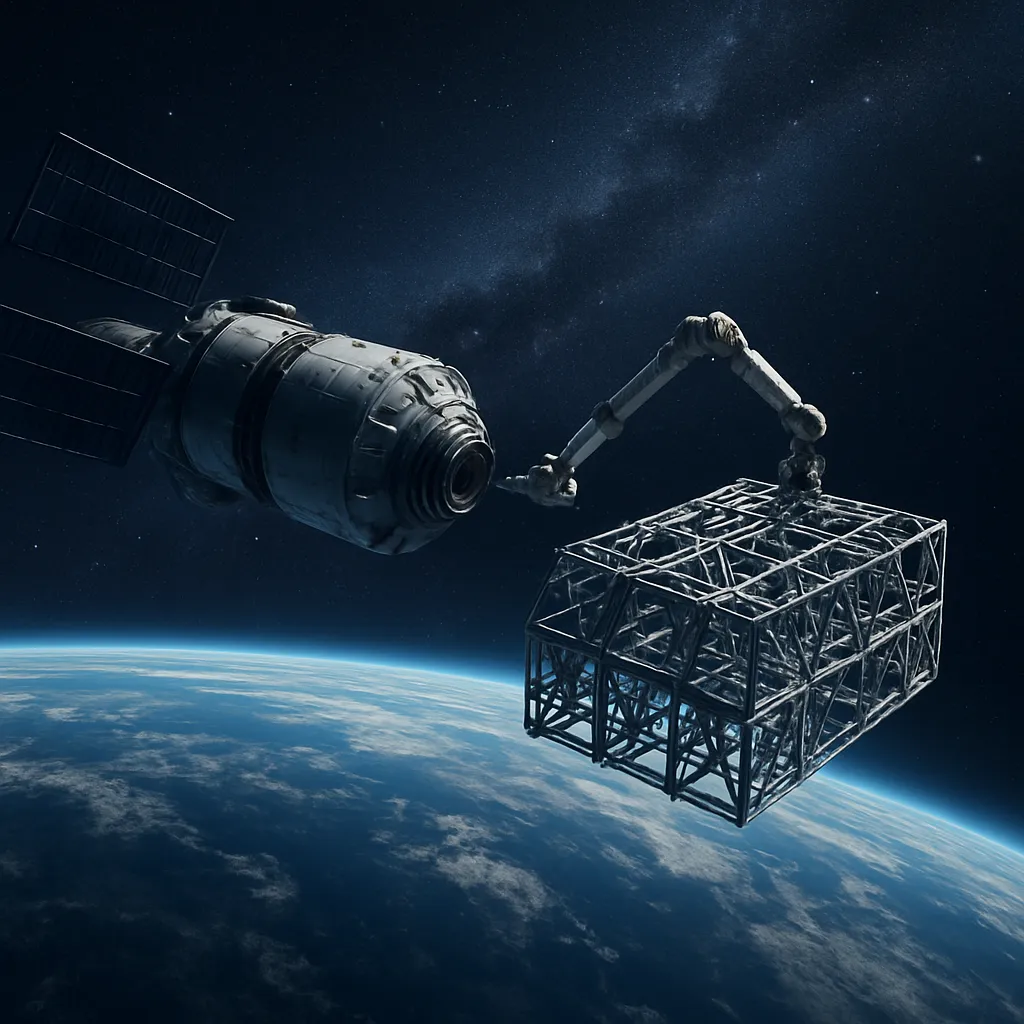
The rapid evolution of orbital platforms and deep-space missions has opened unprecedented avenues for exploring the potential of space-based manufacturing. Unlike conventional Earth-bound factories that grapple with gravity-induced constraints, orbital facilities leverage the unique environment beyond our atmosphere to produce materials and devices with novel properties. As humanity sets its sights on lunar bases, Mars expeditions, and even commercial outposts in low Earth orbit, the development of robust manufacturing techniques in space becomes a strategic imperative. This article delves into the multifaceted challenges, cutting-edge technologies, economic ramifications, and collaborative frameworks shaping the future of producing goods in the cosmos.
Challenges of Manufacturing in Microgravity
Operating manufacturing processes in a microgravity environment introduces complexities absent from terrestrial factories. Traditional casting, extrusion, and assembly rely on gravity to feed, shape, and settle materials. In orbit, engineers must reimagine these workflows to cope with fluid behavior, thermal management, and particle containment. Astronauts and robotic systems must contend with floating droplets, shifting powder, and unpredictable convection currents. Moreover, the harsh radiation environment, vacuum conditions, and limited volume of space habitats impose stringent requirements on equipment durability, energy consumption, and safety protocols.
Fluid Dynamics and Material Handling
Without gravity-driven settling, liquids form spheres governed by surface tension. This phenomenon can be harnessed for ultra-pure crystal growth—but it also demands specialized chambers, electromagnetic pumps, and precision sensors to control flow. Powder metallurgy must prevent particulate dispersion, requiring magnetically assisted collection or sealed enclosures. Contaminants that drift freely may imperil sensitive optics or electronics, elevating the importance of stringent cleanliness standards.
Thermal Control and Energy Constraints
Heat dissipation in vacuum relies on radiation rather than convection. Components heat up unevenly, risking hot spots that degrade material properties or warp structural elements. Active cooling loops, deployable radiators, and phase-change materials are crucial to maintain uniform temperatures. Simultaneously, power generation through solar arrays or nuclear reactors must balance energy-intensive manufacturing cycles against limited onboard reserves.
Technological Innovations Driving Space Factories
Advances in robotics, automation, and additive manufacturing are at the forefront of transforming space into a manufacturing hub. Robotic arms capable of fine manipulation, autonomous systems guided by AI, and modular factory modules can adapt to evolving mission profiles. These innovations promise to deliver precision products ranging from telescope mirrors to life-support components, all fabricated in orbit or on extraterrestrial surfaces.
Additive Manufacturing in Vacuum
- 3D printing of metals: Using laser sintering or electron beam technologies, alloys are fused layer by layer to build complex geometries unattainable on Earth.
- Polymer and composite deposition: Revolving around UV-curable resins and thermoplastics, these methods produce lightweight structural parts with tailored mechanical performance.
- In-situ resource utilization (ISRU): Lunar and Martian regolith can be processed into concrete-like feedstock, drastically reducing launch mass from Earth.
Advanced Robotics and AI Integration
Robotic systems equipped with force-feedback sensors and machine vision can operate independently or in coordination with crew members. AI-driven scheduling optimizes task sequences, while remote operators on Earth oversee critical procedures. This synergy between humans and machines ensures high throughput, minimal downtime, and resilience against unforeseen anomalies.
Economic and Environmental Impacts
Establishing manufacturing capabilities in space carries significant economic prospects alongside sustainability benefits. Launch costs are declining thanks to reusable rockets, making the delivery of raw materials and return of finished products more viable. Companies envision producing high-value items such as semiconductor wafers, fiber-optic cables, and biomedical scaffolds that capitalize on the unique microgravity environment to achieve unmatched quality and performance.
Cost Reduction Strategies
- Reusability: Rockets and spacecraft that can land and relaunch reduce the per-kilogram cost of transportation.
- On-orbit assembly: Modular components launched separately and assembled in space avoid the need for oversized fairings and complex heavy-lift vehicles.
- Public–private partnerships: Collaborative funding models enable risk-sharing between governments and commercial entities, accelerating development.
Sustainability and Resource Efficiency
Producing materials off-Earth mitigates terrestrial environmental impacts by curbing mining, refining, and manufacturing footprints on our planet. Sustainability gains emerge as closed-loop life-support systems repurpose waste, water is recycled, and solar energy powers continuous operations. Future colonies on the Moon and Mars could become largely self-sufficient, mining local regolith for construction, extracting water ice for fuel, and generating oxygen for habitats.
Collaborative Frameworks and Policy Considerations
Realizing the vision of space-based manufacturing demands robust international collaboration and regulatory harmonization. Space agencies, private enterprises, academic institutions, and non-governmental organizations must converge around shared standards for safety, resource allocation, and property rights. The Outer Space Treaty provides foundational principles, but evolving commercial ambitions necessitate clearer guidelines on mining rights, orbital traffic management, and environmental stewardship of celestial bodies.
International Partnerships
Joint ventures such as the International Space Station have proven the value of cooperation. Extending these models to dedicated manufacturing hubs will require harmonized technical protocols, data-sharing agreements, and cross-border training programs. Multilateral consortia can pool investments, distribute risks, and accelerate technology transfer between nations.
Legal and Ethical Dimensions
As companies stake claims in lunar or asteroidal resources, questions arise about equitable access, benefit-sharing, and preservation of pristine environments. Regulatory frameworks must balance innovation incentives with safeguards against monopolization. Ethical guidelines will ensure that the pursuit of profit does not compromise scientific inquiry or the long-term health of space habitats.
Future Outlook and Emerging Opportunities
The horizon for space-based manufacturing extends far beyond orbit. Large-scale orbital platforms, lunar surface foundries, and eventually deep-space refineries promise to transform how humanity sources and fabricates critical goods. Innovations such as electromagnetic levitation furnaces, self-replicating robotic constructors, and photonic assembly techniques will push the boundaries of what is feasible. In parallel, emerging markets for on-demand pharmaceuticals, exotic alloys, and nanoscale materials highlight the expanding commercial landscape.
Synergies with Exploration
Manufacturing capabilities in space enhance exploration by providing real-time production of spare parts, life-support consumables, and mission-specific tools. Crewed missions to Mars could leverage in-situ factories for habitats, landing pads, and radiation shields, drastically reducing logistical burdens and improving mission resilience.
Building a Multi-Planetary Economy
Long-term sustainability hinges on integrating orbital and surface manufacturing into a cohesive interplanetary supply chain. Resources mined on asteroids could be processed in orbital factories, then shipped to lunar bases or Mars colonies. Such a network fosters a self-supporting economy beyond Earth’s confines, unlocking possibilities for population growth, scientific discovery, and commercial innovation on a cosmic scale.