

The concept of a light year often sparks curiosity and wonder, serving as a fundamental unit in measuring the vastness of space and the universe. Unlike everyday units such as miles or kilometers, the light year encapsulates not just a distance but also the remarkable constancy of the speed of light in a vacuum. In this article, we will explore the origins, calculations, and applications of the light year, as well as clarify common misunderstandings that surround this astronomical measurement.
Understanding the Light Year
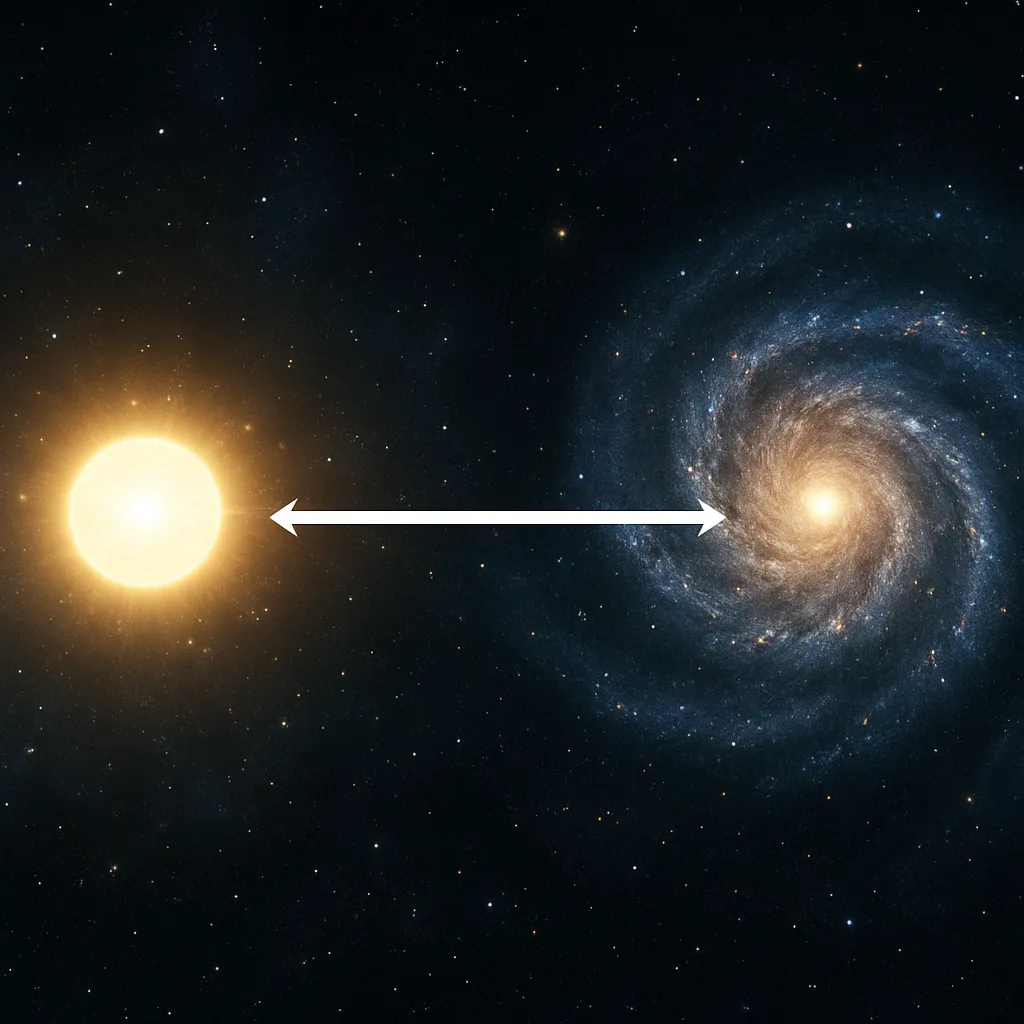
A light year is the distance that light travels in one Earth year. Given that light moves at approximately 299,792 kilometers per second, or about 186,282 miles per second, it covers an extraordinary amount of ground in a single year. This single measure combines two key concepts:
- Speed of light: The ultimate cosmic speed limit, denoted by the letter “c” in physics equations.
- Time interval: Exactly one Julian year, which equals 365.25 days.
Multiplying these factors yields a distance of roughly 9.46 trillion kilometers (5.88 trillion miles). The light year thus becomes an intuitive way to express interstellar and intergalactic distances without resorting to unwieldy numbers. For instance, when astronomers announce that Proxima Centauri is 4.24 light years away, they imply that light—moving at its unchanging pace—requires just over four Earth years to traverse that cosmic gap.
Calculating Cosmic Distances
Determining distances beyond our Solar System relies on a combination of techniques. One of the earliest methods is stellar parallax, which measures the tiny apparent shift of a nearby star against distant background stars as Earth orbits the Sun. By applying simple trigonometry, scientists convert this angular shift into a precise distance, often expressed in parsecs (one parsec equals about 3.26 light years). Key steps include:
- Measure the parallax angle (p) from two observations six months apart.
- Calculate the distance (d) using the formula d = 1/p, where p is in arcseconds and d is in parsecs.
- Convert parsecs to light years to communicate distances more naturally to the public.
As telescopes and detectors improved, astronomers developed additional “standard candle” methods, such as measuring the brightness of Cepheid variables or Type Ia supernovae. These luminous objects have well-understood intrinsic brightness, allowing researchers to infer how far they must be to appear as dim as observed. When those distances are expressed in light years, every reported figure becomes a testament to both human ingenuity and the unchanging nature of light’s journey through space.
Practical Applications in Astronomy
Astronomers and astrophysicists regularly employ light years to map the structure of the Milky Way and to study distant galaxies and quasars. Some notable applications include:
- Cataloguing stellar neighborhoods: Charting stars within a 100-light-year radius reveals the local cosmic environment where potential future spacecraft missions might venture.
- Measuring galaxy sizes: The Andromeda Galaxy spans over 220,000 light years across, giving astronomers a palpable sense of scale when describing large spiral galaxies.
- Determining cosmic expansion: Observations of distant galaxies show redshifts that, when combined with their light-year distances, provide key evidence for the expansion rate of the universe (Hubble’s constant).
By framing results in light years, scientific publications and astronomy outreach efforts help the public grasp the immensity of space. For instance, when a newly discovered exoplanet orbits a star located 580 light years away, the audience appreciates that any signal or light from that star began its flight centuries ago, long before modern civilization existed.
Common Misconceptions about Light Years
Despite its widespread use, the light year can be confusing. Let us address several frequent misunderstandings:
“Light Year” as a Time Unit
Some assume “light year” refers to a period of time rather than a distance. Remember: it combines time and speed to yield distance. One light year is not one Earth year; it is how far light travels in that year.
The Speed of Light Varies
In popular culture, light is sometimes depicted as slowing down or speeding up depending on context. In reality, the cosmic speed limit remains fixed in a vacuum. Only when light travels through media such as water or glass does it appear to slow, but this is a result of interactions with atomic particles, not a change in its fundamental velocity.
All Stars Are Equally Distant in Light Years
Beginners might believe that every star is multiple light years away. While most visible stars are indeed at least a few light years distant, the closest star system, Alpha Centauri, lies at just over four light years. Meanwhile, certain variable stars or nebulae can be thousands of light years away but still visible through telescopes.
Broader Implications for Human Exploration
As humanity contemplates future voyages beyond our Solar System, the light year takes on new significance. Even the fastest theoretical spacecraft, traveling at 10% of the speed of light, would require over 40 years to reach Alpha Centauri. Such numbers underline the challenges of interstellar travel and emphasize the importance of studying light years not only as an abstract measure but also as a guide for engineering and mission planning.
Through continuous advancements in telescope technology, detector sensitivity, and mathematical models, astronomers refine their understanding of the cosmic expanse measured in light years. This relentless pursuit brings us closer to unraveling the mysteries of dark matter, dark energy, and the ultimate destiny of the universe—all while reminding us of our small yet curious place within it.