
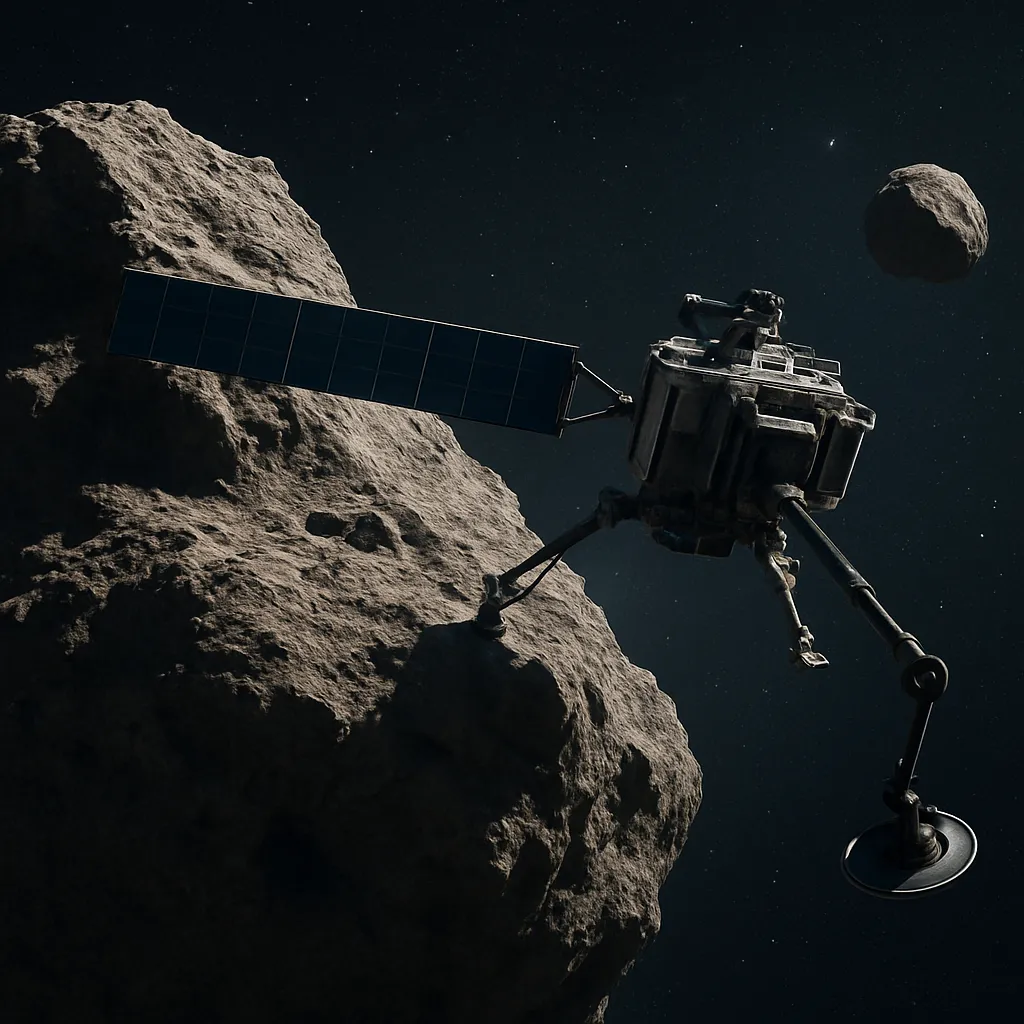
Exploring small bodies like asteroids and comets demands precision, resilience, and innovation. Robotic explorers have become indispensable tools for unlocking the secrets of these ancient remnants of the Solar System. From the earliest flybys to complex sample-return missions, each endeavor pushes the boundaries of engineering and science. This article examines how these automated explorers navigate, analyze, and sample these mysterious worlds.
The Evolution of Robotic Spacecraft
Heritage and Early Missions
In the mid-20th century, pioneering probes such as NASA’s Pioneer and Soviet Luna series laid the groundwork for remote exploration beyond Earth orbit. These early craft demonstrated basic navigation capabilities and rudimentary sensing, proving that machines could survive and operate in the vacuum of space. While they lacked sophisticated instruments, they set the stage for more ambitious projects targeting asteroids and comets.
Landmarks in Small-Body Exploration
The 1986 Giotto mission provided humanity’s first close glimpse of a comet nucleus, pioneering high-speed flybys of Halley’s Comet. Later, Japan’s Hayabusa mission achieved the first direct sampling of asteroid Itokawa in 2005, despite numerous technical challenges. These milestones highlighted the importance of robust communication links, accurate trajectory control, and reliable power systems. Each success redefined what was considered achievable by unmanned spacecraft.
Modern Ingenuity
Today’s robotic explorers incorporate autonomy, advanced AI, and adaptive systems to handle unforeseen conditions. Missions like OSIRIS-REx and Hayabusa2 navigate complex gravity fields, adjust in real time to surface topography, and execute delicate sampling maneuvers. These spacecraft act like moving laboratories, capable of on-the-fly decision making and self-checks to maximize scientific return.
Technological Advances in Instrumentation
Precision Navigation and Guidance
Accurate trajectory control near low-gravity objects requires specialized instruments such as optical landmark trackers, LIDAR altimeters, and Doppler radar. By combining data from these sensors, spacecraft maintain stable orbits or descent paths. For instance, OSIRIS-REx used a laser altimeter to build a high-resolution topographic map of Bennu, while Hayabusa2 employed a suite of cameras and laser systems for pinpoint landing site selection.
Chemical and Mineralogical Analysis
Investigating the composition of an asteroid or comet involves spectrometers spanning ultraviolet to infrared wavelengths, X-ray fluorescence detectors, and mass spectrometers. These instruments reveal the elemental and molecular makeup of regolith, ices, and dust. Onboard laboratories can heat samples to release volatile compounds or use electron beams to examine mineral structures at micrometer scales. Such analyses yield insights into the Solar System’s formation and the potential for organic precursors to life.
Sampling Mechanisms
Under the heading Sample Acquisition, engineers have devised multiple approaches:
- Touch-and-Go techniques that fire a burst of inert gas to stir up material and capture it in a collection head.
- Harpoon Systems that embed small projectiles into the surface to anchor sampling arms.
- Drilling Tools capable of penetrating hard rock to retrieve subsurface cores, preserving pristine material.
Balancing impact force, vacuum compatibility, and contamination control remains a prime challenge in designing these mechanisms.
Mission Strategies for Small Body Sampling
Site Selection and Surveying
Before any contact, spacecraft conduct extensive surveys to assess surface hazards, resource distribution, and scientific value. Detailed imaging, thermal mapping, and particle flux measurements guide teams in choosing optimal locations. This reconnaissance phase reduces the risk of landing on unstable terrain and increases the likelihood of collecting organic-rich or volatile-laden samples.
Descent and Touchdown Operations
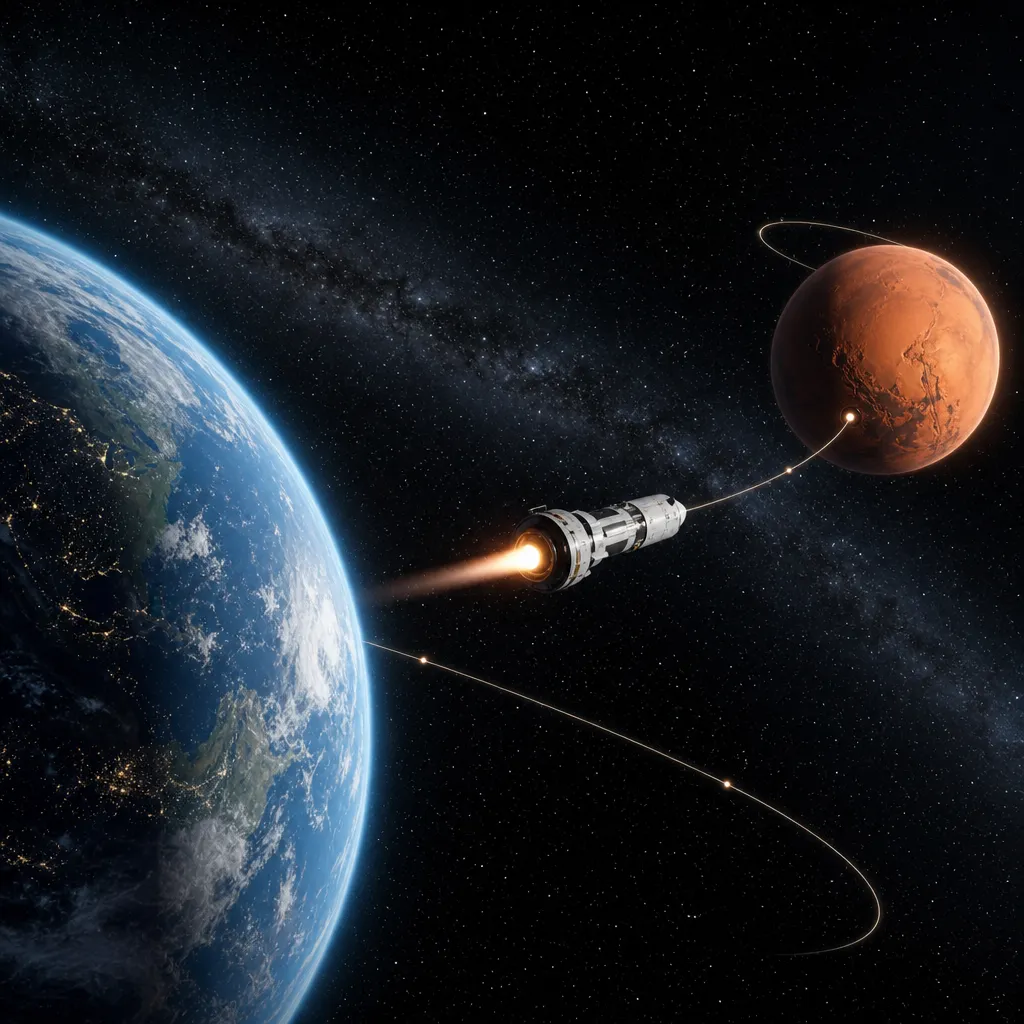
Navigating to a target hundreds of millions of kilometers away involves timed maneuvers and precise thrust control. As the spacecraft approaches, onboard sensors feed into guidance algorithms that generate thruster commands to slow descent. Real-time hazard detection systems can trigger automatic abort sequences or relocation maneuvers. Such techniques were crucial for missions like Philae’s touchdown on Comet 67P/Churyumov–Gerasimenko, despite unexpected bounce events.
Sample Storage and Return
Once collected, securing samples poses a separate set of challenges. Return capsules must maintain vacuum conditions or inert atmospheres to preserve volatile compounds. Thermal insulation and shock-absorbing mounts guard against temperature swings and mechanical stresses during Earth reentry. The precise sealing of collection chambers ensures that precious material arrives in pristine state, ready for Earth-based laboratory analysis.
Challenges and Future Prospects
Surviving Extreme Environments
Asteroids and comets present harsh environments with extreme temperature gradients, microgravity, and high-velocity dust particles. Spacecraft must be shielded against radiation, temperature extremes, and abrasive regolith. The design of robust propulsion systems—including ion thrusters and cold gas jets—enables fine maneuvering and long-duration station-keeping near irregular bodies.
Data Management and Communication
Long-distance missions contend with signal delays of several minutes and limited bandwidth. Onboard data processing reduces the need to transmit raw images or spectra, allowing spacecraft to send higher-level science products first. Compression algorithms and fault-tolerant communication protocols maximize throughput, ensuring that critical information arrives even during brief link windows.
Emerging Technologies and Collaborative Ventures
Future endeavors will leverage small satellites and formation-flying fleets to perform multi-angle observations and coordinate sample transfers between vehicles. Additive manufacturing could enable in-situ repair or upgrades, while advanced robotics arms equipped with tactile sensors will improve surface interactions. International collaboration will pool resources and expertise, broadening the scope of exploration.
Unlocking the Solar System’s Origins
By studying asteroids and comets, scientists hope to answer fundamental questions about the Solar System’s formation, the distribution of water and organics, and the origins of life. Each robotic mission not only gathers invaluable data but also refines our capabilities for future voyages. As technology continues to evolve, these automated explorers will illuminate the hidden corners of our cosmic neighborhood, paving the way for eventual human exploration and utilization of small bodies.