

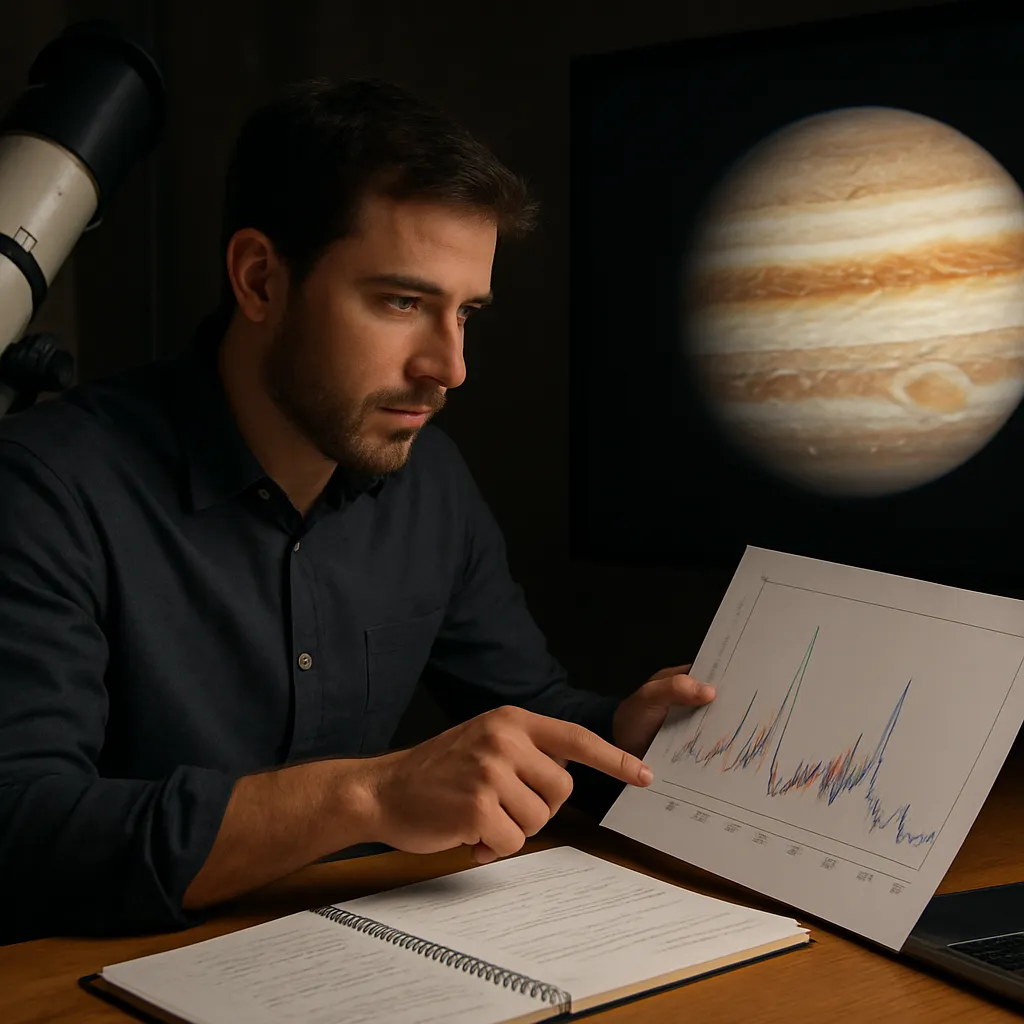
Understanding what worlds beyond our own are made of has captivated humanity for centuries. By combining cutting-edge technology and centuries-old principles of physics and chemistry, astronomers can unravel the secrets hidden in light and motion. The quest to determine the **composition** of distant planets involves clever methods that analyze light, measure motion, and interpret subtle signals from across the cosmos. Below, we explore the primary techniques that enable scientists to decode the **elements**, **molecules**, and physical properties of worlds light-years away.
Spectroscopy: The Rainbow Decoder
Spectroscopy lies at the heart of compositional analysis in astronomy. When light from a star or planet passes through a prism or diffraction grating, it splits into its component colors, producing a spectrum. Each **element** and **molecule** absorbs or emits light at specific **wavelength**s, creating unique fingerprints known as spectral lines.
Absorption and Emission Lines
During an exoplanet transit—when a planet crosses in front of its host star—starlight filters through the planet’s atmosphere. Atoms and molecules in the atmosphere absorb specific wavelengths, producing dark lines in the stellar spectrum. By measuring the depth and position of these lines, astronomers can identify chemical species and even estimate their abundance.
- Sodium and potassium lines often reveal hot, gas-giant atmospheres.
- Water vapor signatures indicate the presence of H2O, crucial for habitability assessments.
- Carbon dioxide and methane may point toward volcanic or biological processes.
High-Resolution Spectroscopy
Modern **telescopes** equipped with high-resolution spectrographs can separate spectral lines with extreme precision. Techniques like cross-correlation enhance the signal from faint planetary atmospheres buried in stellar noise. Instruments on ground-based observatories and space telescopes collect light over wide wavelength ranges, from ultraviolet to infrared, each revealing different atmospheric layers and temperature structures.
Transit and Eclipse Photometry
Measuring changes in a star’s brightness—known as **photometry**—during transits and eclipses offers another window into planetary composition. The size of the transit dip provides the planet’s radius, while the timing yields orbital characteristics. Combining radius with mass (from radial velocity measurements) gives average density, which constrains interior makeup.
Secondary Eclipses and Thermal Emission
When a planet passes behind its star, the observed light drops as the planet’s thermal emission and reflected starlight vanish. By comparing the spectrum before and during the eclipse, researchers isolate the planet’s direct emission spectrum. Infrared observations reveal surface or atmospheric temperatures and, when fitted with models, hint at greenhouse gases and cloud compositions.
- Day–night temperature contrasts inform atmospheric circulation models.
- Absorption features in thermal emission identify major **atmospheres** constituents.
Direct Imaging and Reflectance Spectroscopy
While most exoplanets are too faint or close to their stars for direct detection, specialized imaging systems like coronagraphs and starshades block starlight to isolate planetary photons. Once imaged, the planet’s reflected light can be dispersed into a spectrum to reveal surface or cloud properties.
Clouds, Hazes, and Surface Albedo
Reflected light spectra provide clues about cloud composition—water, ammonia, or photochemical hazes—and surface **reflectance**. Bright, icy worlds show distinct reflectance peaks in the visible range, while rocky or dusty surfaces produce more subdued, featureless spectra.
- Polarimetry enhances contrast and reveals scattering angles characteristic of cloud droplets or ice grains.
- Color–magnitude diagrams classify planets by reflected-light photometry across multiple filters.
Gravitational Measurements and Interior Structure
Beyond atmospheres and surfaces, understanding a planet’s bulk composition requires knowledge of its mass and radius. Combined density yields first-order insights into whether a world is gaseous, rocky, or icy.
Radial Velocity and Mass Determination
Planets tug on their host stars, inducing small Doppler shifts in stellar spectral lines. By measuring these wobbles with precise **spectroscopy**, astronomers determine the planet’s minimum mass. Coupled with radius from transit data, the mean density emerges.
Mass–Radius State Diagram
Plotting mass versus radius for thousands of exoplanets reveals distinct populations:
- Gas giants with low density, indicating thick H/He envelopes.
- Mini-Neptunes with moderate density and mixed ices or volatiles.
- Super-Earths and rocky worlds showing Earth-like or higher densities.
By comparing observations to theoretical models of interior layering—iron cores, silicate mantles, water–ice crusts—scientists infer proportions of each component.
Emerging Techniques and Future Prospects
New missions and instruments promise to refine our view of planetary composition.
Space-Based Infrared Observatories
Telescopes like the James Webb Space Telescope push spectroscopic sensitivity deeper into the infrared, crucial for detecting molecules such as CO2, NH3, and complex organics. The Mid-Infrared Instrument (MIRI) offers unprecedented resolution for cold, temperate exoplanets.
Next-Generation Direct Imagers
Projects such as the Nancy Grace Roman Space Telescope and proposed Habitable Worlds Observatory aim to directly image Earth-like planets around nearby stars. Advanced **coronagraphs** and starshades will suppress starlight by factors of billions, enabling the detection of faint reflected signals from potentially habitable worlds.
- Characterizing biosignatures like O2, O3, and CH4 in terrestrial atmospheres.
- Mapping surface heterogeneities to identify oceans, continents, or vegetation analogs.
High-Precision Time-Series Spectroscopy
Rapid-cadence observations capture dynamic weather patterns on exoplanets. Time-resolved spectra reveal changing cloud decks, storms, and rotational modulation, offering three-dimensional views of atmospheric composition and climate. Such studies rely on stable instrumentation and innovative data analysis techniques to tease out signals at the parts-per-million level.
Challenges and Synergies
Determining planetary composition is inherently complex due to degeneracies in data interpretation. For instance, similar density values can arise from vastly different interior structures, and overlapping spectral features require careful disentangling. Synergistic observations—combining transit, direct imaging, radial velocity, and astrometry—help break these ambiguities.
Interdisciplinary collaboration between astronomers, chemists, geophysicists, and atmospheric modelers drives progress, as does the integration of laboratory measurements of exotic ices and high-pressure minerals. By leveraging complementary approaches, the scientific community steadily refines its understanding of how diverse planetary architectures form and evolve throughout the galaxy.