

The James Webb Space Telescope stands as a groundbreaking instrument destined to transform our understanding of the universe. Nestled at the second Lagrange point, this observatory uses advanced infrared capabilities to peer further into space and time than ever before. By combining cutting-edge optics, sensitive detectors, and innovative deployment mechanisms, the telescope promises unprecedented views of cosmic phenomena, from the birth of the first galaxies to the atmospheres of distant exoplanets. This article delves into the unique features, scientific objectives, and anticipated breakthroughs of the James Webb Space Telescope.
Technological Marvels of the Webb Observatory
At its core, the James Webb Space Telescope represents a leap forward in astronomical technology. Several key components work in concert to achieve its mission:
- Deployable Mirror Assembly – Comprising 18 hexagonal mirror segments made of beryllium and coated with gold, the primary mirror unfolds in space to form a 6.5-meter-wide surface, vastly larger than the Hubble’s 2.4-meter mirror.
- Sunshield – A five-layer, tennis-court-sized barrier that blocks heat and light from the Sun, Earth, and Moon, ensuring the telescope remains at cryogenic temperatures essential for infrared observations.
- Instruments – Four state-of-the-art devices:
- NIRCam (Near Infrared Camera) for high-resolution imaging.
- NIRSpec (Near Infrared Spectrograph) enabling multiplex spectroscopy of hundreds of objects simultaneously.
- MIRI (Mid-Infrared Instrument) extending capabilities into longer wavelengths for dust-enshrouded targets.
- FGS/NIRISS (Fine Guidance Sensor/Near Infrared Imager and Slitless Spectrograph) for precision pointing and exoplanet spectroscopy.
- Cryogenic Cooling – Passive and active cooling methods maintain critical components at temperatures below 50 K, essential for reducing thermal background noise in the infrared regime.
- High-Precision Pointing – Reaction wheels and gyroscopes ensure stable alignment, allowing prolonged exposures and deep-field imaging of faint cosmic objects.
These engineering feats were achieved through international collaboration, primarily between NASA, the European Space Agency (ESA), and the Canadian Space Agency (CSA). Each partner contributed expertise, funding, and crucial hardware, guaranteeing the success of this telescope on its ambitious journey.
Revealing the Dawn of Galaxies
One of the most profound goals of the James Webb Space Telescope is to observe the first luminous structures that emerged after the cosmic dark ages. By accessing wavelengths in the infrared, it can:
- Detect the redshifted light from the earliest galaxies, formed less than 500 million years after the Big Bang.
- Study the properties of primordial stars, known as Population III stars, whose chemical composition provides clues about the universe’s initial formation of elements.
- Map the distribution of hydrogen through emission lines like Lyman-alpha, revealing the process of cosmic reionization.
Through deep-field campaigns—long exposures targeting seemingly empty regions of sky—NASA expects to uncover thousands of faint galaxies. This will help address fundamental questions:
- How rapidly did the first galaxies grow and merge?
- What role did dark matter halos play in assembling these early structures?
- How did dust and gas evolve to create environments suitable for subsequent star and planet formation?
By combining spectroscopy with imaging, Webb can determine stellar ages, metallicities, and star formation rates in galaxies spanning cosmic history. These observations will refine theoretical models of galaxy evolution and offer a clearer timeline of the universe’s growth.
Exploring Exoplanets and Potential Habitability
The hunt for worlds beyond our solar system has accelerated over the past two decades, with thousands of exoplanets discovered. However, characterizing their atmospheres and assessing habitability remains a challenge. The James Webb Space Telescope brings powerful tools to bear on this quest:
- Transit Spectroscopy – When a planet passes in front of its star, a fraction of starlight filters through the planetary atmosphere. Webb’s sensitive detectors can measure absorption features of molecules such as water vapor, carbon dioxide, methane, and ozone.
- Direct Imaging – Using coronagraphs to block starlight, the telescope can capture direct infrared images of large, young gas giants orbiting far from their host stars.
- Phase Curve Analysis – Observing how the brightness of an exoplanet system changes over its orbit provides information on thermal emission and atmospheric circulation patterns.
These methods aim to answer critical questions about planetary systems:
- Which exoplanets possess substantial atmospheres, and what are their compositions?
- Are there signs of biological or prebiotic molecules that hint at potential life?
- How do planetary atmospheres evolve under stellar radiation and magnetic fields?
In addition, Webb’s observations of protoplanetary disks around young stars will illuminate the earliest stages of planet formation. By detecting gaps carved by forming worlds, astronomers can witness planet-building in real time and compare models of solar system development.
Supernovae, Black Holes, and Cosmic Transients
Beyond the study of early galaxies and exoplanets, the telescope’s sensitivity in the infrared opens a new window on dynamic cosmic events:
- Supernova Remnants – Infrared imaging penetrates dust that often obscures dying stars, revealing the distribution of heavy elements expelled into interstellar space.
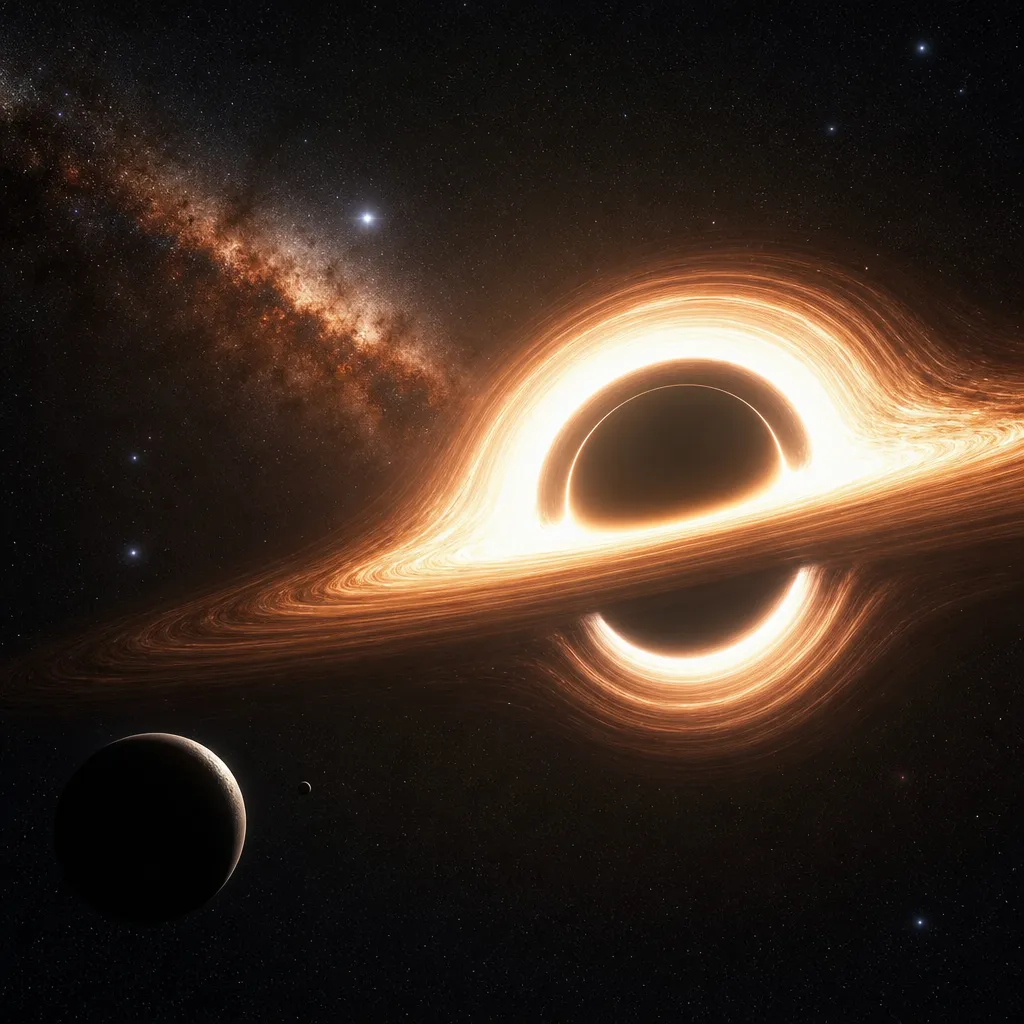
- Active Galactic Nuclei – Webb can peer into the hearts of galaxies harboring black holes, studying the interplay between accretion disks, jets, and surrounding gas clouds.
- Gravitational Wave Counterparts – When events like neutron star mergers trigger gravitational waves, the infrared glow from resulting kilonovae can be tracked, shedding light on heavy element synthesis.
Through rapid-response observing programs, astronomers will be able to seize fleeting phenomena, combining Webb data with other ground- and space-based observatories. This coordinated approach will deepen our understanding of energetic processes that shape cosmic environments.
The Road Ahead: Collaborative Science and Future Missions
As data from the James Webb Space Telescope begins to flow, the global scientific community prepares for a deluge of discoveries. Several factors will maximize the mission’s impact:
- Archival Science – With millions of high-quality observations, astronomers worldwide can mine the archive for unanticipated phenomena and conduct cross-disciplinary studies.
- Synergy with Other Facilities – Combining Webb’s infrared insights with radio telescopes like ALMA, optical observatories like the Vera Rubin Telescope, and X-ray platforms will produce a comprehensive view of cosmic processes.
- Public Engagement – Citizen science projects and open data initiatives will enable enthusiasts to contribute to the search for supernovae, exoplanets, and more.
Looking ahead, the success of Webb will pave the way for next-generation observatories. Concepts such as the Origins Space Telescope and the Habitable Worlds Observatory build upon its legacy, aiming for even greater sensitivity and spectral coverage. Together, these instruments will continue humanity’s quest to answer profound questions: Where did we come from? Are we alone? And what is the ultimate destiny of the cosmos?