



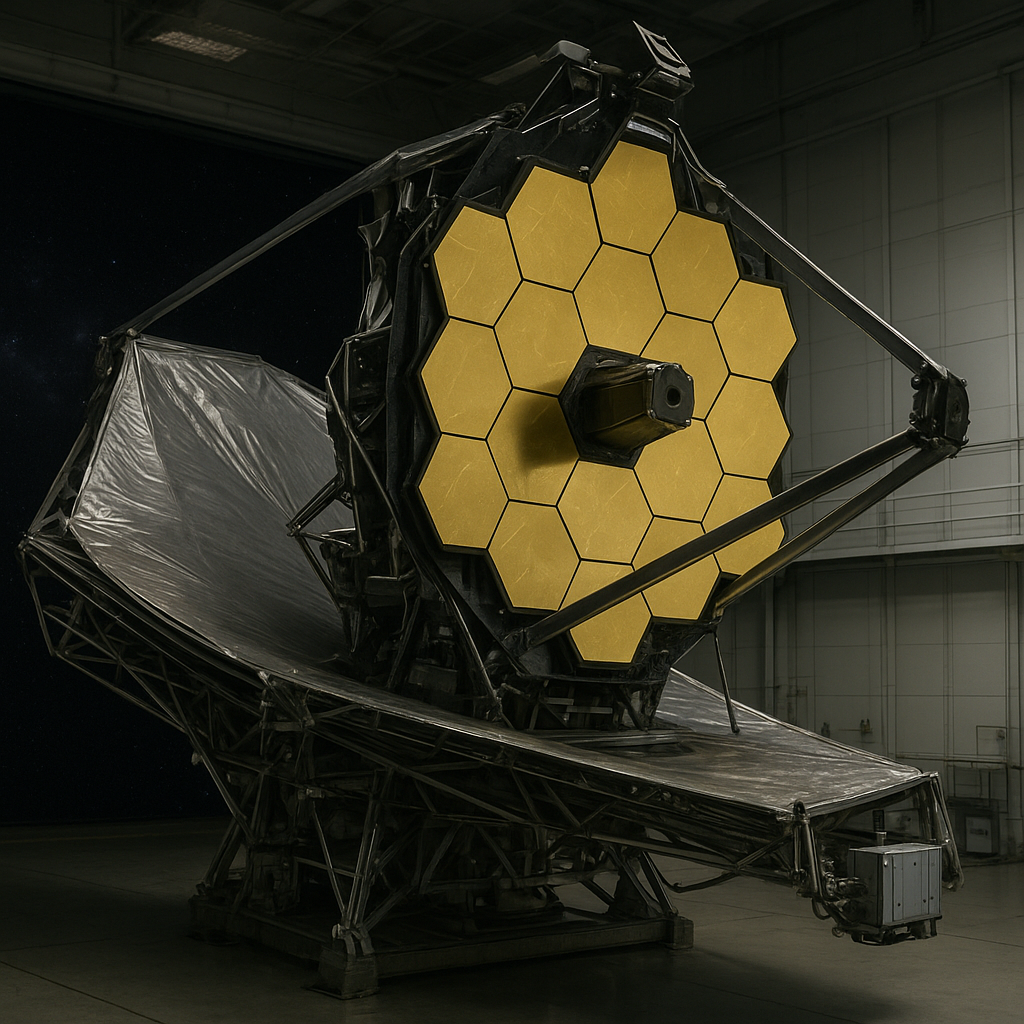
The Engineering Behind Space Telescopes explores the intricate fusion of advanced technologies that enable humanity to peer deep into the cosmos. From launch vehicles to precision optics, each element must perform flawlessly in the harsh environment of space. This article delves into key design principles, material selection, and control systems that underpin the success of these extraordinary observatories.
Optical Systems and Mirror Technologies
At the heart of every space telescope lies its mirror assembly, which defines its light-gathering power and image resolution. Unlike ground-based instruments, these optics must endure zero-gravity and extreme temperature swings without deforming. Engineers employ a combination of lightweight substrates and ultra-thin reflective coatings to achieve both rigidity and minimal mass.
Primary Mirror Fabrication
- Material Selection: Beryllium and fused silica are popular for their low thermal expansion and high stiffness.
- Lightweighting Techniques: Computer-controlled milling removes internal material, creating rib structures that maintain shape while cutting weight.
- Coating Application: Atomic layer deposition forms a uniform, nanometer-scale reflective layer of aluminum or silver.
Wavefront Error Control
Ensuring diffraction-limited performance demands sub-wavelength precision. Interferometric tests measure deviations in real time, while alignment mechanisms with actuators correct residual errors. This calibration process is critical before launch.
- Active Optics: Piezoelectric actuators adjust mirror segments in response to wavefront sensors.
- Phasing Mechanisms: Laser interferometers align multiple segments to function as a single continuous surface.
Structural and Thermal Engineering
Space telescopes experience drastic temperature contrasts—from direct sunlight to the cold darkness of space. Without convective cooling, thermal management relies on radiation shields, conductive paths, and multi-layer insulation (MLI).
Sun Shields and Baffles
- Multi-Layer Insulation: Alternating layers of reflective films and spacers reduce heat transfer.
- Sculpted Baffles: Prevent stray light and thermal radiation from reaching sensitive detectors.
Material Innovations
Advanced composites like carbon-fiber-reinforced polymers provide high stability and low mass. Their low coefficient of thermal expansion (CTE) ensures that structural dimensions remain constant despite temperature cycles. Integration of heat pipes and louvers further stabilizes instrument temperatures.
Attitude Control and Precision Pointing
To capture pinpoint images, space telescopes must maintain exceptional pointing accuracy—often within milliarcseconds. An ensemble of sensors and actuators work in concert to stabilize and orient the observatory.
Key Components
- Reaction Wheels: Provide fine torque adjustments using spinning flywheels.
- Star Trackers: Detect reference stars to determine precise attitude.
- Gyroscopes: Monitor rotational rates to support control loops.
Pointing Control Algorithms
Advanced feedback loops combine sensor data to drive stability. Kalman filters merge gyroscope and star tracker measurements, while momentum management routines desaturate reaction wheels using magnetorquers or thrusters. Redundant paths ensure reliability in case of component failure.
Data Handling, Communication, and Onboard Systems
High-resolution detectors generate vast streams of raw data, which must be processed, stored, and downlinked with minimal loss. Onboard systems perform initial corrections and compressions before transmission to Earth-based stations.
Detector Electronics
- Low-Noise Readouts: Minimize electronic interference for faint-source observations.
- Analog-to-Digital Converters: High bit-depth sampling preserves dynamic range.
Compression and Downlink
Custom algorithms identify and preserve scientifically valuable features while reducing data volume. Ka-band or optical laser communications enable multi-gigabit downlink rates. Fault-tolerant architectures allow sensors and computers to recover from radiation-induced errors.
Emerging Technologies and Next-Generation Telescopes
The future of space-based astronomy hinges on ever more ambitious platforms. Concepts like segmented, deployable mirrors exceed 10 meters in aperture, while formation-flying constellations act as virtual interferometers.
- Deployable Structures: Hinged mirror segments unfold in orbit to achieve large apertures.
- Interferometric Arrays: Multiple spacecraft maintain precise separations to simulate expansive baselines.
- Coronagraphs and Starshades: Innovative starlight suppression tools enable direct imaging of exoplanets.
Adaptive Optics in Space
Although adaptive optics is traditionally ground-based, future missions may carry micro-electromechanical systems (MEMS) to correct residual wavefront errors post-launch. Combining real-time control with high-precision metrology will push the boundaries of diffraction-limited imaging.
Integration Challenges
Seamless assembly of thousands of components requires exceptional integration and verification processes on the ground. Simulated zero-gravity testbeds, cryogenic chambers, and vibration tables replicate launch and operational conditions to validate performance.