




The invisible force field generated deep within planetary cores serves as a crucial shield against the relentless onslaught of charged particles permeating space. From the vibrant dancing lights of auroras to the protection of delicate atmospheric layers, the presence of an active magnetosphere shapes a world’s potential for supporting life. This article examines how magnetic fields are born, how they interact with the solar wind and cosmic rays, and why their existence is a key factor in planetary habitability.
Protective Influence of Magnetic Fields
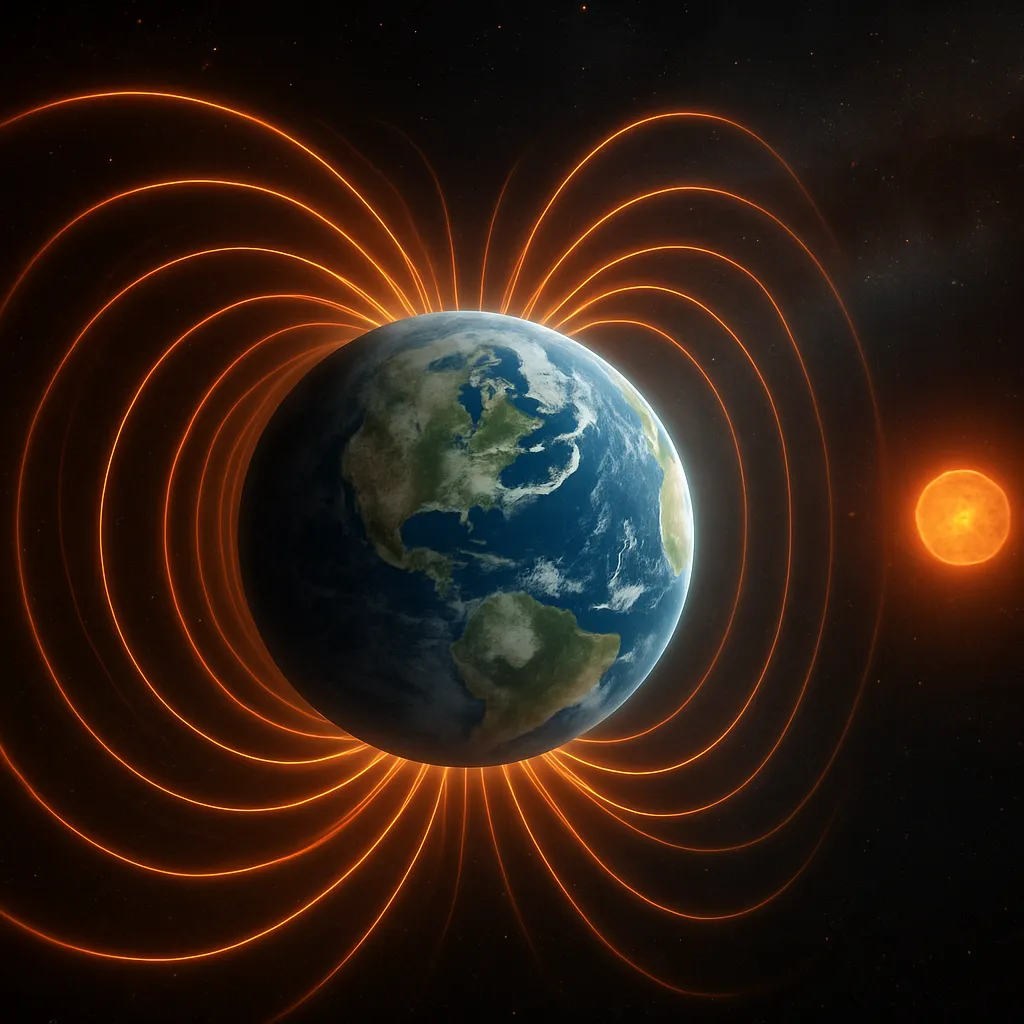
Every planet lacking a robust magnetic field stands vulnerable to direct bombardment by high-energy particles. The continuous stream of protons and electrons emanating from a star, known as the solar wind, carries a magnetic field of its own. When this flow encounters a planetary magnetosphere, it is deflected around the globe, forming a bow shock and magnetotail that funnel harmful radiation away from the surface.
- The atmosphere remains intact by reduced ionization and sputtering.
- Charged particles spiral along field lines, giving rise to spectacular auroras rather than penetrating to ground level.
- Cosmic radiation from outside the solar system is modulated, decreasing DNA–damaging exposure.
Without this protective buffer, significant radiation reaches lower altitudes, stripping away atmospheric particles and sterilizing surface environments. Over geological timescales, an unshielded planet can lose the bulk of its gaseous envelope, undermining any prospects for stable liquid water and organic chemistry.
Mechanisms of Dynamo Generation
At the heart of the magnetic field lies the dynamo process, driven by convection in a planet’s electrically conductive interior. Heat escaping from the core sets molten metals in churning motion, and planetary rotation twists these flows to produce complex magnetic patterns. Key ingredients include:
- Electric conductivity of the core material, typically liquid iron or iron alloys.
- Temperature gradients strong enough to sustain convective currents.
- Rotation rate sufficient to organize chaotic motions into coherent magnetic structures.
Different worlds exhibit dynamos under varying conditions. Gas giants like Jupiter maintain dynamos via metallic hydrogen layers, while smaller rocky planets rely on iron cores. The longevity of these dynamos depends on the rate of heat loss and core composition. When the core cools below a certain threshold, convective motions cease, and the global magnetic field decays.
Reversals and Fluctuations
Planetary magnetic fields can undergo polarity flips, as evidenced by paleomagnetic records on Earth. These reversals signal changes in the internal flow patterns but do not necessarily interrupt the field’s protective capacity. However, extended intervals of weak magnetism—known as excursions—may temporarily expose the surface to elevated radiation levels.
Comparative Insights: Earth, Mars, and Beyond
Earth stands as the prime example of a planet hosting a vigorous dynamo and, consequently, a strong magnetosphere. The geomagnetic field intercepts most solar and cosmic particles, keeping our atmosphere intact and enabling a thriving biosphere.
Martian Mysteries
Mars once possessed an active dynamo, indicated by remnant magnetization in ancient crustal rocks. When the core cooled and the field collapsed, the planet lost its protective barrier:
- Solar particles stripped away lighter atmospheric molecules, particularly water vapor.
- Surface radiation levels soared, hindering long-term preservation of organic compounds.
- Present-day Mars relies on a thin atmosphere and localized magnetic anomalies to offer limited shelter.
The dramatic decline of Mars’s magnetosphere provides a cautionary tale: even a moderate field is vastly superior to none when it comes to safeguarding planetary environments.
Lessons for Exoplanets
Astronomers seeking habitable worlds among distant exoplanets often weigh stellar activity and orbital distance, but recent models emphasize the critical role of planetary magnetism. Factors influencing magnetic strength include mass, composition, and rotation:
- Super-Earths may sustain vigorous dynamos if they spin rapidly and retain substantial internal heat.
- Tidally locked planets orbiting red dwarfs face persistent stellar flares; a robust shield is vital to prevent atmospheric erosion.
- Planets around quiet stars can rely on weaker fields, yet still benefit from reduced cosmic rays impacting surface habitability.
Future telescopes capable of detecting auroral emissions or magnetospheric radio bursts could reveal the magnetic landscapes of these worlds, bringing us closer to identifying truly habitable environments.
Implications for Human Exploration
Understanding planetary magnetism is not only fundamental for assessing life’s potential but also for planning robotic and crewed missions. Key considerations include:
- Entry trajectories through magnetospheres to minimize exposure to high-energy particles.
- Long-term human habitats requiring artificial shield analogs when natural fields are absent or weak.
- Spacecraft electronics designed to tolerate increased radiation in magnetically unprotected regions.
The interplay between natural magnetic defenses and engineered solutions will define the safety and success of deep-space endeavors.
Future Directions in Magnetospheric Science
Ongoing missions such as Juno at Jupiter and MAVEN at Mars continue to refine our understanding of magnetic interactions. Advanced numerical simulations of dynamo action and magnetosphere–solar wind coupling hint at complex feedback loops that determine field initiation and decay. Collaborative studies in comparative planetology promise to unlock the secrets of magnetic protection across a vast array of worlds.
By decoding the signatures of planetary magnetic fields, scientists inch closer to answering whether life’s cradle is a cosmic rarity or a commonplace phenomenon nurtured by unseen forces.