


The study of cosmic radiation reveals some of the most profound mysteries of our universe. By examining high-energy particles that constantly bombard Earth from outer space, scientists are able to explore fundamental processes in astrophysics, probe the behavior of matter under extreme conditions, and assess risks for future space missions. This article delves into the advanced techniques, sophisticated instruments, and comprehensive analysis strategies that researchers employ to detect, measure, and interpret cosmic radiation.
Instrumentation and Detection Methods
Ground-Based Observatories
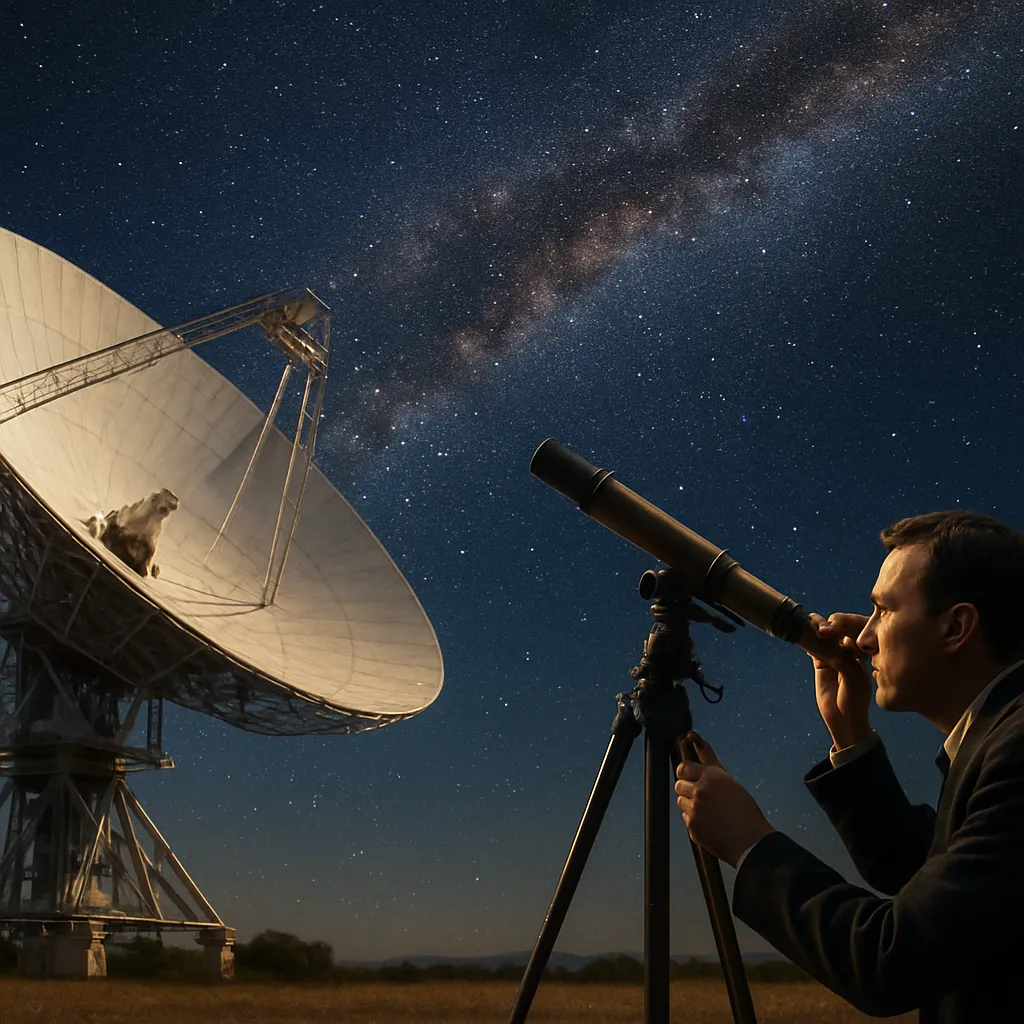
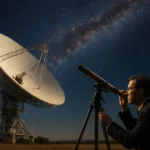
High-altitude facilities and mountain-top observatories play a crucial role in capturing secondary cascades produced when primary cosmic rays collide with atmospheric molecules. Arrays of scintillator counters, water-Cherenkov tanks, and muon detectors are spread over vast areas to measure shower properties. Parameters such as arrival angle, lateral distribution, and timing help reconstruct the energy and origin of the incoming particle.
Balloon-Borne Experiments
Scientific balloons carry instruments to altitudes above 30 kilometers, where the atmosphere is thin. Instruments on board often include:
- Scintillation detectors for timing and energy deposition.
- Magnetic spectrometers to determine charge and momentum.
- Silicon tracker arrays for trajectory reconstruction.
These experiments provide direct measurements of primary cosmic radiation before significant interaction with the atmosphere. The payload is recovered and refurbished for successive flights, enabling cumulative data collection over years.
Satellite and Spacecraft Detectors
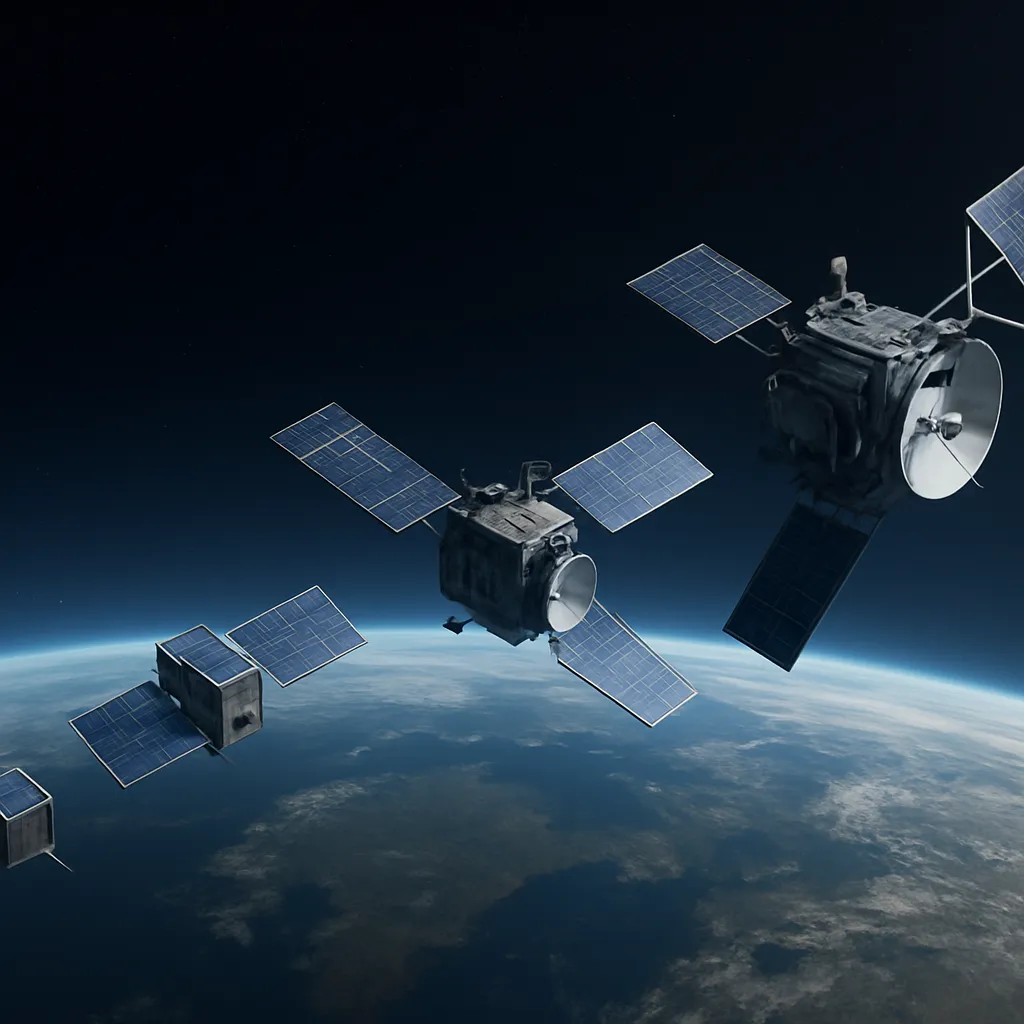
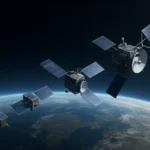
Orbiting platforms such as the International Space Station, dedicated small satellites, and interplanetary probes host a variety of particle detectors designed for extended missions:
- Solid-state telescopes to detect heavy ions.
- Calorimeters to measure total deposited energy.
- Cherenkov counters to distinguish particle velocities.
These instruments operate above the protective layer of the atmosphere, ensuring a clean measurement of cosmic rays across a broad energy spectrum. Shielding strategies are critical to minimize spacecraft-induced background noise and to protect sensitive electronics from radiation damage.
Data Processing and Analysis Techniques
Signal Calibration and Noise Reduction
Raw signals from detectors contain various sources of noise: thermal fluctuations, electronic interference, and background radiation from the spacecraft. Calibration procedures include:
- Periodic injection of known charge pulses.
- Monitoring temperature and voltage levels in real time.
- Cross-referencing with redundant sensors and control channels.
Advanced algorithms filter out spurious events, ensuring that only genuine cosmic ray interactions are retained for further study.
Event Reconstruction
Once noise is suppressed, each detection event is reconstructed using geometric and temporal information. Techniques include:
- Time-of-Flight measurements for velocity estimation.
- Track fitting algorithms to define particle trajectories.
- Energy deposition models to infer charge and mass.
By combining these approaches, researchers can classify incident particles as protons, heavier nuclei, electrons, or antiparticles.
Statistical and Machine Learning Methods
Datasets from cosmic radiation detectors often exceed petabyte scale. Modern studies leverage:
- Multivariate statistical analysis to identify rare events.
- Machine learning classifiers trained on simulated data.
- Deep neural networks for pattern recognition in high-dimensional feature space.
These tools enhance the discovery potential for exotic phenomena such as antimatter clusters, ultra-high-energy cosmic rays, or indirect signals of dark matter.
Theoretical Modeling and Simulations
Propagation Through Space
Cosmic rays originate in distant astrophysical sources like supernova remnants, pulsars, or active galactic nuclei. To bridge the gap between production and detection, scientists build models of particle propagation that include:
- Interaction with magnetic fields in the Milky Way.
- Energy losses via synchrotron radiation and inverse Compton scattering.
- Fragmentation into lighter nuclei through spallation processes.
Monte Carlo simulations replicate billions of particle trajectories, providing statistical predictions for flux, composition, and angular distribution at Earth.
Atmospheric Interaction Models
When high-energy particles collide with atmospheric nuclei, they generate extensive air showers composed of secondary photons, electrons, and muons. Atmospheric models incorporate:
- Altitude-dependent density and composition profiles.
- Cross-section data for hadronic and electromagnetic interactions.
- Propagation of secondary particles to ground-based arrays.
Sophisticated software such as CORSIKA and GEANT4 are integral to these simulations, enabling precise predictions of detector responses to cosmic radiation.
Isotope Production and Nuclear Physics
Secondary nuclear interactions can produce rare isotopes like beryllium-10 or carbon-14. Measuring the abundance of these isotopes yields insight into cosmic ray exposure ages and transport timescales. Nuclear reaction cross sections are obtained from accelerator experiments and integrated into cosmic ray propagation codes.
Biological and Technological Implications
Radiation Risks for Astronauts
Cosmic rays pose a significant hazard for long-duration spaceflight. Galactic cosmic radiation can penetrate spacecraft and human tissue, increasing cancer risk and potential degeneration of neural tissues. Studies simulate tissue damage at the cellular level, guiding the development of protective shielding materials and operational protocols.
Impact on Electronics and Materials
High-energy particles can cause single-event upsets, latch-ups, and cumulative displacement damage in semiconductor components. Radiation testing facilities replicate cosmic ray conditions to evaluate the robustness of avionics, sensors, and structural materials. Results inform both spacecraft design and mission planning to ensure reliable performance in harsh space environments.
Climate and Atmospheric Chemistry
Ionizing radiation in the upper atmosphere influences cloud nucleation processes and ozone chemistry. By monitoring cosmic ray flux variations, researchers seek correlations with climate patterns on Earth. Long-term records from neutron monitors and balloon flights contribute to understanding solar modulation effects on atmospheric dynamics.
Frontiers and Future Directions
Next-Generation Detectors
Planned missions aim to extend the energy range and increase the sensitivity of cosmic ray detection. Proposals include ultra-large ground arrays spanning thousands of square kilometers, deep-space probes beyond the heliosphere, and advanced calorimeters with higher granularity. These instruments will explore the ultra-high-energy end of the spectrum, searching for the sources of the most energetic particles in the universe.
Interdisciplinary Collaborations
Understanding cosmic radiation requires expertise from astrophysics, particle physics, nuclear physics, materials science, and biology. International collaborations coordinate data sharing, cross-calibration of detectors, and joint simulation efforts. Large consortia such as the Pierre Auger Observatory and the Alpha Magnetic Spectrometer (AMS-02) on the ISS exemplify these global partnerships.
Implications for Human Expansion into Space
As humanity contemplates missions to Mars and beyond, comprehensive knowledge of cosmic radiation is essential. Shielding technologies, habitat design, and medical countermeasures will all benefit from decades of cosmic ray research. By leveraging both experimental and theoretical advances, scientists can foster safer and more sustainable pathways for interplanetary exploration.