
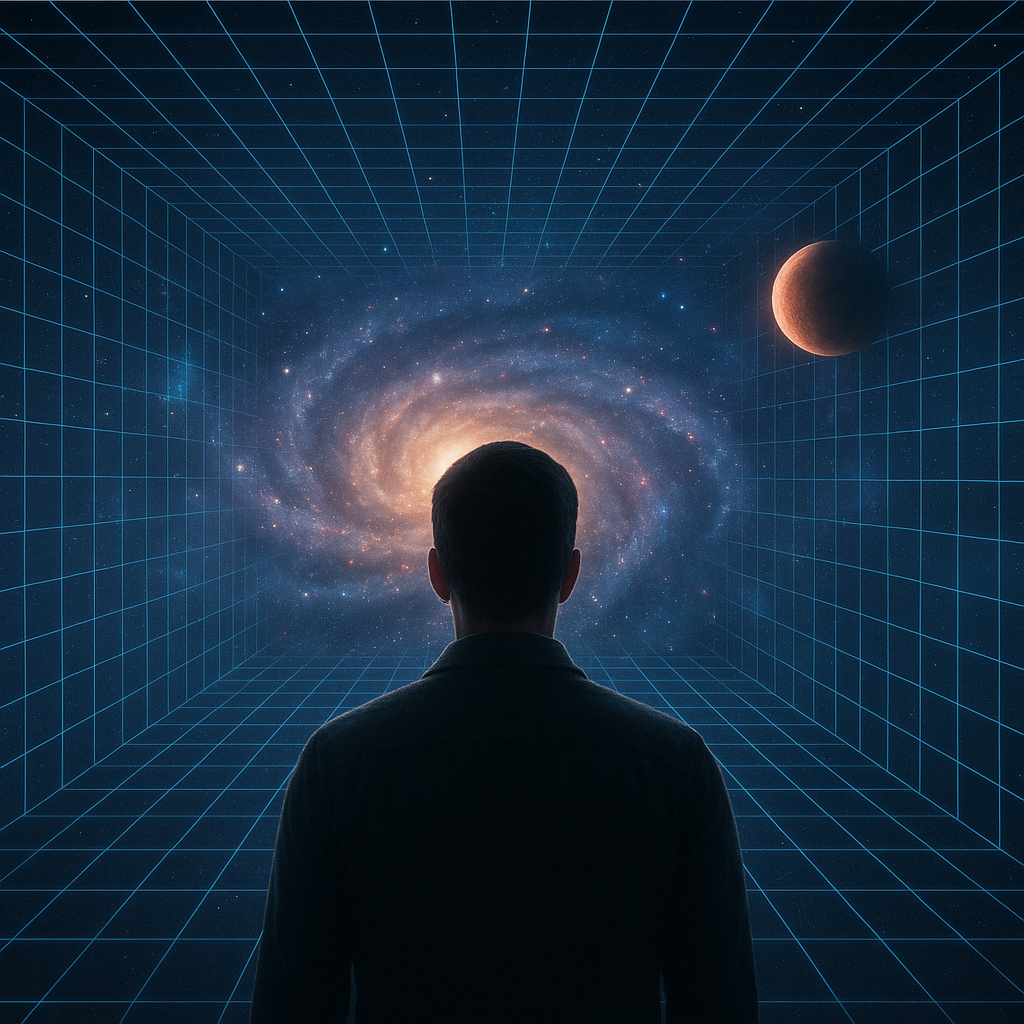
The idea that we might be living in a giant computer simulation has captivated philosophers, scientists, and storytellers alike. This provocative hypothesis challenges our most fundamental assumptions about the nature of reality and invites us to reconsider what it means to exist. Is our universe the ultimate playground orchestrated by a higher intelligence, or a byproduct of evolving technology so advanced that distinguishing the fabricated from the authentic becomes impossible? Through careful analysis of philosophical arguments, scientific perspectives, and the potential societal implications, we delve into the question: What if the universe is a simulation?
Philosophical Foundations of the Hypothesis
Origins and Historical Context
Speculations about the illusory nature of the world date back to ancient thinkers such as Plato, who described reality as shadows on a cave wall. In modern times, philosopher Nick Bostrom formulated the Simulation Hypothesis in 2003, arguing that at least one of the following statements must be true:
- Almost all civilizations at our level of technological development go extinct before becoming capable of creating high-fidelity simulations.
- Advanced civilizations have no interest in running simulations of their evolutionary past.
- We are almost certainly living in a computer simulation.
Bostrom’s trilemma forces us to confront uncomfortable possibilities about the fate of existence and the trajectory of our own species.
Mind, Consciousness, and Perception
The question of consciousness looms large in any discussion of simulated worlds. If our subjective experiences are merely data packets processed by an alien supercomputer, can we still claim genuine sentience? Philosophers of mind debate whether consciousness can arise from purely informational substrates or if there is an irreducible, non-computational quality to awareness. The role of perception is equally critical: our senses interpret electromagnetic waves, sound vibrations, and chemical signals. Could these inputs be replaced by code, making our perceptions indistinguishable from “real” stimuli?
Scientific Perspectives and Technological Considerations
Computational Limits and the Nature of Physical Laws
One of the most compelling scientific arguments for simulation stems from the digital footprints embedded in physical theories. The quantization of energy, space, and time in quantum mechanics suggests that the universe operates on discrete units, akin to the bits and bytes of a computer program. Physicists have pointed out:
- The Planck length and Planck time set fundamental resolution limits.
- Physical constants remain consistent across vast cosmic distances.
- Holographic principles imply that information content scales with surface area, not volume.
These observations mirror the constraints of technology we understand today, hinting at an underlying computational substrate.
Advances in Virtual Reality and AI
As virtual reality systems become ever more immersive, the line between the real world and digital environments blurs. Modern VR headsets can trick the brain into perceiving alternate landscapes with convincing detail. Artificial intelligence agents learn to navigate and adapt within simulated environments. If current trends continue, one day it may be possible to create a fully convincing digital cosmos inhabited by self-aware entities. Each breakthrough in rendering fidelity and algorithmic complexity lowers the barrier to building a simulation of our own universe.
Implications for Humanity and Cosmic Evolution
Ethical and Existential Considerations
Believing we might be simulated could reshape human values. Would life lose its meaning if we are mere characters in someone else’s experiment? Some argue that moral responsibility remains paramount, regardless of the substrate. Even if we exist within a digital realm, suffering, joy, and hope are still real to those who experience them. Conversely, a simulated framework might also offer unprecedented control over environmental variables, potentially eradicating poverty or disease within the “game.”
Cosmological Consequences
If the universe is a simulation, then what lies beyond its boundaries? Are we one among countless nested programs, each running on higher-dimensional machinery? Theories of cosmology that describe multiverses and brane worlds align well with the simulation concept. Our cosmos could be a subroutine in a grand cosmic computer, with our perceived laws of physics serving as its codebase. This perspective reframes questions about the Big Bang, dark matter, and dark energy as design choices rather than natural phenomena waiting to be discovered.
Detection Strategies and Future Research
Searching for Computational Artifacts
Scientists have proposed methods to test the simulation hypothesis by hunting for anomalies in physical processes. Potential signatures include:
- Deviations in high-energy cosmic rays due to grid-like spacetime.
- Unexpected patterns in the cosmic microwave background radiation.
- Limits on computational capacity revealed through quantum experiments.
By meticulously analyzing observational data, researchers hope to distinguish between a continuous reality and one constructed from discrete informational units.
The Role of Future Technologies
Progress in quantum computing, neural interfaces, and machine learning may unlock new tools for exploring whether our universe is a crafted environment. If we ever achieve the capability to simulate conscious minds on a large scale, we will simultaneously validate key aspects of Bostrom’s argument and gain insights into the architecture of any higher-order simulation that might encompass us. It remains an open question whether such revelations would be celebrated as technological triumphs or feared as unsettling proof of our own cosmic insignificance.