
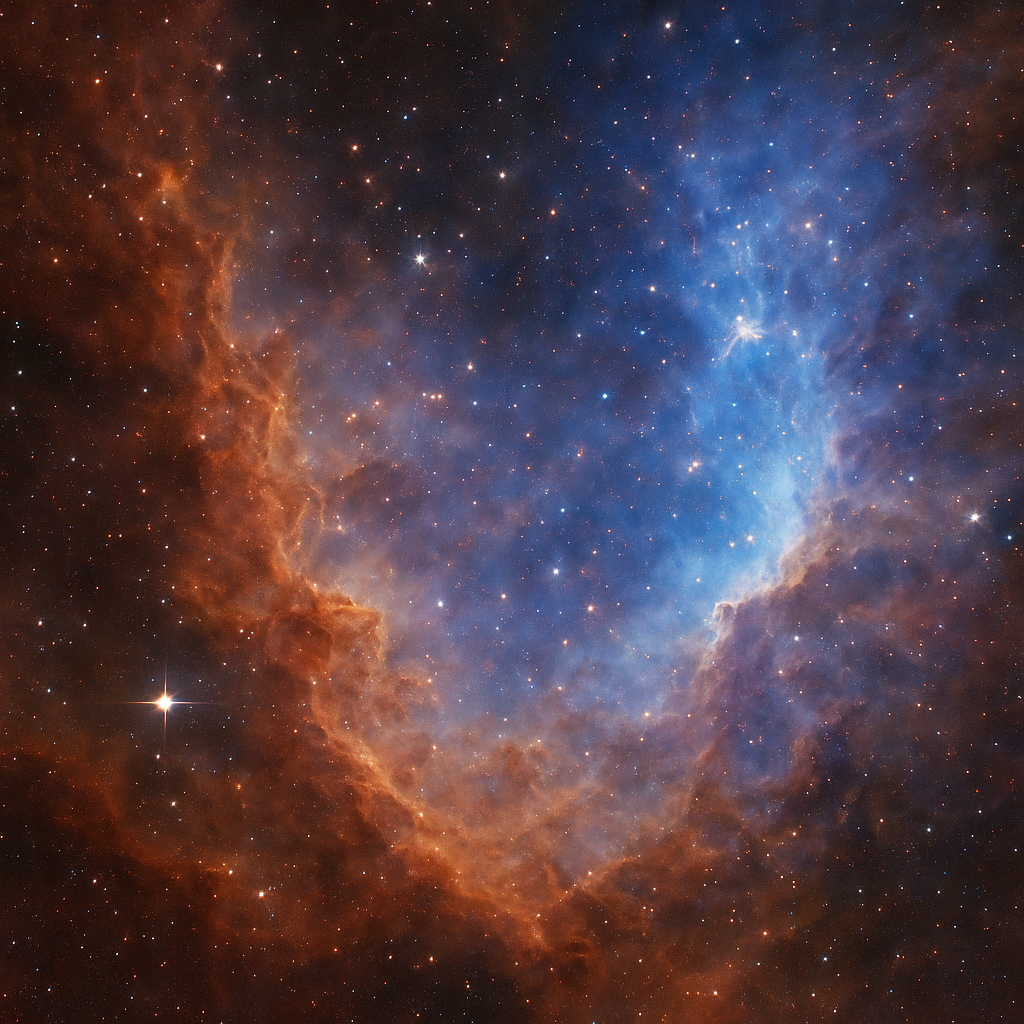
Hidden within the vast canvas of the universe, nebulas shine as ethereal masterpieces sculpted by gravity, light, and time. Captured in exquisite detail by the Hubble Space Telescope, these cosmic clouds reveal the processes of star formation and the hidden beauty of the interstellar medium. Through its sensitive instruments, Hubble has provided unprecedented views in ultraviolet, visible, and near-infrared wavelengths, allowing astronomers and enthusiasts alike to marvel at the vibrant colors and intricate structures of these stellar nurseries. This article explores some of the most breathtaking nebulas ever recorded, showcasing how each one contributes to our understanding of the cosmic tapestry.
The Pillars of Creation in the Eagle Nebula
Perhaps no image is more iconic than the “Pillars of Creation,” towering columns of cold gas and dust within the Eagle Nebula (M16). These three stunning structures stretch over four light-years tall and are illuminated by the brilliant ultraviolet radiation of nearby young stars. Hubble first captured this panorama in 1995 using its Wide Field and Planetary Camera 2, revealing the dense star-forming cores embedded within. Subsequent observations in 2014 with the Advanced Camera for Surveys added deeper detail, showing that parts of the pillars are gradually being eroded by the fierce stellar winds.
- Dense Cores: Regions where gravity compresses gas to ignite new stars.
- Photoevaporation: Process by which ultraviolet light strips away material.
- Dust Lanes: Dark silhouettes marking the presence of heavy elements.
Beyond their aesthetic appeal, the Pillars offer a window into the earliest phases of stellar evolution. Infrared observations by other telescopes have pierced through the opaque dust to reveal dozens of embryonic stars nestled at the tips of these columns. As these protostars accumulate mass, they may one day become fully-fledged suns, perhaps hosting their own planetary systems.
The Carina Nebula: A Stellar Nursery on Fire
Also known as NGC 3372, the Carina Nebula is a sprawling complex of glowing gas and dark dust clouds located in the southern sky. At over 260 light-years across, it ranks among the largest star-forming regions in our galaxy. Hubble’s high-resolution imagery has unveiled dramatic pillars, shock fronts, and cavities carved by the powerful winds of massive stars such as Eta Carinae, a hypergiant destined for a spectacular supernova.
Within the Carina Nebula lies an intricate network of filaments and globules—compact clouds of gas that can collapse under their own weight to form new stars. Hubble’s near-ultraviolet filters highlight hot, young stars bathing their surroundings in radiation, while visible-light exposures bring out the nebula’s rich palette of reds, greens, and blues caused by ionized hydrogen, oxygen, and sulfur.
- Eta Carinae: One of the most massive and luminous stars known.
- Keyhole Nebula: A dark, key-shaped structure within Carina.
- Herbig–Haro Objects: Jets and shock waves from newborn stars.
The Carina Nebula’s dynamic environment serves as a laboratory for understanding how the most massive stars influence their natal clouds. When these giants eventually explode, they will enrich the surrounding medium with heavy elements, seeding future generations of stars and planets.
The Hourglass of MyCn18
Nicknamed the “Hourglass Nebula,” MyCn18 dazzles with its symmetrical shape and vivid colors. Situated approximately 8,000 light-years from Earth, this planetary nebula represents the final breath of a dying star roughly the mass of our Sun. Hubble’s narrowband filters isolate glowing shells of ionized gas, revealing an inner waist only one light-year across and beautifully curved lobes extending outward.
Unlike diffuse star-forming clouds, planetary nebulas like MyCn18 form when an aging star expels its outer layers into space. The exposed core, now a white dwarf, emits intense ultraviolet radiation that excites the ejected gas, causing it to fluoresce. Hubble’s observations have shown:
- Symmetry: The almost perfect hourglass shape hints at hidden magnetic fields or binary companions shaping the outflow.
- Knots and Filaments: Tiny clumps of gas that survive the initial ejection process.
- Color Gradients: Layers corresponding to different chemical elements.
By studying planetary nebulas, astronomers gain insights into stellar death throes and the recycling of material back into the galaxy. The heavy atoms forged in the star’s core become the building blocks for planets and future stars, making objects like MyCn18 crucial to the cycle of cosmic evolution.
The Veil Nebula: Remnants of a Supernova
Stretching across nearly three degrees of sky—six times the diameter of the Moon—the Veil Nebula (NGC 6992/6995) is the scattered remains of a supernova that exploded around 8,000 years ago. Hubble’s targeted mosaics highlight intricate shock fronts and filamentary structures, where the blast wave plows through the galactic medium at hundreds of kilometers per second.
The Veil’s delicate tendrils of glowing hydrogen and oxygen showcase the raw aftermath of stellar cataclysm. Key features include:
- Shock Filaments: Bright sheets of gas compressed by the supernova blast.
- Diffuse Glow: Fainter regions where material has cooled and recombined.
- Magnetic Alignment: Filaments trace underlying magnetic field lines in the galaxy.
Hubble’s high-resolution data, when combined with X-ray and radio observations, help reconstruct the explosion’s three-dimensional geometry and energy. Understanding supernova remnants provides crucial information about how these events inject energy into the interstellar medium, trigger new waves of star formation, and distribute elements such as oxygen and iron throughout the galaxy.
The Bubble Nebula: Stellar Wind Meets Gas Cloud
NGC 7635, commonly called the Bubble Nebula, shines as a glowing sphere of ionized gas carved by fierce stellar winds from its central star, an O-type giant with a powerful outflow. Spanning about 10 light-years across, the bubble is offset within a larger cloud of hydrogen gas, creating a dynamic interface between wind-blown cavities and denser surroundings.
Hubble’s multiwavelength imagery reveals:
- Compressed Shell: The bright rim where the wind sweeps up gas.
- Pillars of Material: Finger-like extensions pointing toward the central star.
- Color Mapping: Emission lines of sulfur (red), hydrogen (green), and oxygen (blue).
The Bubble Nebula exemplifies how massive stars shape their environment long before ending their lives in supernova explosions. By studying such interactions, astronomers can better understand feedback mechanisms that regulate the pace of galactic evolution and control the birthrate of new stars.