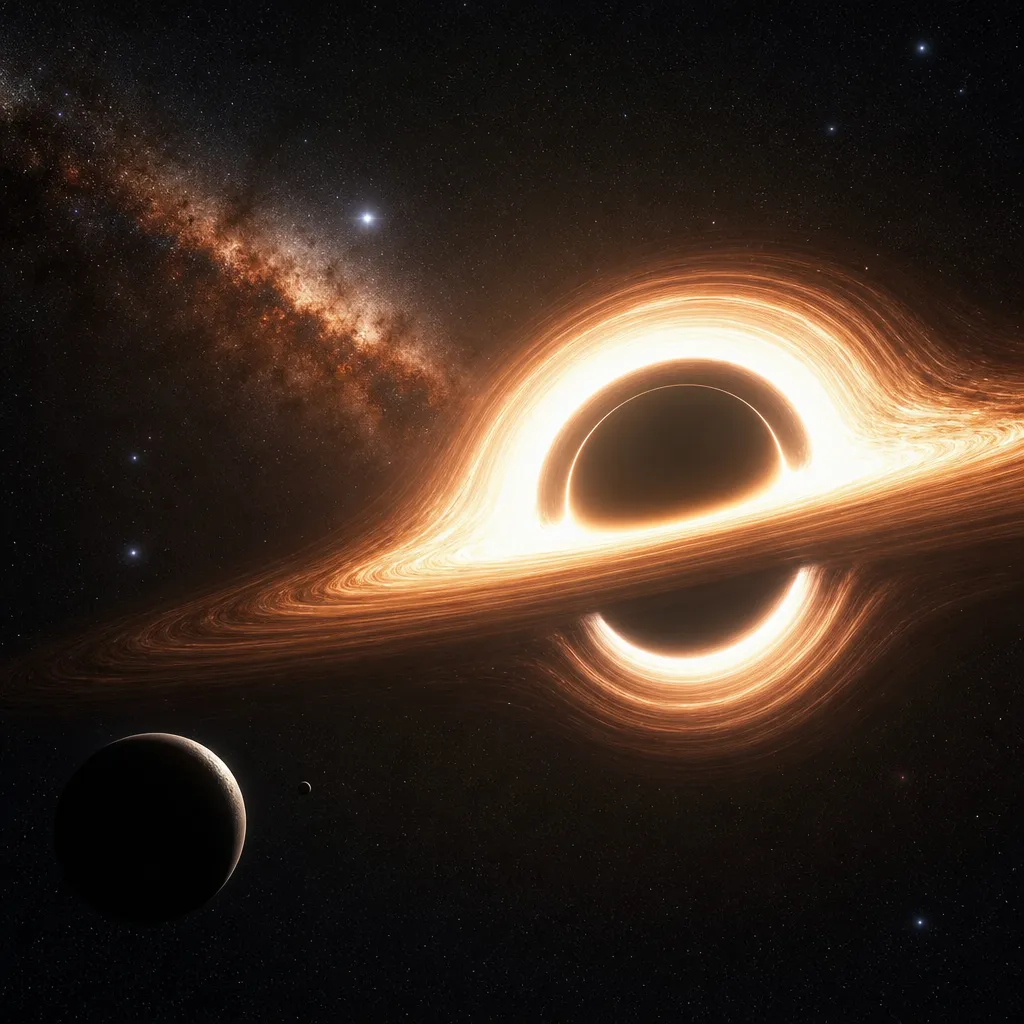

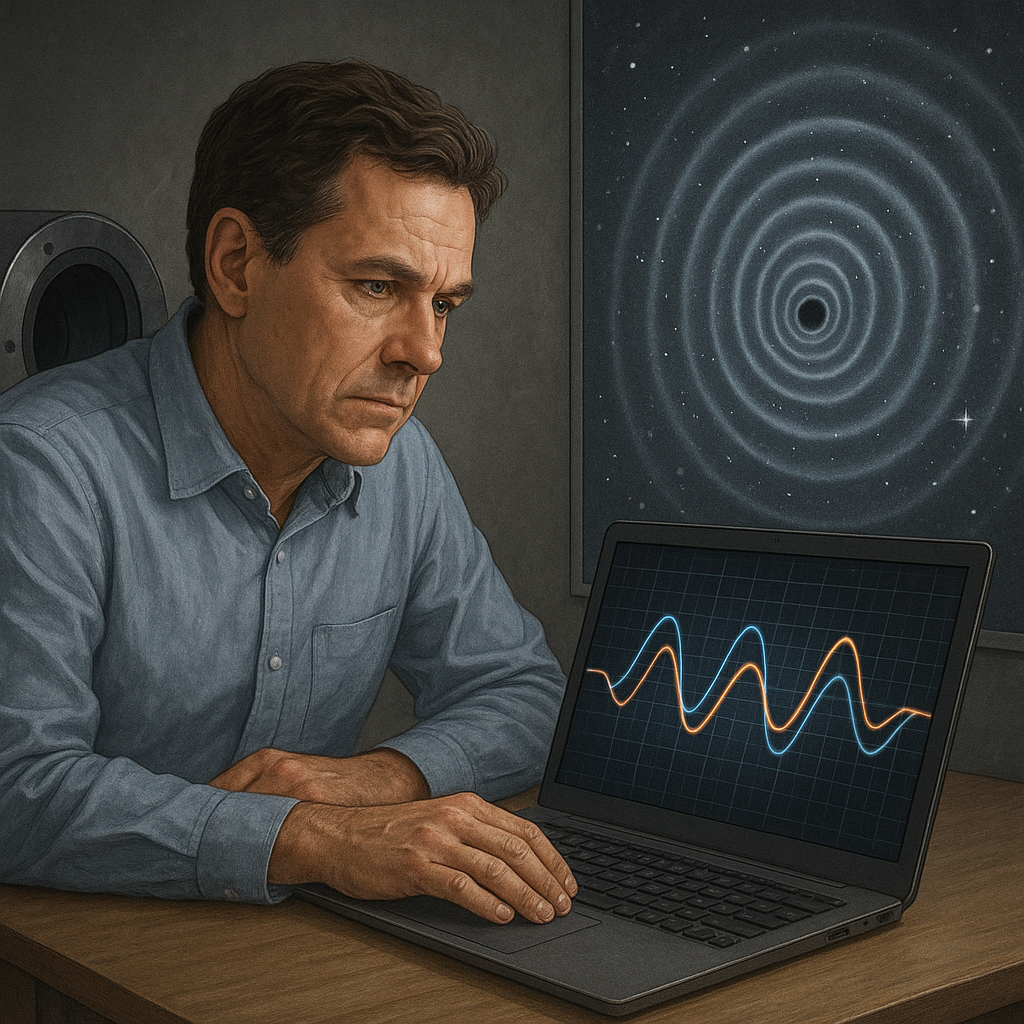
The ripples that traverse the cosmos, once a theoretical curiosity, have become one of the most profound windows into the workings of our universe. The prediction of gravitational wave phenomena nearly a century ago laid dormant until technological ingenuity and perseverance led to their first direct observation. These spacetime vibrations carry information about cataclysmic events, unlocking a new era of astronomy in which scientists can “listen” to the universe as well as observe it. The discovery not only confirmed a cornerstone of modern physics but continues to transform our understanding of black hole mergers, neutron star collisions, and the behavior of matter under extreme conditions.
Understanding the Concept of Ripples in Spacetime
When Albert Einstein formulated the equations of general relativity in 1915, he revolutionized the way scientists perceive gravity. Instead of a force acting at a distance, gravity emerged as the curvature of spacetime itself. Massive objects bend this four-dimensional fabric, and when such bodies accelerate—especially in binary systems—the distortion propagates outward as waves. Einstein’s original mathematical treatment suggested these distortions would be vanishingly small, making detection seem impossible for decades.
Core Principles of Wave Generation
- Massive objects in orbital motion produce periodic perturbations of spacetime.
- The energy carried by these waves is proportional to the square of the acceleration and mass involved.
- Gravitational waves travel at the speed of light, unimpeded by matter or radiation.
- The amplitude of these waves at Earth is extraordinarily tiny, demanding ultra-sensitive instruments.
Despite the challenges, conceptual leaps in laser technology, vibration isolation, and data analysis have paved the way for observational confirmation.
The Historic Achievement of the LIGO Detectors
After decades of theoretical speculation, the Laser Interferometer Gravitational-Wave Observatory (LIGO) succeeded in capturing the first direct evidence of ripples in the cosmic fabric. On September 14, 2015, two widely separated detectors in Louisiana and Washington recorded an identical fleeting signal named GW150914. Within a fraction of a second, these observatories measured a minute change in length—less than one ten-thousandth of a proton diameter—caused by passing waves from a distant merger of two black holes.
Key Components of the Detection System
- Dual 4-kilometer-long arms configured in an L-shape to measure spacetime distortions via interference patterns.
- High-power density lasers to enhance measurement precision and reduce noise.
- Sophisticated seismic isolation platforms to mitigate ground vibrations from earthquakes and human activities.
- Advanced data-processing algorithms capable of distinguishing true astrophysical signals from environmental and instrumental artifacts.
Following the initial triumph, LIGO was joined by the Virgo interferometer in Europe and later by KAGRA in Japan. Their combined network has improved sky localization, enabling astronomers to trace signals to specific regions in our galaxy and beyond.
Cosmic Sources and Their Signatures
Various astrophysical events generate different signatures in the gravitational wave spectrum. The most commonly detected signals originate from compact binary coalescences, especially merging black holes and colliding neutron stars. Each type of source imprints unique characteristics on the waveform, such as:
- Chirp patterns: frequency and amplitude increase as objects spiral inward.
- Ringdown: the final settling of the merged object emits a decaying tone revealing its mass and spin.
- Post-merger oscillations: in neutron star mergers, matter interactions produce complex oscillatory modes.
For instance, the landmark observation of GW170817 in 2017 involved two neutron stars colliding at nearly half the speed of light. Its gravitational-wave chirp was followed by electromagnetic counterparts—gamma rays, optical kilonova light, and radio afterglows—ushering in the era of multi-messenger astronomy.
Expanding the Frontiers of Observational Astronomy
The ability to detect and interpret gravitational waves has profound implications for multiple fields of research:
- Testing fundamental physics: Precise measurements probe deviations from general relativity under extreme gravity.
- Cosmology: Observations of standard sirens help determine the Hubble constant and the rate of cosmic expansion.
- Stellar evolution: Direct data on black hole and neutron star populations refine models of stellar life cycles.
- Nuclear physics: Insights into the equation of state at supra-nuclear densities from neutron star mergers.
Future observatories like the space-based LISA mission will access lower frequencies, opening a window onto supermassive black hole binaries and primordial cosmic processes. Meanwhile, third-generation ground-based detectors promise to observe waves from the entire visible universe.
The Road Ahead: Challenges and Opportunities
Continuous advancement is necessary to push the sensitivity envelope. Scientists face the ongoing challenge of isolating ever-smaller signals from myriad noise sources. Strategies include cryogenic mirrors to reduce thermal noise, new laser wavelengths, and novel interferometer designs. With each technical improvement, the boundary of the observable gravitational wave universe expands, promising discoveries of exotic objects, dark matter candidates, and possibly signatures from the Big Bang itself.
Emerging Technologies and Collaboration
- Quantum squeezing techniques to surpass standard quantum limits in measurement.
- Global data-sharing frameworks to coordinate rapid follow-up by electromagnetic and neutrino observatories.
- Machine learning algorithms for real-time signal classification and noise reduction.
By fostering international cooperation and interdisciplinary research, humanity stands at the threshold of a richer, more complete narrative of cosmic history. The story of gravitational waves—once a mere theoretical footnote—now drives a transformative journey through the hidden symphony of the universe.