


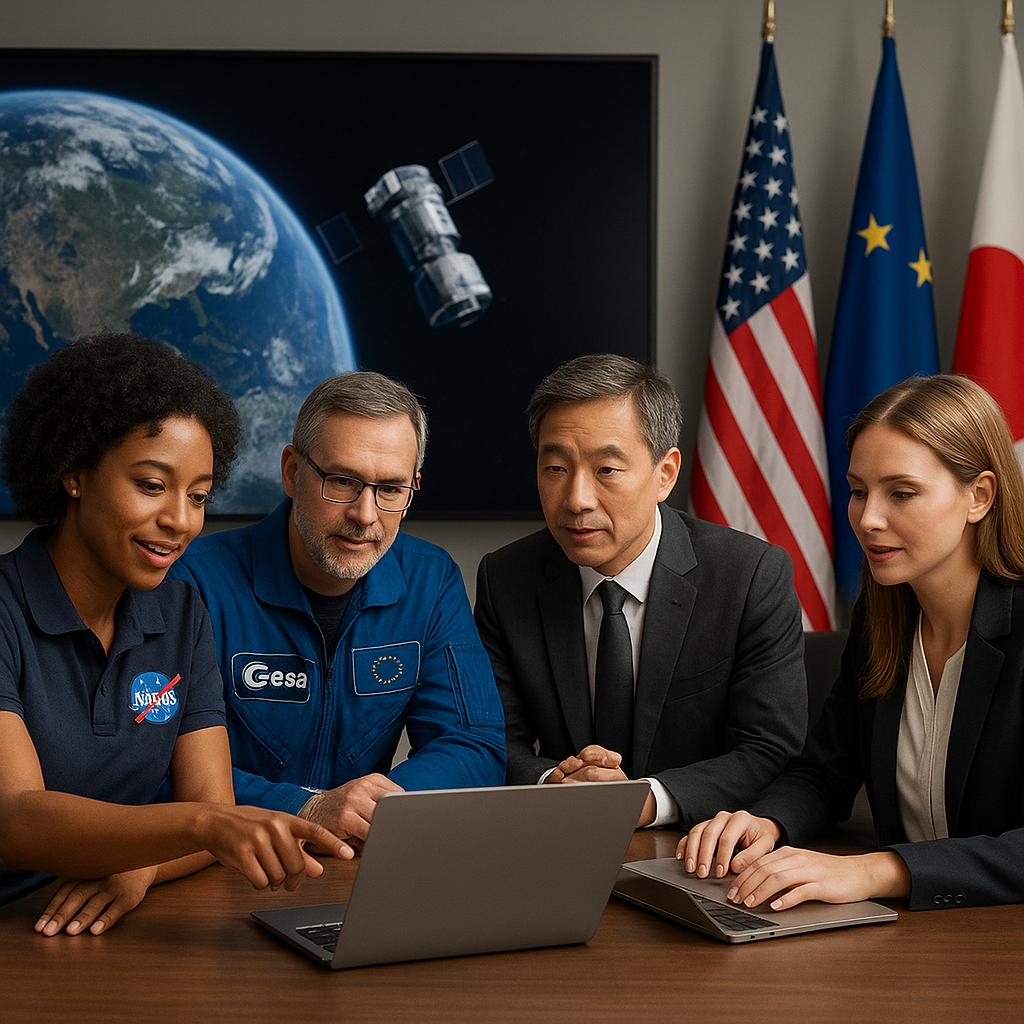
International collaboration in space has transformed our understanding of the universe and enabled achievements once deemed impossible. By pooling expertise, funding, and technology, space agencies forge partnerships that propel humanity beyond Earth’s confines. This article explores how agencies unite their strengths to conduct groundbreaking missions, advance research, and inspire future generations of explorers.
Origins of International Collaboration
Cold War Rivalry to Cooperative Ambitions
During the mid-20th century, the space race between the United States and the Soviet Union was fueled by competition rather than cooperation. Yet, by the 1970s, political tensions eased enough to spark joint efforts such as the Apollo–Soyuz Test Project in 1975. This historic docking mission demonstrated the power of collaboration even amidst ideological divides. Scientists and engineers began to recognize that shared goals in exploration outweighed national rivalries.
Establishment of the International Space Station
The conception of the International Space Station (ISS) in the 1980s marked a paradigm shift. Agencies including NASA, Roscosmos, ESA, JAXA, and CSA committed to a modular space outpost in low Earth orbit. Each partner contributed unique modules, equipment, and Crew Members. By 2011, the ISS hosted astronauts from over 20 nations, fostering an environment of continuous innovation and data exchange. The station’s construction and operation remain a testament to shared resources and expertise.
Key Collaborative Frameworks
Multilateral Agreements
Space agencies formalize their alliances through treaties and memoranda of understanding (MOUs). Major agreements include:
- Intergovernmental Agreement (IGA) on the ISS – defines legal and financial obligations among partners.
- Apollo–Soyuz MOU – established protocols for docking and joint crew activities.
- Artemis Accords – a modern framework led by NASA to outline principles for lunar exploration.
These documents ensure that each member upholds safety standards, shares data, and coordinates launch schedules effectively.
Joint Missions and Programs
Beyond the ISS, agencies collaborate on robotic and human spaceflight projects. Notable examples:
- ExoMars – led by ESA and Roscosmos to search for signs of life on Mars.
- James Webb Space Telescope – a partnership between NASA, ESA, and CSA for deep-space observation.
- Dragon and Cygnus resupply missions – NASA contracts with private firms while coordinating with international partners.
Joint endeavors leverage each agency’s strengths, whether in launch vehicles, spacecraft design, or scientific instrumentation.
Technological and Scientific Benefits
Shared Infrastructure and Resources
Building and maintaining space facilities demands vast financial and technical commitments. By dividing costs among nations, agencies reduce individual burdens and accelerate timelines. Shared ground stations, launch complexes, and tracking networks improve global coverage for mission control. This cooperative model maximizes asset utilization and minimizes duplication.
Standardization of Technology and Procedures
To ensure interoperability, partners adopt common specifications for docking systems, power interfaces, and communication links. Standards such as the International Docking System Standard (IDSS) facilitate future joint spacecraft visits. Moreover, unified safety protocols and training curricula prepare astronauts from diverse backgrounds to work seamlessly in microgravity environments.
Challenges and Solutions
Political and Funding Volatility
International politics can disrupt long-term programs. Shifts in government priorities or economic downturns may lead to budget cuts. Agencies mitigate these risks by diversifying partner coalitions and pursuing legally binding agreements that secure funding commitments. Engaging emerging spacefaring nations also broadens the financial base and promotes stability.
Cultural and Language Barriers
Multinational teams face challenges in communication and organizational culture. To bridge gaps, agencies implement:
- Language training programs for astronauts and engineers.
- Cross-cultural workshops to align management practices.
- Standard operating procedures documented in multiple languages.
These measures foster mutual respect and streamline collaboration on complex tasks.
Future Prospects for Exploration
Moon and Mars Initiatives
The planned return of humans to the Moon under the Artemis program exemplifies next-generation cooperation. NASA works with ESA to develop the European Service Module for Orion, while JAXA and CSA contribute habitation and logistics modules. Building on lunar experience, agencies aim for a sustained presence and eventual crewed missions to Mars.
Inclusion of Private Sector and New Entrants
Commercial space companies are increasingly integrated into international frameworks. Firms like SpaceX and Blue Origin collaborate with government agencies on launch services, crew transport, and lunar landers. Additionally, emerging space nations in Asia, Africa, and South America seek partnerships to advance their own space capabilities. This expanded network drives competition and further innovation across the industry.
The Road Ahead
As humanity pushes outward, collaborative networks among space agencies will become ever more vital. Shared ambition, pooled data, and combined expertise promise to unlock the cosmos’s deepest mysteries. Through enduring partnerships, the dream of exploring distant worlds moves closer to reality, inspiring generations to look up and reach beyond our home planet.