
The quest to understand weightlessness has driven researchers to develop ingenious methods for **simulating** zero gravity on Earth. By mimicking space-like conditions, scientists can conduct critical **experiments**, train **astronauts**, and design **spacecraft** components without leaving our planet. This article explores a variety of terrestrial techniques—each harnessing unique principles of **physics**, **engineering**, and innovation—to create environments where the effects of gravity are effectively neutralized.
Parabolic Flight: Simulating Weightlessness Through Flight Paths
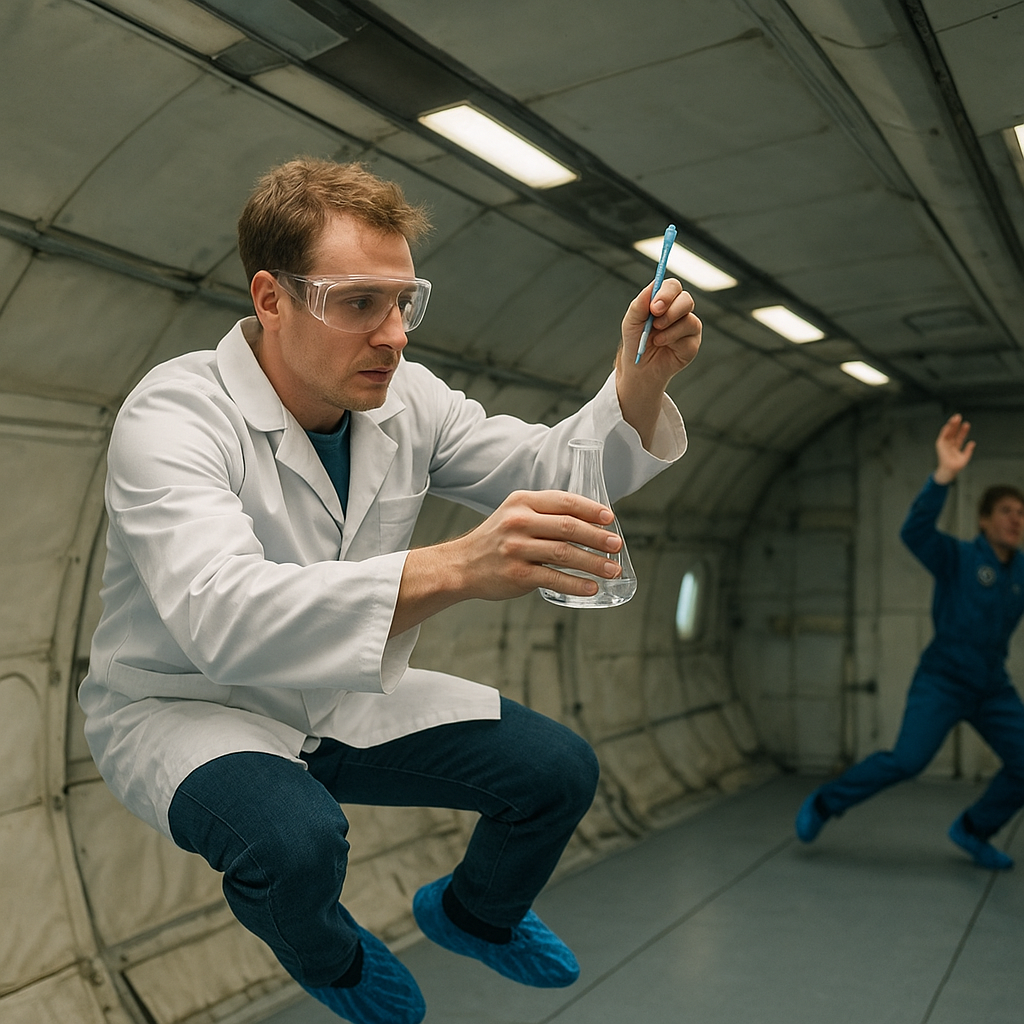
One of the most iconic ways to achieve brief periods of free fall is through parabolic flight. Specialized aircraft, such as NASA’s “Vomit Comet,” perform a series of climbs and descents along carefully calculated trajectories. During each parabola, passengers experience up to 25 seconds of near-microgravity conditions.
- Flight Path: The plane ascends at a steep angle, then pushes over into a downward arc, tracing a parabola relative to Earth’s gravity.
- Free Fall: At the top of the arc, the aircraft and its contents accelerate downward at 9.8 m/s², matching Earth’s gravitational pull. This synchronized acceleration creates a sensation of weightlessness.
- Recovery: After the free-fall phase, the pilot pulls out of the dive, restoring normal gravity levels and allowing occupants to brace for the next parabola.
Researchers aboard parabolic flights can test delicate fluid dynamics experiments, study human physiology under low gravity, and evaluate robotic systems destined for orbit. Although each zero-G interval lasts less than half a minute, repeat parabolas provide cumulative data invaluable for space mission planning.
Drop Towers: Brief but Effective Zero-G Conditions
Drop towers offer an alternative method to achieve weightlessness by leveraging the principle of free fall within a controlled vertical shaft. Facilities like ZARM’s Bremen Drop Tower in Germany and NASA’s Zero Gravity Research Facility in Florida allow payloads to be dropped from heights exceeding 100 meters.
- High-Speed Descent: A carriage or capsule containing the experiment is released and falls freely within the vacuum-sealed tower.
- Duration: Depending on the tower’s height, researchers can obtain 4 to 9 seconds of uninterrupted microgravity.
- Recovery: Magnetic or pneumatic brakes decelerate the capsule safely at the bottom, preserving delicate instruments.
Despite its short duration, drop tower testing is prized for its affordability and repeatability. It enables high-precision studies in **combustion**, **fluid physics**, and **material sciences**, where even a few seconds of free fall can reveal phenomena hidden under constant gravity.
Underwater Training and Neutral Buoyancy Labs
To prepare astronauts for the challenges of extravehicular activities (EVAs), space agencies utilize large water tanks known as Neutral Buoyancy Labs (NBLs). By balancing buoyant forces against weight, participants can simulate the feeling of **floating** in space.
Main Components of Neutral Buoyancy Training
- Buoyancy Control: Divers adjust weights and flotation devices so their net density matches that of the surrounding water.
- Mockup Environments: Full-scale replicas of spacecraft modules, rover systems, and satellite components are submerged for realistic practice.
- Underwater Tools: Special tethers, handrails, and communication gear allow astronauts to rehearse procedures safely.
While water resistance differs from a vacuum, neutral buoyancy remains the gold standard for EVA preparation. It hones participant dexterity, team coordination, and task sequencing, reducing the risk of errors during real spacewalks.
Magnetic and Acoustic Levitation Techniques
Beyond mechanical free fall, scientists have devised advanced levitation methods to counteract gravity at the molecular and macroscopic levels. These approaches push the boundaries of what’s achievable in laboratory settings.
- Magnetic Levitation: Diamagnetic materials, such as water or biological tissues, can be suspended in strong magnetic fields. The magnetic force counteracts gravity, allowing continuous study of microgravity effects on living organisms or fluid interfaces.
- Acoustic Levitation: High-frequency sound waves generate pressure nodes that trap small objects mid-air. Researchers use this technique to investigate droplet evaporation, crystallization, and **material synthesis** without container interference.
Although both methods are limited by scale—magnetic levitation often requires massive superconducting magnets, while acoustic levitation handles minute samples—they open pathways to microgravity experiments in fields ranging from **chemistry** to biomedical research.
Virtual Reality and Computational Models
When physical simulation proves challenging or costly, teams turn to virtual reality (VR) and computational modeling to predict how systems behave in zero gravity. These digital environments can replicate complex scenarios, from spacecraft docking maneuvers to thermal fluid dynamics in orbit.
- VR Training: Astronauts use immersive headsets and haptic feedback suits to rehearse mission tasks, problem-solving skills, and emergency protocols.
- Simulation Software: Advanced codes solve the Navier–Stokes equations under microgravity constraints, revealing heat transfer patterns, structural stresses, and fluid instabilities.
While VR cannot replicate the physical sensation of weightlessness, it offers cost-effective preparation and early-stage testing, accelerating the development cycle of space-bound hardware.