



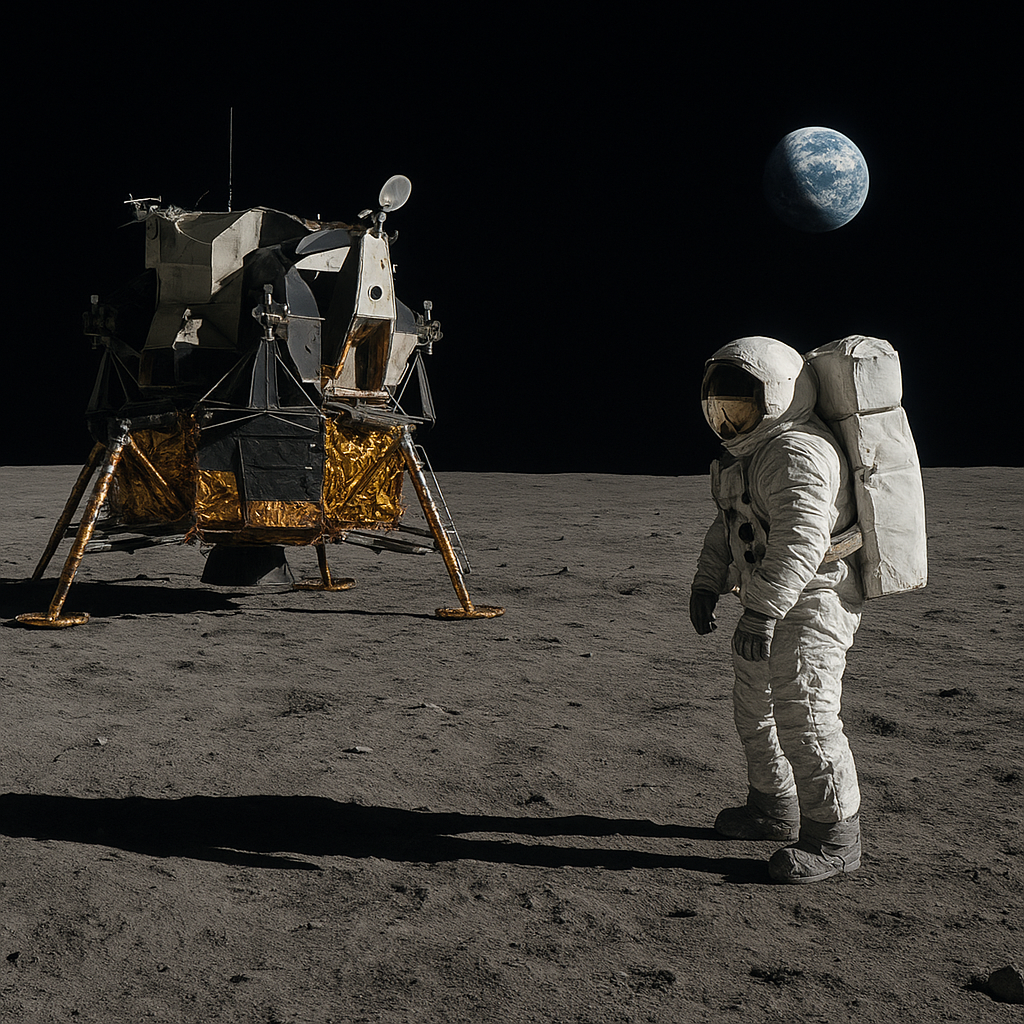
In the vast expanse of space exploration, humanity stands on the brink of a new lunar era. The upcoming mission to Earth’s only natural satellite promises to reshape our understanding of the cosmic neighborhood and catalyze profound advancements in technology, science, and long-term space exploration. By returning astronauts to the lunar surface after decades, this endeavor will test cutting-edge systems, gather invaluable data, and pave the way for future deep-space voyages. As we prepare to set foot once more on the Moon’s dusty plains, key questions about resource utilization, human resilience, and interplanetary travel await answers.
Return to the Lunar Surface: Renewed Goals and Aspirations
After the historic Apollo landings, lunar missions fell dormant for nearly half a century. Now, international space agencies and private enterprises have joined forces to rewrite that chapter. The upcoming expedition aims not only to demonstrate safe crewed operations beyond low Earth orbit but also to establish a persistent presence near the Moon. Astronauts will utilize a state-of-the-art lander designed for multiple sorties, allowing them to explore diverse terrains—from the cliffed walls of ancient craters to the smooth floors of impact basins.
One of the most daring objectives involves visiting the lunar south pole, a region of intense scientific interest. Permanently shadowed craters there may harbor water ice—an essential ingredient for future outposts. By drilling and sampling these deposits, crews hope to confirm the presence and purity of water, informing strategies for in-situ resource utilization. Additionally, precision rovers will accompany the astronauts, collecting geological specimens and relaying high-definition imagery of previously uncharted landscapes.
- Astronaut safety: rigorous life-support and radiation shielding
- Landing precision: automated systems to touch down within meters of target
- Habitat testing: inflatable modules for short-duration stays
- Surface operations: advanced tools for sample collection and analysis
Harnessing Lunar Resources for Sustainable Exploration
One of the mission’s central themes is sustainability. Rather than hauling all necessities from Earth, engineers are developing techniques to live off the land. Resources such as regolith (the Moon’s dusty soil) can be processed to extract elements like oxygen, silicon, and metals. These could support life-support systems, fuel production, and even construction of lunar infrastructure using three-dimensional printing methods.
Testing in-situ resource utilization (ISRU) on the actual lunar surface marks a significant leap forward. Experimental reactors and chemical reactors will convert regolith into breathable oxygen and hydrogen for rocket propellant. Researchers have designed pilot plants to validate the efficiency of these processes under real lunar conditions. Successful demonstrations could drastically reduce the mass and cost of cargo shipments from Earth, transforming the Moon into a viable staging ground for deeper space missions.
Key ISRU Demonstrations
- Electrochemical extraction of oxygen from lunar soil
- Demonstration of regolith-based 3D printing for habitat slabs
- Production of rocket-grade propellant using local water ice
- Assessment of solar and nuclear power systems for continuous operation
Advancing Science: Instruments and Experiments on the Moon
The lunar environment offers a unique laboratory for experiments impossible on Earth. With virtually no atmosphere and low gravity, the Moon enables crisp observations of the Universe and precise studies of fundamental physics. Deploying sophisticated instruments on the surface will expand our understanding of cosmic phenomena and test theories under extreme conditions.
A suite of next-generation sensors will be installed around the landing site. Among these, a radio telescope array will listen to the faint signals from the early Universe, probing the cosmic dawn before the first stars emerged. Seismic networks will map the Moon’s interior structure, revealing details about its core, mantle, and crust. These measurements not only deepen our knowledge of lunar geology but also inform theories about planetary formation and evolution.
Biological experiments will accompany the geophysical research. Small greenhouses and bio-chambers will examine plant growth and microbial behavior in reduced gravity. Understanding how life adapts off-Earth is crucial for designing long-duration missions and potential extraterrestrial colonies. Data from these experiments could lead to breakthroughs in radiation protection, closed-loop life-support, and sustainable agriculture beyond our planet.
Preparing Humanity: The Path from Moon to Mars
As the Moon returns to the forefront of exploration, it serves as a critical stepping stone toward Mars. The challenges of crewed lunar missions—radiation exposure, extended isolation, complex rendezvous operations—mirror those awaiting astronauts on a Martian journey. Each milestone achieved on the Moon strengthens our readiness for the Red Planet.
Long-duration stays in lunar orbit and on the surface will test habitats designed to shield crews from cosmic rays and solar particle events. Engineers will trial advanced propulsion systems, including solar electric and nuclear thermal rockets, in lunar vicinity. Successful tests of these engines could shorten transit times to Mars, reducing crew risk and mission costs.
Finally, the international collaboration model forged in lunar missions will underpin future deep-space alliances. Shared infrastructure, standardized docking mechanisms, and cross-trained crews lay the groundwork for a global effort to land humans on Mars. By learning to work together under the Moon’s pale light, nations prepare to reach for the next frontier and answer humanity’s enduring question: what lies beyond?