




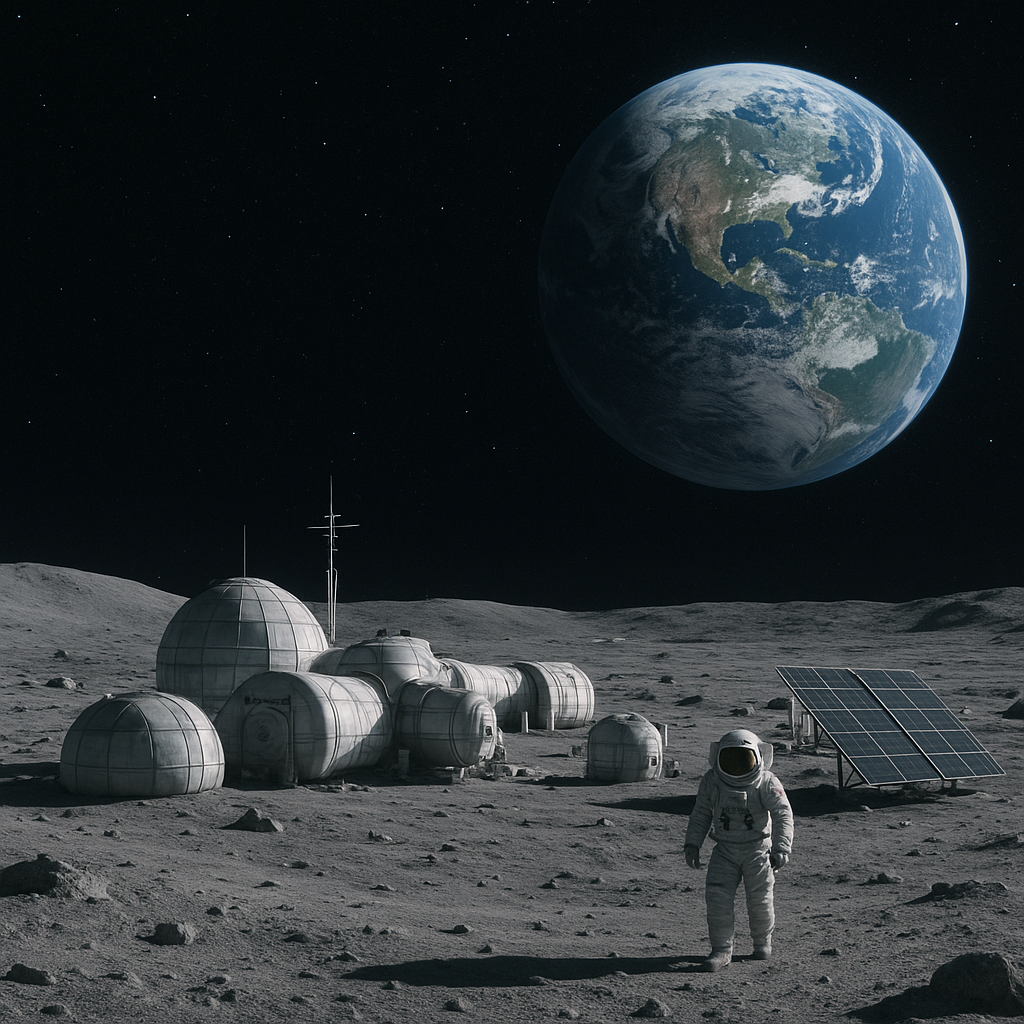
The concept of establishing sustainable human presence on the Moon has captured imaginations for decades. As nations and private enterprises renew their focus on lunar exploration, the question arises: What Is the Future of Lunar Bases? Advances in technology, international cooperation, and commercial opportunities are converging to make lunar habitats more than science fiction. This article explores the critical factors shaping lunar base development, from engineering hurdles to economic incentives and the wider implications for space exploration.
Challenges of Building Lunar Bases
Constructing a permanent facility on the Moon presents formidable obstacles. The lunar environment is dominated by extreme temperature fluctuations, with surface temperatures ranging from -173°C at night to +127°C during the day. Protecting inhabitants from radiation and micrometeorite impacts requires robust shielding solutions. Additionally, the abrasive nature of lunar regolith can damage equipment and pose health risks to astronauts by causing respiratory issues and equipment abrasion.
Effective life support systems must reliably provide water, air, and power. Transporting resources from Earth is prohibitively expensive, motivating research into ISRU (In-Situ Resource Utilization) methods. However, extracting water ice from permanently shadowed craters at the lunar poles involves drilling into extremely cold, dark regions, demanding specialized robotics and drilling technology. Continuous solar power generation is hindered by the Moon’s 14-day night, necessitating advanced energy storage or alternative power sources like nuclear reactors.
Technological Innovations and Infrastructure
Recent progress in robotics, additive manufacturing, and modular habitat design is driving lunar architecture forward. Autonomous rovers equipped with AI can survey terrain and prepare sites for construction before human arrival. 3D printing techniques using regolith as a raw material promise to reduce launch mass by fabricating landing pads, radiation shields, and habitat walls directly on the Moon.
- Modular Habitats: Inflatable or stackable modules can be expanded as the base grows, offering flexibility and redundancy.
- Radiation Shielding: Regolith-based shielding or water walls can absorb harmful cosmic rays and solar particle events.
- Power Systems: High-efficiency solar arrays, regenerative fuel cells, and small nuclear reactors are under development to guarantee continuous power supply.
Another promising avenue is the use of autonomous construction robots capable of operating in the harsh lunar environment. These machines could deploy structures overnight during the lunar day, minimizing astronaut exposure to hazards. Innovations in lightweight materials and advanced alloys enhance the resilience and longevity of structural components, while closed-loop life support systems aim to recycle water and air with minimal resupply.
Scientific and Economic Opportunities
A well-established lunar base would serve as a unique platform for scientific research and commercial ventures. Scientists could study lunar geology in situ, unlocking clues about the early Solar System and the Moon’s formation. The low gravity environment enables experiments in material science, biology, and fluid dynamics that are impossible on Earth.
- Helium-3 Mining: The Moon’s surface contains small quantities of helium-3, a potential fuel for future fusion reactors on Earth.
- Tourism: Luxury lunar hotels and guided excursions could become a reality in the coming decades.
- Manufacturing: Vacuum conditions and low gravity are ideal for producing high-purity materials and unique alloys.
Moreover, lunar bases could serve as waystations for deeper space missions. Refueling depots, equipped with water ice-derived hydrogen and oxygen, would significantly reduce the cost and complexity of missions to Mars and beyond. Stationing telescopes on the far side of the Moon offers uninterrupted observations of the Universe free from Earth-based radio interference, potentially revolutionizing astronomy.
International Cooperation and Governance
The future of lunar colonization hinges on robust legal frameworks and cooperative ventures. The 1967 Outer Space Treaty provides a starting point but lacks clear provisions for resource extraction and property rights. New agreements, like the Artemis Accords, seek to establish norms for peaceful cooperation, resource sharing, and environmental protection of lunar sites.
Collaboration between space agencies, including NASA, ESA, Roscosmos, CNSA, and JAXA, combined with private companies, accelerates progress. Shared missions distribute costs and risks, while cross-border partnerships foster technological exchange. However, competition for strategic advantages and valuable resources must be managed diplomatically to prevent conflicts.
Key Governance Considerations
- Defining clear property and resource rights under international law.
- Ensuring environmental safeguards to preserve lunar heritage sites.
- Promoting transparency and data sharing among participants.
Balancing national interests with collective goals requires flexible frameworks that can adapt as lunar activities evolve. The Moon Village concept, proposed by the European Space Agency, envisions a multi-user base where various stakeholders contribute and benefit without exclusive ownership, embodying a spirit of collaboration.
Long-Term Visions: From Habitats to Terraforming
While early lunar bases will focus on autonomy and survival, long-term visions include ambitious steps toward large-scale colony development. Concepts like spinning habitats built from lunar materials could provide artificial gravity, addressing the health challenges posed by prolonged exposure to low gravity. Underground lava tubes offer natural shelters, shielding occupants from radiation and micrometeorites.
Though terraforming the Moon remains a distant prospect, researchers are exploring techniques to thicken the exosphere by releasing volatiles trapped underground. Such efforts would require colossal energy inputs and advanced technologies far beyond current capabilities but hint at the transformative potential of lunar settlement.
- Spinning Cylinder Habitats: Large rotating structures to simulate Earth-like gravity.
- Subsurface Colonies: Utilizing lunar caves for immediate protection against hazards.
- Environmental Engineering: Releasing volatiles to thicken the lunar atmosphere.
Ultimately, the evolution of lunar bases will depend on the synergy between government initiatives, private enterprise, and international partners. The Moon stands as both a stepping stone and a destination, offering profound scientific insights and commercial promise. As humanity ventures back to our celestial neighbor, the dream of a thriving lunar outpost moves ever closer to reality.