





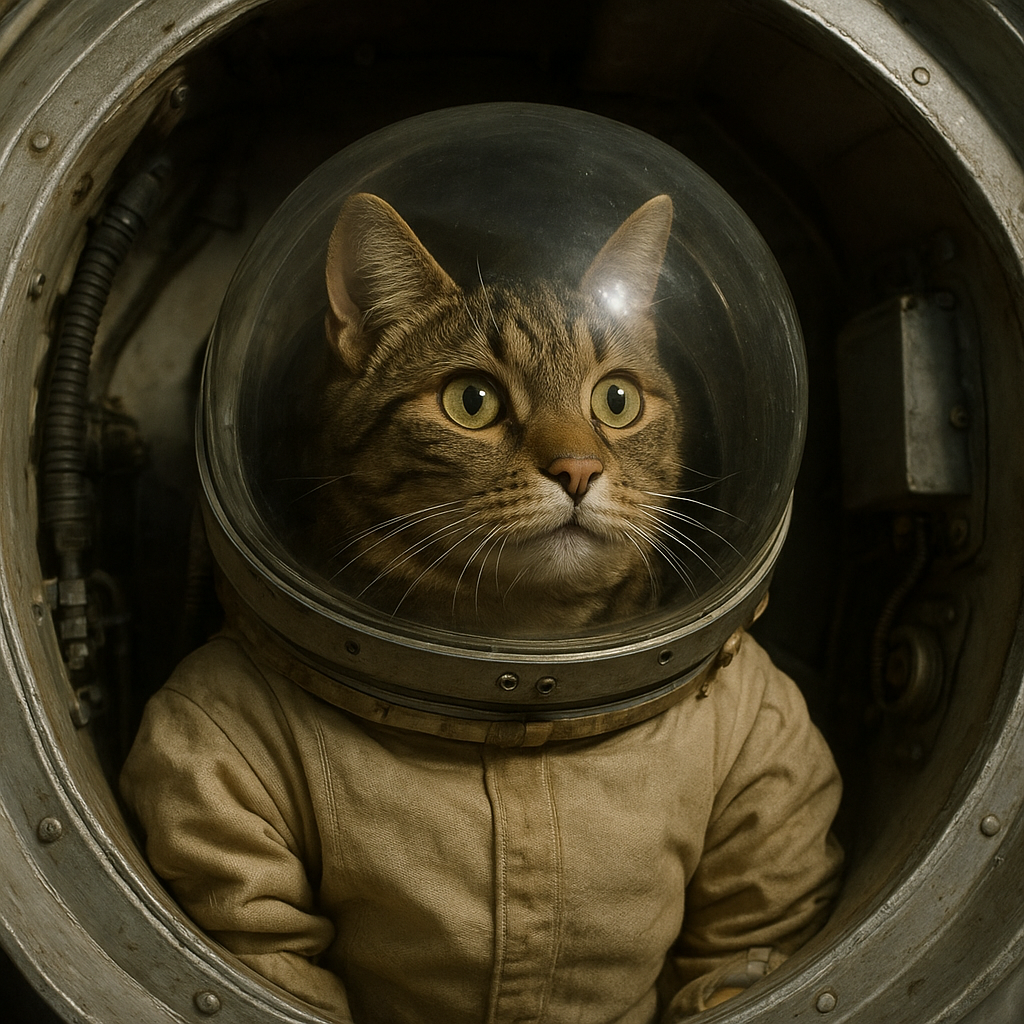
Since the earliest days of rocketry, scientists have relied on animals to test the effects of microgravity, radiation, and the stresses of launch on living organisms. These living pioneers paved the way for human spaceflight, revealing how life adapts outside Earth’s atmosphere. From tiny insects to loyal canines, the story of these experimental passengers is both inspiring and sobering.
The Pioneering Journey of Laika and Beyond
In 1957, the Soviet spacecraft Sputnik 2 carried Laika, a stray dog from Moscow streets, into orbit. Though she never returned, Laika became one of the most pioneering figures in engineering and biology. Prior to her mission, researchers had already sent fruit flies on a suborbital flight aboard a U.S. V-2 rocket in 1947. Those tiny creatures helped measure cosmic radiation levels. Building on that success, the Soviets and Americans launched:
- Rhesus monkeys (Albert I–IV) on U.S. V-2 and Aerobee rockets
- Various breeds of dogs in Soviet R-1 and R-2 rockets
- Guinea pigs and rabbits on orbital and suborbital flights
These missions provided crucial data on how biological systems respond to acceleration, weightlessness, and re-entry stresses. Though some flights ended tragically, each experiment informed spacecraft design and life-support systems for future human crews.
Challenges of Animal Spaceflight
Launch and Re-entry Risks
The act of launching into space exposes passengers to extreme g-forces. For a small creature like a dog or monkey, the acceleration can exceed six times Earth’s gravity. Engineers equipped capsule interiors with specially molded seats and monitoring sensors. Upon re-entry, unpredictable heat and deceleration could prove fatal without robust engineering solutions.
Life Support and Monitoring
- Respiration: Circulating oxygen and removing carbon dioxide
- Thermal regulation: Maintaining a stable temperature
- Nutrition: Delivering food in gel or tube form
- Health monitoring: Recording heart rate, blood pressure, and brain activity
Many early flights lacked automatic systems, requiring manual overrides or remote control from ground-based veterinarian experts. Data transmission used primitive telemetry, meaning any failure reduced the mission’s scientific value.
Key Discoveries and Scientific Impact
Animal missions yielded groundbreaking insights into how weightlessness affects organ systems, metabolism, and even cellular function. Among these findings:
- Loss of bone density and muscle mass under prolonged microgravity exposure
- Changes in cardiovascular health, including fluid redistribution and altered heart rhythms
- Disorientation and vestibular disturbances, akin to motion sickness
- Immune system suppression and modifications to cell repair mechanisms
Radiation and Genetic Studies
High-altitude and orbital flights allowed measurement of cosmic ray interactions with DNA. Scientists observed increased mutation rates in fruit flies and mice, leading to a deeper understanding of cancer risks for astronauts. These scientific data underpinned the development of radiation shielding materials and operational guidelines for human missions.
Ethics, Controversy, and Evolving Standards
While these early tests achieved monumental scientific breakthroughs, they also sparked ethical debates. Critics pointed to:
- Inadequate pain relief and anesthesia
- High mortality rates among subjects
- Lack of informed consent (by nature of animal research)
The controversy prompted the formation of stricter guidelines and oversight committees. By the 1970s, animal research programs required justification of potential benefits versus harm. Veterinary care and post-mortem analysis became mandatory. Transition to cell cultures, computer models, and volunteer human studies began to reduce reliance on live animals.
Legacy and Future Prospects
The sacrifices of early test animals laid the foundation for safe human space exploration. Without them, first flights by Yuri Gagarin and Alan Shepard might never have occurred. Today, research continues aboard the International Space Station with rodents, fruit flies, and fish. Modern studies focus on:
- Muscle and bone regeneration therapies
- Advanced radiation countermeasures
- Microbial behavior in closed habitats
- Genetically engineered organisms to monitor environmental changes
Looking ahead, space agencies plan missions to Mars and deep-space habitats. Ethical frameworks now govern every aspect of animal involvement. New technologies like organ-on-a-chip systems and AI-driven simulations aim to replace live subjects. Nevertheless, the historic flight of Laika and her predecessors remains a powerful reminder of the mission, courage, and complexity involved in extending life beyond Earth.