

The quest to uncover life beyond our planet has captivated scientists and the public alike for decades. Recent advances in technology, combined with ambitious space missions, have brought us closer than ever to answering one of humanity’s oldest questions: Are we alone in the universe? This article explores the cutting-edge techniques, groundbreaking observations, and future endeavors that define the ongoing search for extraterrestrial life.
Methodologies in the Hunt for Life
A diverse array of scientific disciplines collaborates under the umbrella of astrobiology, employing multiple strategies to detect potential life signatures. Researchers focus on both remote sensing from telescopes and in-situ measurements by robotic spacecraft.
- Spectroscopy: By splitting light from distant worlds into its component colors, astronomers can identify the unique fingerprints of chemicals in exoplanet atmospheres.
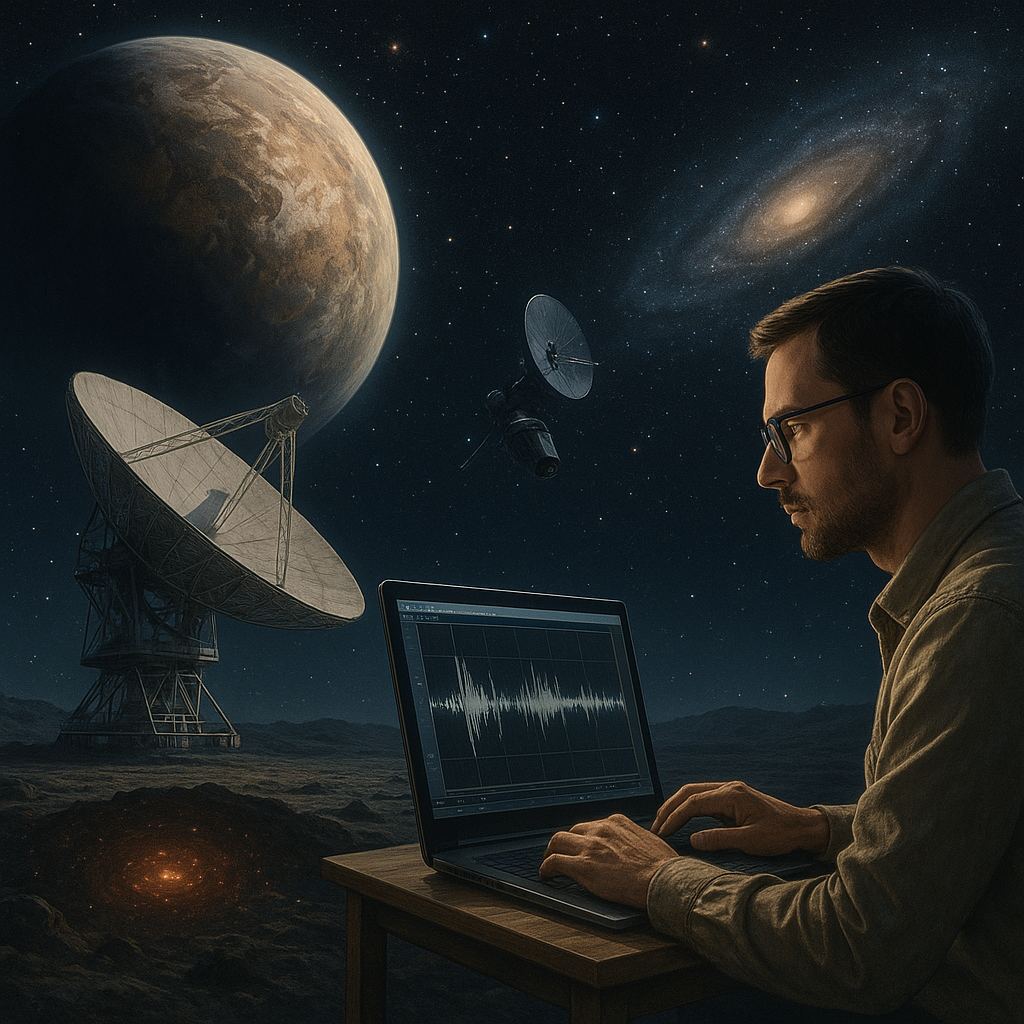
- Radio Astronomy: Facilities like the Allen Telescope Array scan the skies for narrow-band radio emissions that could hint at intentional transmissions.
- In-Situ Exploration: Mars rovers and upcoming ocean probes to icy moons will sample soil, ice, and water for microbial life.
- Technosignature Searches: Observatories also look for indirect signs of advanced civilizations, such as waste heat from hypothetical megastructures.
Each of these approaches complements the others. While telescopes on Earth and in orbit offer broad surveys of thousands of star systems, robotic explorers provide ground truth by analyzing samples directly.
Breakthrough Discoveries and Exoplanet Atmospheres
The last decade has seen an explosion in the number of confirmed exoplanets. As of now, over five thousand worlds orbit stars beyond our solar system, ranging from hot gas giants to rocky Earth-like spheres. The most exciting targets reside in the so-called habitable zone, where temperatures may allow liquid water to exist.
Key observations include:
- Detection of water vapor on K2-18b, an intermediate-size planet in the habitable zone of its star.
- Identification of methane and oxygen in the atmospheres of temperate super-Earths, both potential biosignatures if found together.
- High-precision transit photometry from space telescopes revealing atmospheric haze layers that could protect surface life from harmful radiation.
The launch of the James Webb Space Telescope marked a turning point. Its powerful spectrographs can analyze starlight filtered through exoplanet atmospheres with unprecedented sensitivity. Early results have confirmed water and carbon dioxide on several mini-Neptunes and super-Earths, paving the way for more detailed studies of smaller terrestrial planets.
Technosignatures and the Search for Intelligent Life
Beyond chemical clues, scientists consider the possibility of technosignatures—observable effects of advanced technology that might outlast short-lived radio transmissions. Modern SETI initiatives employ cutting-edge instruments and large data sets to broaden the search.
- Optical SETI: Searching for intense, short laser pulses that could be used for interstellar communication.
- Infrared Surveys: Looking for infrared excesses that might indicate waste heat from large-scale energy use, such as hypothetical Dyson spheres.
- Fast Radio Burst (FRB) Studies: Investigating whether some millisecond radio flashes have artificial origins.
These approaches benefit from the exponential growth in computing power, enabling real-time analysis of petabytes of data. Collaborative networks of radio telescopes, like the Square Kilometre Array under development, promise to revolutionize our ability to detect faint or sporadic signals.
Extremophiles and Analog Studies on Earth
Life on Earth thrives in environments once thought uninhabitable, from acidic hot springs to subglacial Antarctic lakes. Studying these extremophiles provides essential clues about possible extraterrestrial ecosystems.
Major research efforts include:
- Sampling microbial mats in acid mine drainage to understand acid-tolerant biochemistry.
- Probing deep-sea hydrothermal vents where chemosynthetic organisms form the base of complex food webs.
- Simulating Martian soil conditions in laboratory chambers to test microbial survival under cold, dry, and UV-intense environments.
These Earth-based analogs help refine life-detection instruments and inform mission designs for environments like the subsurface ocean of Europa or the dusty plains of Mars.
Future Missions and the Road Ahead
The next generation of space missions aims to expand our capabilities both within and beyond the solar system. Planned projects promise to deliver higher-resolution data and access new frontiers.
- Europa Clipper: Scheduled to launch in the mid-2020s, it will perform detailed reconnaissance of Jupiter’s icy moon Europa, probing for signs of a salty subsurface ocean.
- Mars Sample Return: A multi-agency collaboration to bring Martian rock and soil samples back to Earth laboratories for comprehensive analysis.
- Roman Space Telescope: Featuring a wide-field infrared camera, it will survey exoplanet transits to yield tens of thousands of new candidates.
- Extremely Large Telescope (ELT): Ground-based observatory under construction that will directly image nearby exoplanets and resolve atmospheric features.
As these missions advance, interdisciplinary collaboration will be crucial. Planetary scientists, chemists, biologists, and engineers must work in concert to design experiments capable of distinguishing true signs of life from false positives caused by abiotic processes.
Challenges and Aspirations
Despite remarkable progress, the search for extraterrestrial life faces significant hurdles. False positives can arise when non-biological processes mimic biological signatures. Instrument sensitivity limits may prevent detection of faint signals. Vast interstellar distances impose practical constraints on direct exploration.
Nonetheless, every new discovery refines our understanding. The journey to find life beyond Earth is as much about self-reflection as it is about cosmic discovery. Each breakthrough fuels both scientific innovation and the universal human yearning to connect with unknown worlds.