
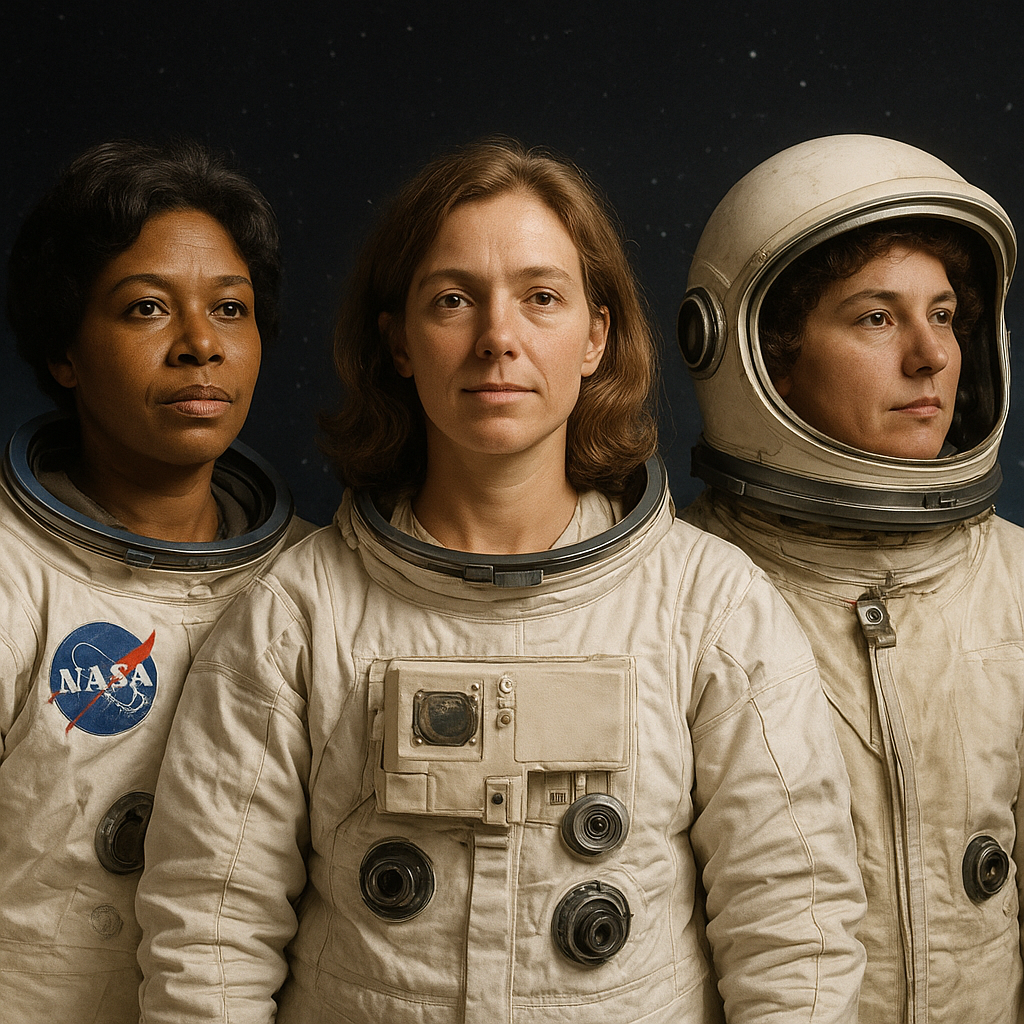
The narrative of space exploration owes much to the often-overlooked contributions of women whose passion, expertise, and innovation propelled humanity beyond Earth’s bounds. From the earliest mathematicians charting celestial motions to astronauts conducting experiments in microgravity, these pioneers have demonstrated remarkable perseverance and unwavering courage. Their journeys not only shaped scientific discovery but also laid the groundwork for increasing equality in a field once dominated by men. Through each milestone, these women instilled lasting inspiration for future generations seeking to pursue the final frontier.
Early Female Minds Shaping Astronomy and Rocket Science
Long before rockets pierced the sky, women made strides in understanding the cosmos. In the late 18th century, Caroline Herschel cataloged nebulae and star clusters, her meticulous records complementing her brother William’s telescopic work. Later, Annie Jump Cannon devised the stellar classification system still in use today, organizing hundreds of thousands of stars by their spectra. These achievements underscored a vision for systematic exploration of stellar phenomena.
During World War II and the ensuing Cold War, groundbreaking work in rocketry and aerodynamics opened new opportunities for women engineers and mathematicians. At NASA’s predecessor, NACA, Dorothy Vaughan led a team of African American “human computers,” calculating crucial aerodynamic coefficients. Her leadership exemplified pioneering spirit in an era of segregation. Katherine Johnson’s path-breaking trajectory analysis enabled John Glenn’s orbital flight, proving that precise computation could save lives in the vacuum of space. Mary Jackson later became NASA’s first Black female engineer, championing inclusive policies that recognized technical talent over social barriers.
- Caroline Herschel – Nebula cataloging and comet discoveries
- Annie Jump Cannon – Stellar classification system
- Katherine Johnson – Orbital mechanics for manned missions
- Mary Jackson – Aeronautical engineering and civil rights advocacy
Breaking Barriers: From Soviet Skies to American Orbits
The space race accelerated female involvement in manned missions. In 1963, Valentina Tereshkova became the first woman to orbit Earth aboard Vostok 6, her mission demonstrating Soviet commitment to female astronauts. Her success emboldened international space agencies to consider women for demanding missions. Although political motivations underpinned her flight, Tereshkova’s courage set a global precedent.
In 1983, Sally Ride shattered another threshold as the first American woman in space. Her presence on Challenger’s STS-7 mission diversified NASA’s astronaut corps and inspired countless young women to pursue STEM careers. Ride’s calm demeanor and technical expertise challenged stereotypes about women’s capacity for high-pressure missions. Soon after, Judith Resnik and Kathryn Sullivan added to this lineage, conducting crucial experiments and becoming the first woman to walk in space, respectively.
- Valentina Tereshkova – First woman in orbit
- Sally Ride – First American woman astronaut
- Judith Resnik – Mission Specialist on STS-41D
- Kathryn Sullivan – First female spacewalker
These achievements underscored an essential truth: gender is no barrier to mastering the rigors of spaceflight. Each mission expanded public perception of women’s roles beyond Earth’s atmosphere, forging a path toward greater female participation in exploratory and scientific tasks.
Expanding Horizons: Women on Long-Duration Missions and in Leadership
As the International Space Station (ISS) became a permanent outpost, women took leading roles in extended missions. In 2008, Peggy Whitson set records for the longest cumulative time in space by any American astronaut, amassing over 665 days. Her meticulous research on muscle atrophy and bone density contributed significantly to understanding human physiology in microgravity. Whitson’s tenure as ISS commander highlighted female leadership in coordinating complex multinational crews.
Christina Koch and Jessica Meir made history in 2019 by conducting the first all-female spacewalk, fixing power systems outside the station. Their collaboration symbolized teamwork and proved that women possess the technical proficiency and teamwork essential for demanding extravehicular activities. Koch went on to complete the longest single spaceflight by a woman, while Meir conducted biomedical experiments that continue to inform space medicine.
- Peggy Whitson – ISS commander and record-breaking duration in space
- Christina Koch – Participant in first all-female spacewalk
- Jessica Meir – Researcher in space biology and extravehicular operations
Beyond astronauts, women have occupied senior roles in mission planning and spacecraft design. Engineers like Lori Garver and Ellen Ochoa, NASA’s first Hispanic female astronaut, became directors within the agency, shaping policy and fostering diversity initiatives. Their combined contributions testify to women’s capacity for technical innovation and administrative excellence in space programs worldwide.
Next Generation: Inspiring Tomorrow’s Cosmic Explorers
Looking to the future, women continue to serve as beacons for the next wave of astronauts, engineers, and scientists. The Artemis program, aiming to return humans to the Moon and eventually reach Mars, features a goal of landing the first woman on the lunar surface. Astronaut candidates such as Jessica Watkins and Raja Chari, among others, carry the torch of trailblazers from past missions.
Educational outreach initiatives highlight the importance of nurturing young talent across genders and cultures. Programs like Girls Who Code, Space Camp scholarships for disadvantaged youth, and international exchange fellowships ensure that the field grows more inclusive. With each new cohort, the legacy of female spacefarers continues to resonate, guiding aspirants to dream beyond terrestrial limits.
In every era—from early astronomers to future lunar explorers—the participation of women has been synonymous with progress, equality, and unyielding inspiration. Their stories remind us that true exploration demands diversity of thought, collaborative leadership, and unwavering vision to overcome challenges. As humanity sets its sights on Mars and beyond, the legacy of these remarkable women will shape journeys yet to unfold.