Fast Radio Bursts (FRBs) have emerged as one of the most **intriguing** puzzles in modern **astronomy**, captivating scientists and enthusiasts alike with their millisecond-long flashes of radio waves. First detected just over a decade ago, these enigmatic signals originate from distant reaches of the universe, challenging our understanding of **space** and its most extreme phenomena. This article delves into the journey of FRB research, exploring the observations that unveiled them, the leading theories that seek to explain their origin, and the technological advances driving future discoveries.
Observations and Discovery of Fast Radio Bursts
The story of FRBs began in 2007, when astrophysicist Duncan Lorimer examined archival data from the Parkes Radio Telescope and noticed a single, bright pulse lasting only a few milliseconds. This initial detection, later dubbed the “Lorimer Burst,” exhibited an unusually high dispersion measure, indicating that the signal had traveled through vast amounts of ionized matter before reaching Earth. Since then, dozens of FRBs have been recorded by various observatories around the globe.
Key Characteristics of FRBs
- Brief Duration: Bursts typically last between 0.5 and 10 milliseconds.
- Extreme Brightness: Despite their short duration, FRBs can outshine all other radio sources in their sky region.
- High Dispersion Measure: Values often exceed those expected from our own galaxy, pointing to extragalactic or even cosmic origins.
- Polarization: Some FRBs show significant polarization, hinting at strong magnetic fields near their source.
- Repeating vs. Non-Repeating: A subset of FRBs have been observed to repeat, while most appear as singular events.
Leading Theories and Models
As the catalog of detected FRBs expanded, researchers proposed a myriad of explanations. These theories generally fall into two broad categories: cataclysmic events that destroy or drastically alter their progenitor, and repeatable processes that can occur multiple times in the same object.
Cataclysmic Event Hypotheses
In cataclysmic models, the FRB arises from a one-off explosive event. Prominent ideas include:
- Neutron star mergers: When two dense neutron stars coalesce, they may emit an intense burst of radio waves alongside gravitational waves.
- Black hole–neutron star collisions: Similar to neutron star mergers, these violent interactions could generate a powerful FRB.
- Collapse of a supramassive neutron star: A rapidly spinning neutron star might collapse into a black hole, releasing a sudden radio pulse.
Repeatable Phenomenon Theories
Repeaters challenge single-event models, leading to theories involving persistent or episodic engines capable of multiple bursts:
- Magnetars: Highly magnetized neutron stars that occasionally undergo starquakes or magnetic reconnection events, producing intense radio emission.
- Accretion onto compact objects: Interactions between a neutron star or black hole and a companion star’s material might generate sporadic bursts.
- Pulsar-like mechanisms: Extreme pulsars in dense environments could emit FRB-like pulses under unique conditions.
Technological Breakthroughs and Detection Techniques
Advancements in radio astronomy infrastructure and data-processing algorithms have been instrumental in FRB research. Early discoveries relied on surveys designed for other purposes, but dedicated instruments now specialize in real-time FRB detection.
Next-Generation Telescopes
- CHIME (Canadian Hydrogen Intensity Mapping Experiment): Equipped with a wide field of view and digital beamforming, CHIME has become a prolific FRB hunter, discovering hundreds of new bursts.
- ASKAP (Australian Square Kilometre Array Pathfinder): By combining multiple dishes and real-time localization, ASKAP can pinpoint FRB origins to individual galaxies.
- MeerKAT and FAST: These powerful instruments bring unprecedented sensitivity, enabling the detection of faint and distant FRBs.
Data Processing and Machine Learning
Handling petabytes of radio data requires sophisticated pipelines:
- Real-time filtering to separate genuine FRBs from terrestrial interference.
- Automated classification algorithms that flag potential bursts within seconds.
- Machine learning models trained on known FRB profiles improve the success rate of new detections.
Implications for Astrophysics and Cosmology
Fast Radio Bursts carry information about the medium they traverse, making them powerful probes of the intergalactic environment. By analyzing the dispersion and scattering of FRBs, astronomers can infer the density and distribution of free electrons between galaxies, shedding light on the so-called “missing baryon” problem in cosmology.
Mapping the Universe’s Invisible Matter
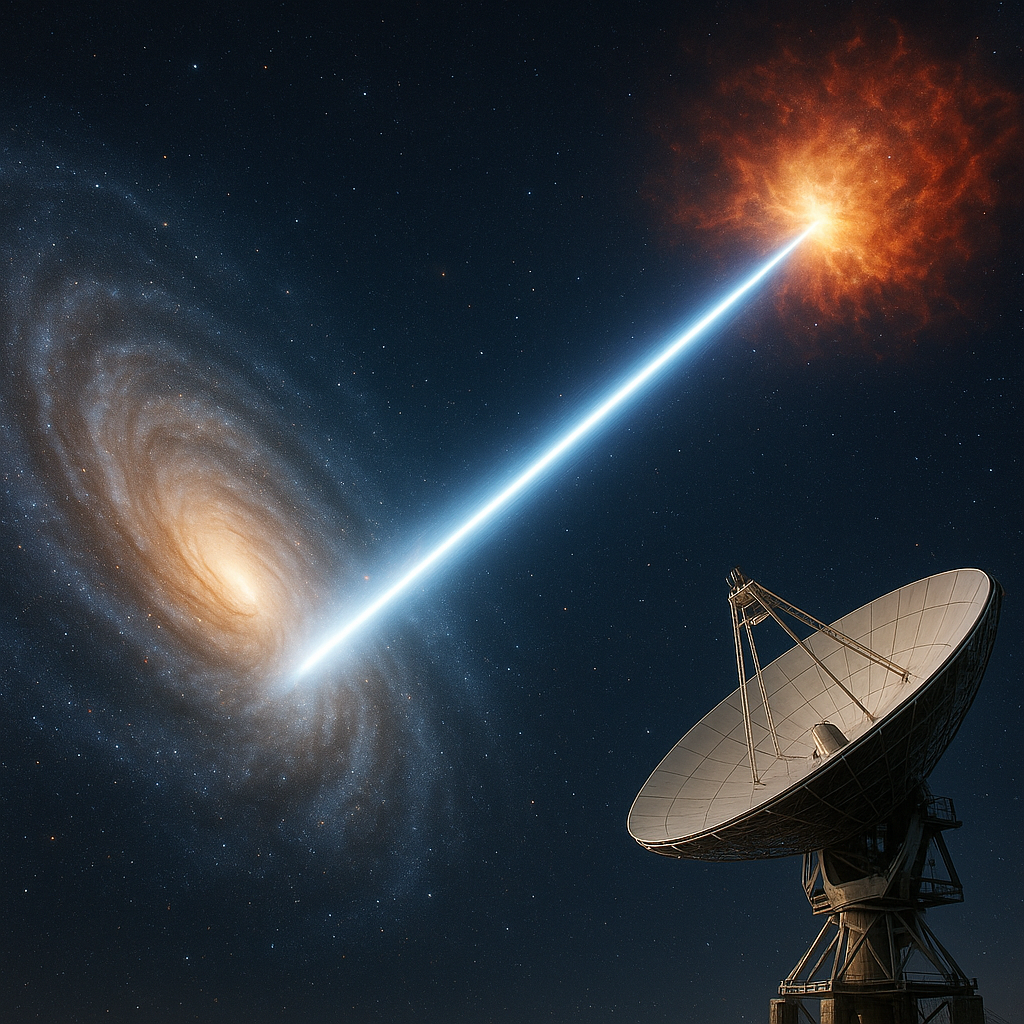
Every FRB acts like a flashlight shining through the cosmic web. Variations in dispersion measure across different lines of sight provide a three-dimensional map of otherwise invisible gas.
Measuring Magnetic Fields on Cosmic Scales
Polarization studies of FRBs reveal the strength and orientation of magnetic fields in host environments and along the path to Earth. This helps researchers understand the role of magnetism in galaxy formation and evolution.
Probing Extreme Physics
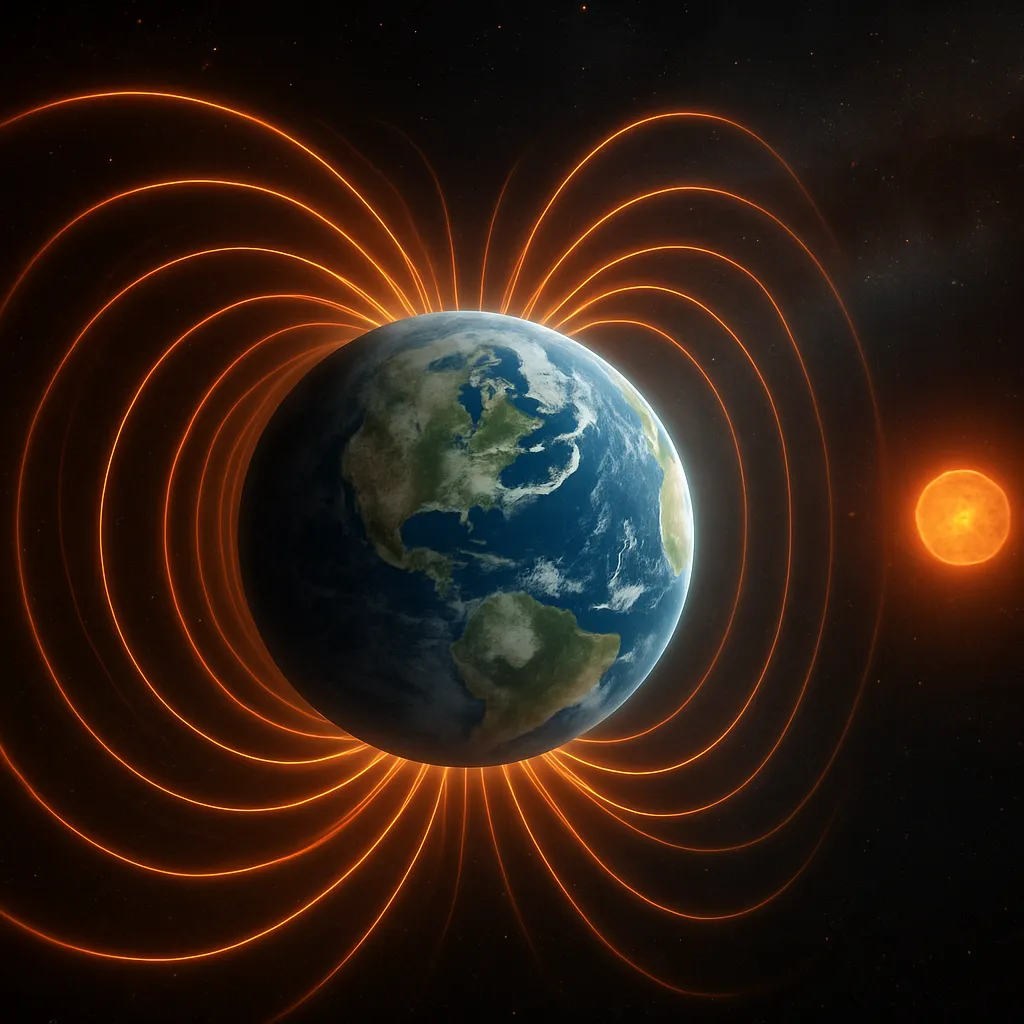
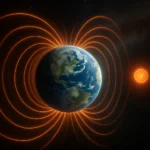
The extreme conditions required to produce FRBs—energies equivalent to the Sun’s output over days compressed into milliseconds—offer a natural laboratory for studying high-energy phenomena under magnetic fields billions of times stronger than Earth’s. Insights gained here feed into broader fields of astrophysics and plasma physics.
Localization and Host Galaxy Insights
Identifying an FRB’s host galaxy provides critical context about its environment and potential progenitor. Precise localization has been achieved for several bursts, revealing a diverse range of galactic neighborhoods.
- Some repeating FRBs reside in star-forming dwarf galaxies, suggesting a link to young stellar populations.
- Non-repeating bursts have been traced to massive galaxies with low star-formation rates, hinting at older progenitor systems.
- Observations of FRBs embedded in supernova remnants or near active galactic nuclei imply multiple formation channels.
Future Prospects and Ongoing Challenges
Despite remarkable progress, many questions remain unanswered. The precise emission mechanism, the full diversity of FRB sources, and the connection between repeaters and one-off events continue to elude a unified theory. Upcoming facilities such as the Square Kilometre Array (SKA) promise to revolutionize the field by providing unprecedented sensitivity and resolution.
As detection rates soar and multi-wavelength follow-ups become routine, the next decade is poised to unravel the deepest secrets of Fast Radio Bursts. Each new discovery not only sharpens our view of these fleeting radio flashes but also expands our understanding of the **electromagnetic** universe and the exotic objects that dwell within it. By harnessing cutting-edge technology and innovative theory, scientists edge ever closer to solving this cosmic enigma.